
Shopping Cart
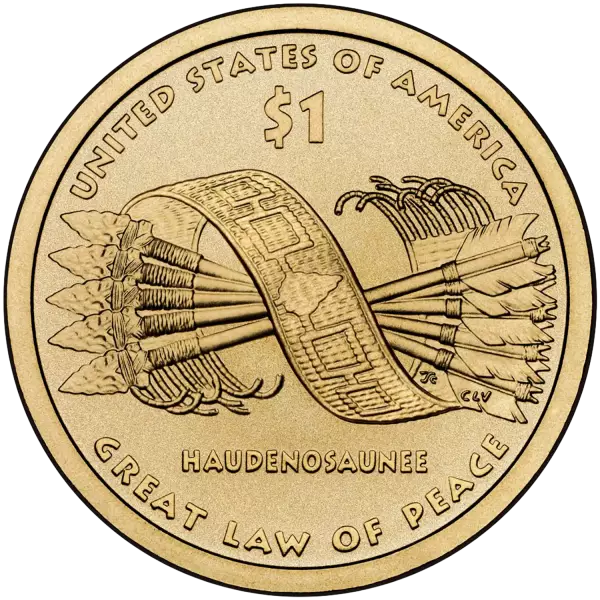


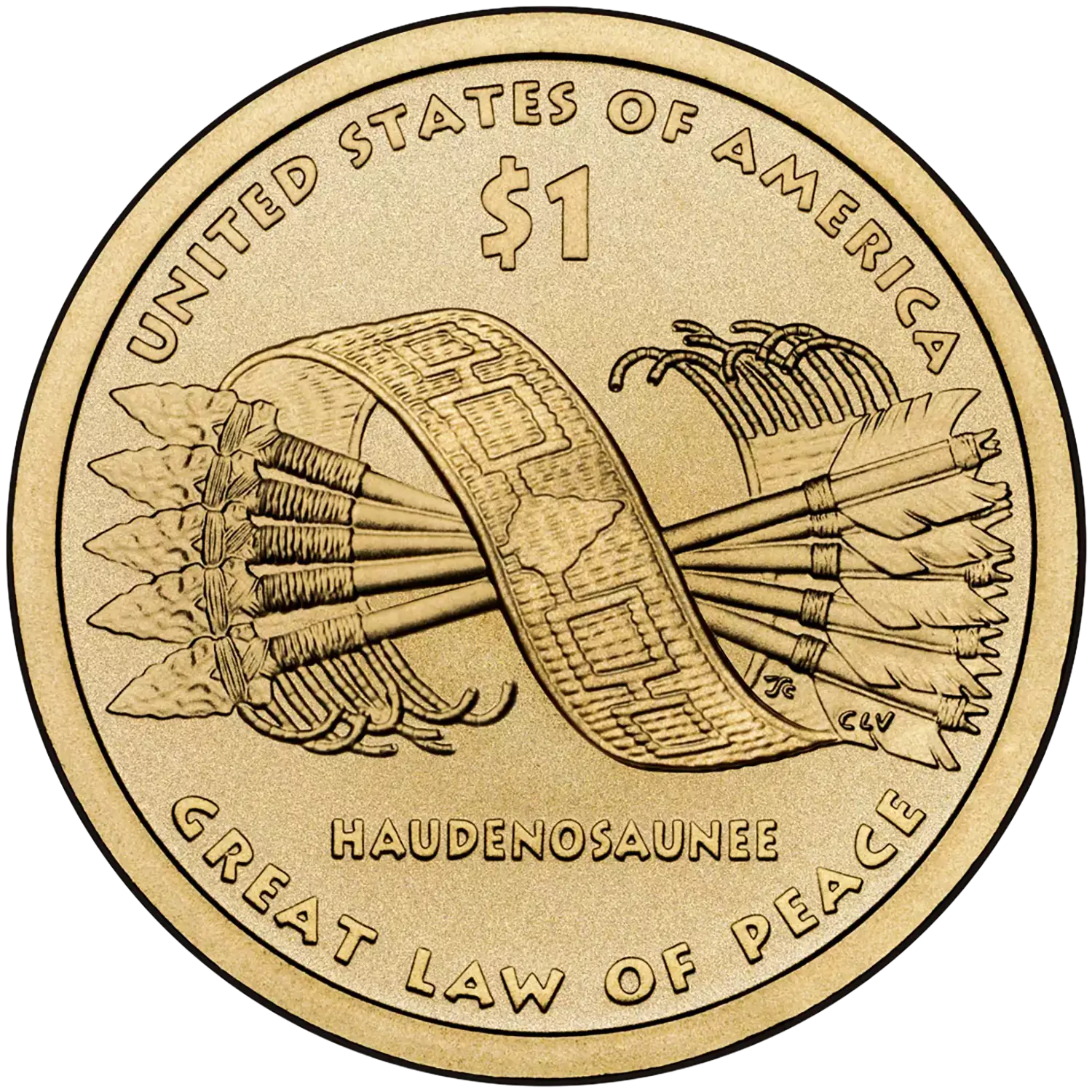
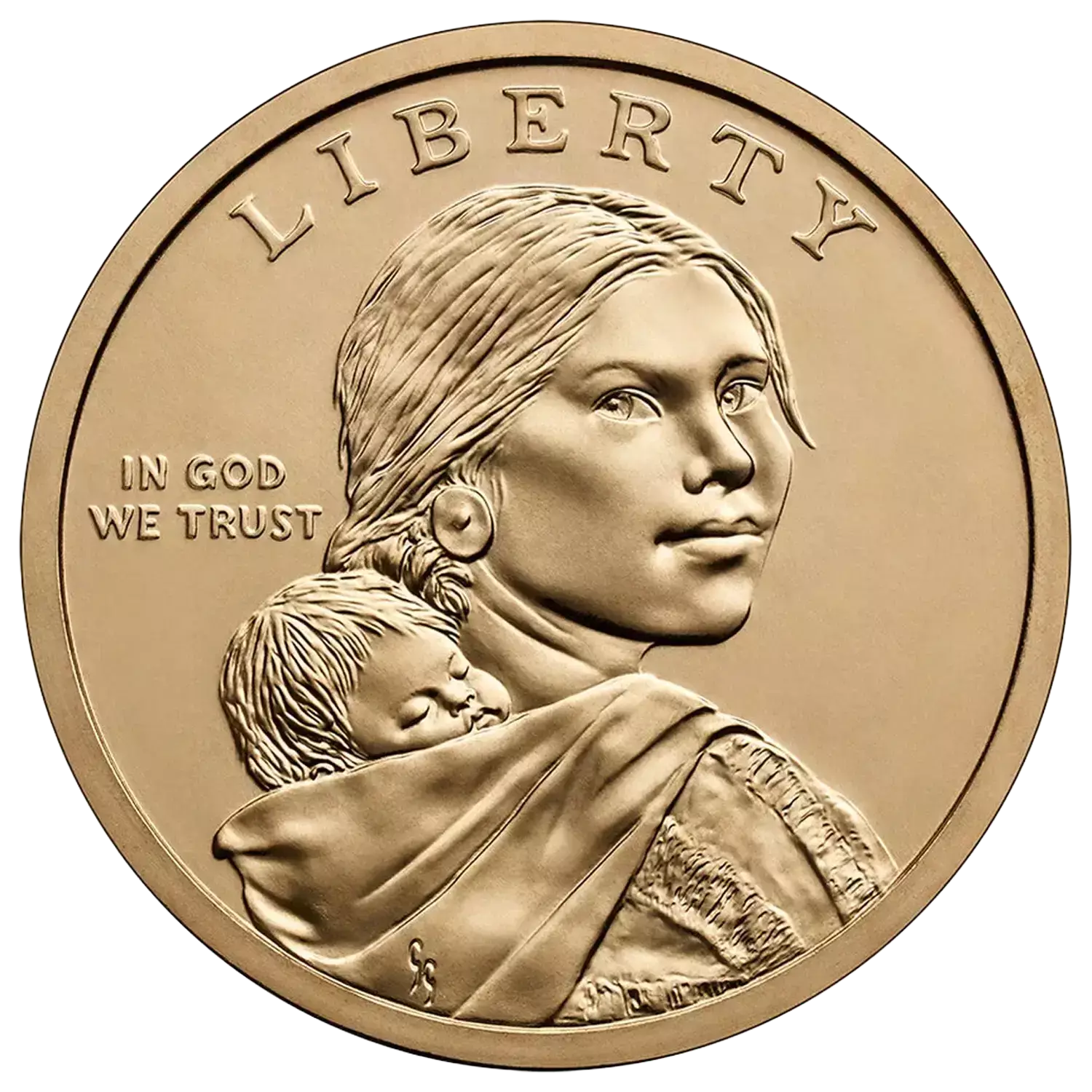
A Sacagawea / Native American dollar — an annual "time capsule" of Native American contributions. The theme of this issue is "Great Law of Peace".
Obverse
The obverse shows a portrait of Sacagawea — a young Shoshone woman, guide of the Lewis and Clark Expedition, carrying her infant son Jean-Baptiste on her back. Flanking it are LIBERTY and IN GOD WE TRUST. It is the most recognizable image of the series, unchanged since 2000. The inscription and portrait set a solemn, recognizable tone for the whole series.
Reverse
The 2010 reverse is a miniature of its own: it depicts the Hiawatha Belt surrounding five bound stone-tipped arrows — the emblem of the five-nation Haudenosaunee (Iroquois) Confederacy and its Great Law of Peace. Around the rim are UNITED STATES OF AMERICA and the denomination $1, while the year and the motto E PLURIBUS UNUM are lettered on the edge. The relief catches the light as the coin is turned.
Historical context
The series-wide obverse depicts Sacagawea — a young Lemhi Shoshone woman born around 1788 in what is now Idaho. Captured by a rival tribe as a girl, she later became the wife of the trader Toussaint Charbonneau and, already pregnant, joined the Lewis and Clark Expedition in February 1805. Carrying her infant son Jean-Baptiste on her back, she took on the roles of interpreter, guide and peacemaker, without whom the party could hardly have reached the Pacific. Sacagawea became one of the most honored women in U.S. history — with more monuments dedicated to her than to any other American woman.
The 2010 reverse honors the Great Law of Peace and the founding of the Iroquois (Haudenosaunee) Confederacy back in the 15th century. The coin shows the Hiawatha Belt, symbol of the union of five nations, around five bound arrows — an image of unity in strength. By tradition, the Confederacy’s founders symbolically buried their weapons beneath the Great Tree of Peace, sealing a promise of concord among the peoples. It rounds out the series nicely and looks striking in a capsule or tray.