
Shopping Cart
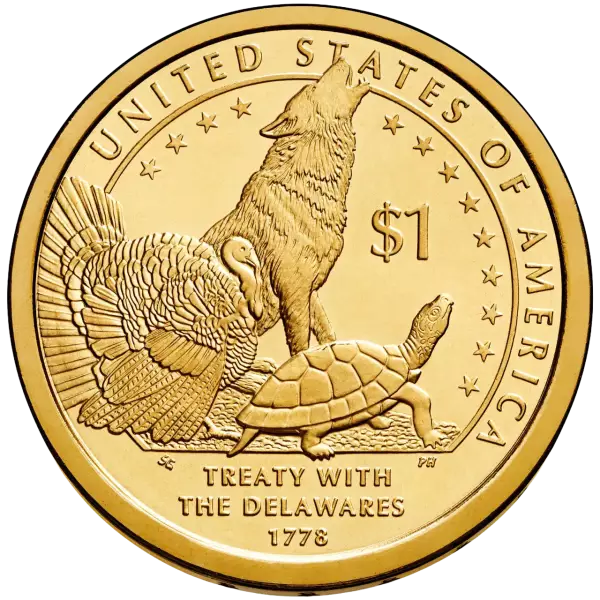


With its warm brass tone, the coin tells a distinct chapter from the history and culture of Native tribes. The theme of this issue is "Treaty with the Lenape 1778".
Obverse
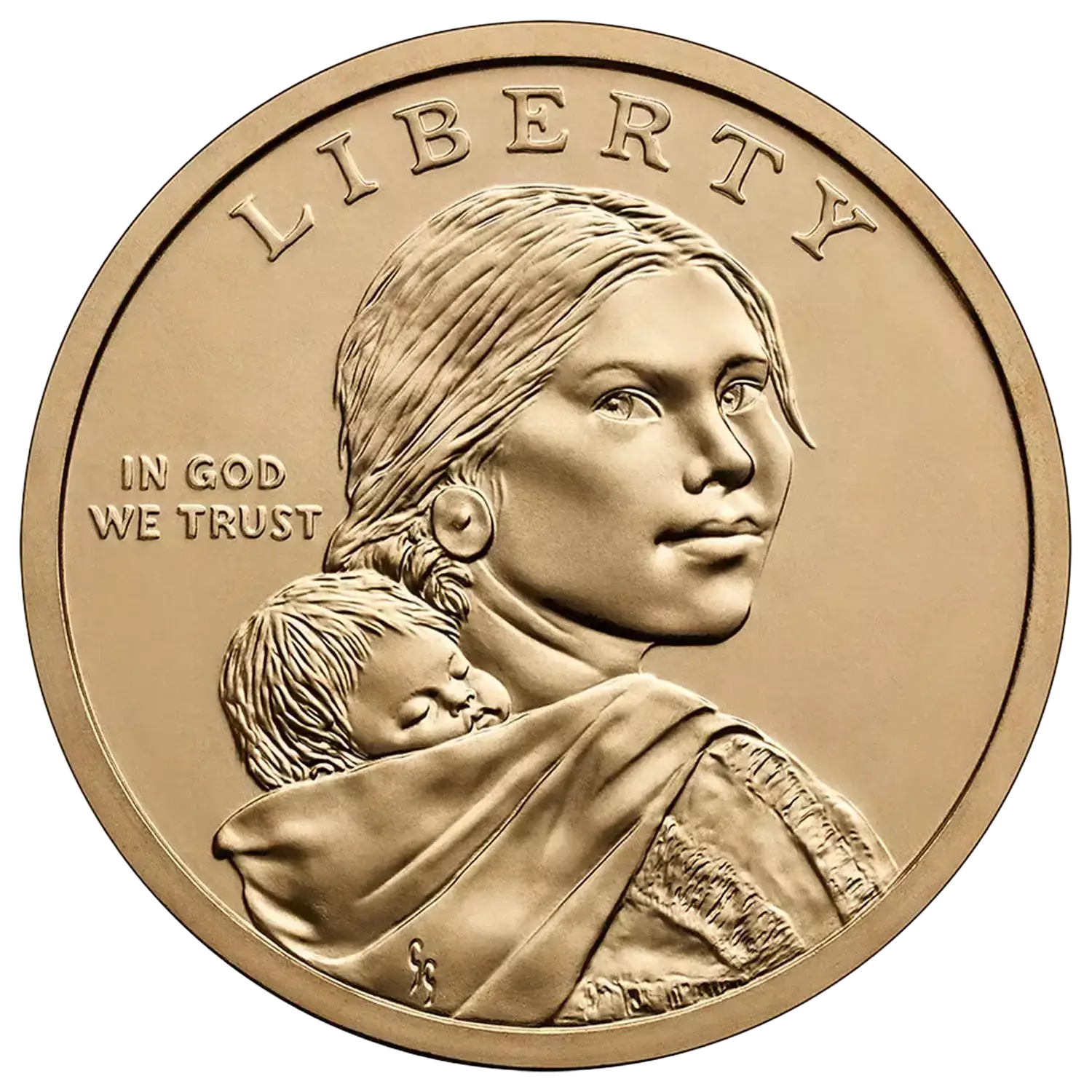
The obverse shows a portrait of Sacagawea — a young Shoshone woman, guide of the Lewis and Clark Expedition, carrying her infant son Jean-Baptiste on her back. Flanking it are LIBERTY and IN GOD WE TRUST. It is the most recognizable image of the series, unchanged since 2000. The inscription and portrait set a solemn, recognizable tone for the whole series.
Reverse
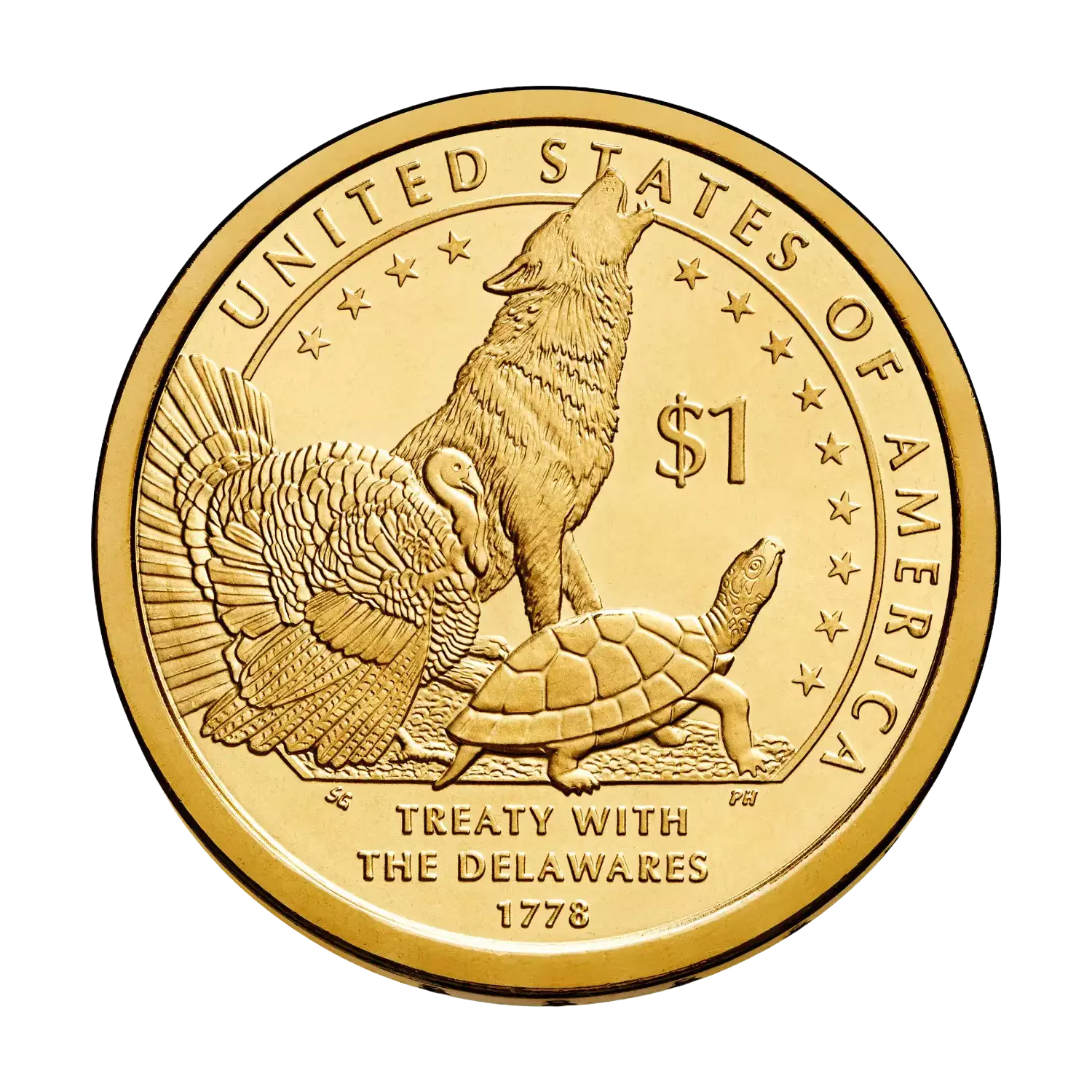
The 2013 reverse is a miniature of its own: it depicts a turkey, a howling wolf and a turtle — clan symbols of the Lenape (Delaware) people, honoring the first formal treaty between the U.S. and a Native tribe in 1778. Around the rim are UNITED STATES OF AMERICA and the denomination $1, while the year and the motto E PLURIBUS UNUM are lettered on the edge. The relief catches the light as the coin is turned.
Historical context
The series-wide obverse depicts Sacagawea — a young Lemhi Shoshone woman born around 1788 in what is now Idaho. Captured by a rival tribe as a girl, she later became the wife of the trader Toussaint Charbonneau and, already pregnant, joined the Lewis and Clark Expedition in February 1805. Carrying her infant son Jean-Baptiste on her back, she took on the roles of interpreter, guide and peacemaker, without whom the party could hardly have reached the Pacific. Sacagawea became one of the most honored women in U.S. history — with more monuments dedicated to her than to any other American woman.
The 2013 reverse recalls the 1778 Treaty with the Delaware (Lenape) — the first formal treaty between the U.S. government and a Native people. The coin shows a turkey, a howling wolf and a turtle, the clan totems of the three Lenape divisions. Signed during the Revolutionary War, it even dangled the prospect of a Lenape-led state. The promises were later broken, but the document itself stands as a milestone in U.S.–Native relations. A neat accent for any set and a pleasant keepsake.