
Shopping Cart
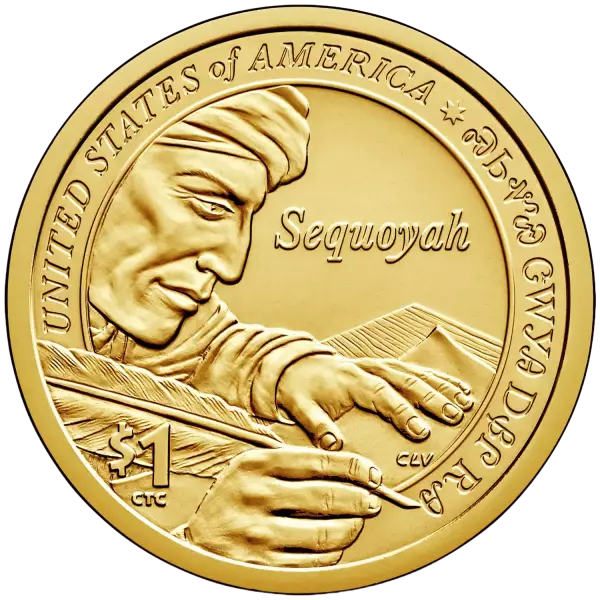


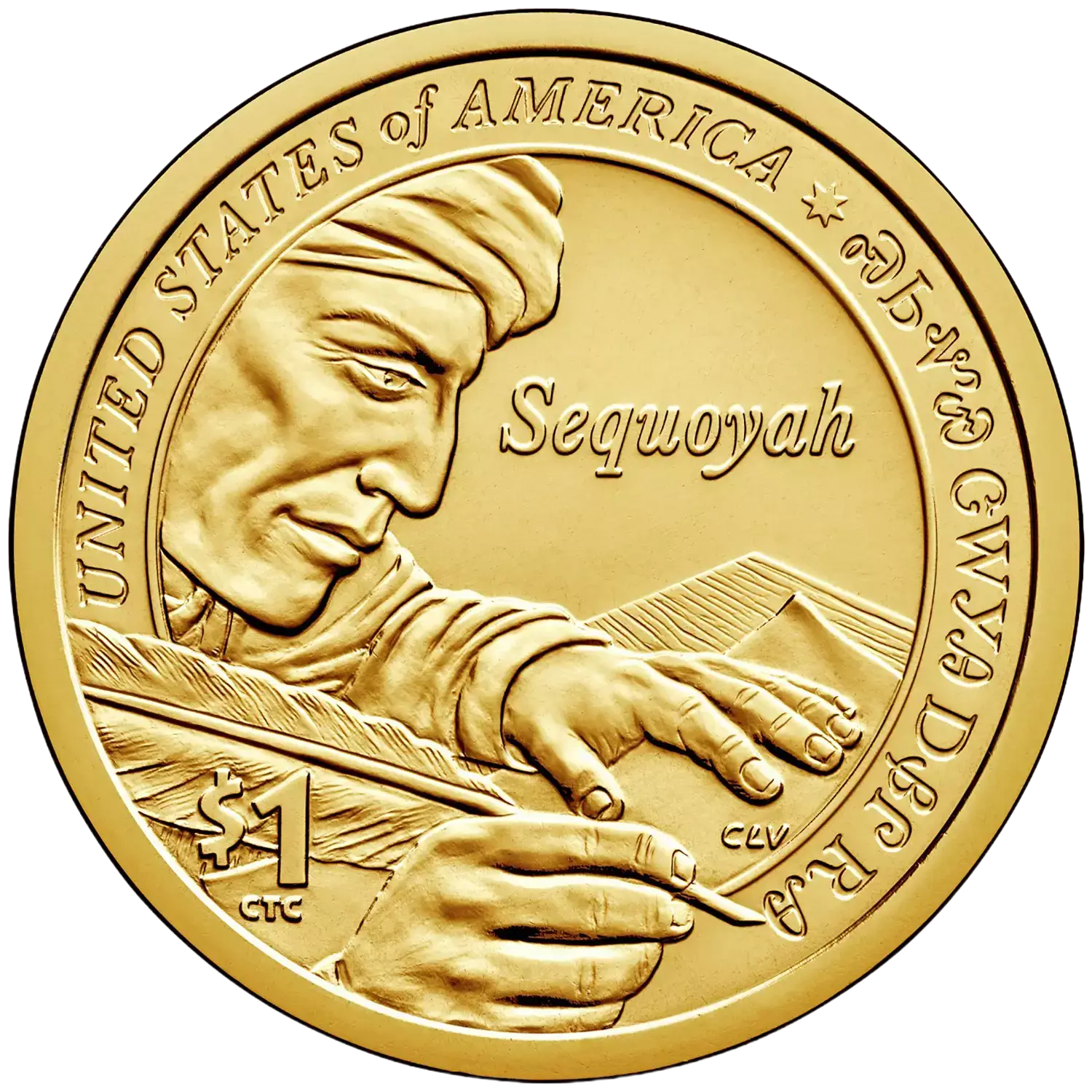
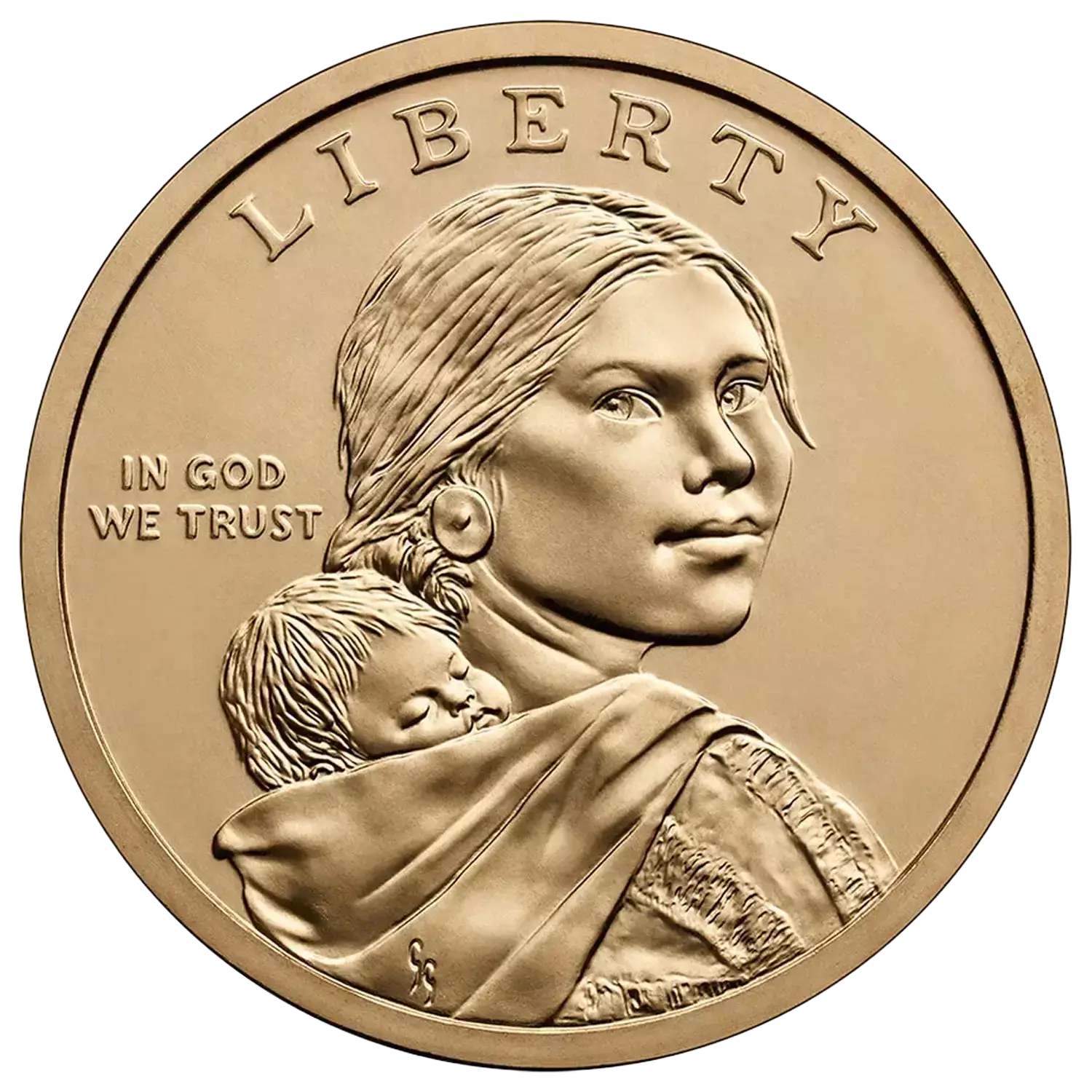
With its warm brass tone, the coin tells a distinct chapter from the history and culture of Native tribes. The theme of this issue is "Sequoyah".
Obverse
The obverse shows a portrait of Sacagawea — a young Shoshone woman, guide of the Lewis and Clark Expedition, carrying her infant son Jean-Baptiste on her back. Flanking it are LIBERTY and IN GOD WE TRUST. It is the most recognizable image of the series, unchanged since 2000. The inscription and portrait set a solemn, recognizable tone for the whole series.
Reverse
The 2017 reverse is a miniature of its own: it depicts Sequoyah, creator of the Cherokee syllabary, inscribing his name in the script he invented — a tribute to the writing system that gave the Cherokee their own literacy. Around the rim are UNITED STATES OF AMERICA and the denomination $1, while the year and the motto E PLURIBUS UNUM are lettered on the edge. The relief catches the light as the coin is turned.
Historical context
The series-wide obverse depicts Sacagawea — a young Lemhi Shoshone woman born around 1788 in what is now Idaho. Captured by a rival tribe as a girl, she later became the wife of the trader Toussaint Charbonneau and, already pregnant, joined the Lewis and Clark Expedition in February 1805. Carrying her infant son Jean-Baptiste on her back, she took on the roles of interpreter, guide and peacemaker, without whom the party could hardly have reached the Pacific. Sacagawea became one of the most honored women in U.S. history — with more monuments dedicated to her than to any other American woman.
The 2017 reverse is dedicated to Sequoyah, creator of the Cherokee syllabary. On the coin he inscribes his own name in the script he invented in the early 19th century. With no formal schooling, Sequoyah spent years devising a system of signs that let the Cherokee read and write their own language. It is one of history’s rare cases of a writing system created by a single person — and rapidly adopted by an entire nation. A neat accent for any set and a pleasant keepsake.