
Shopping Cart
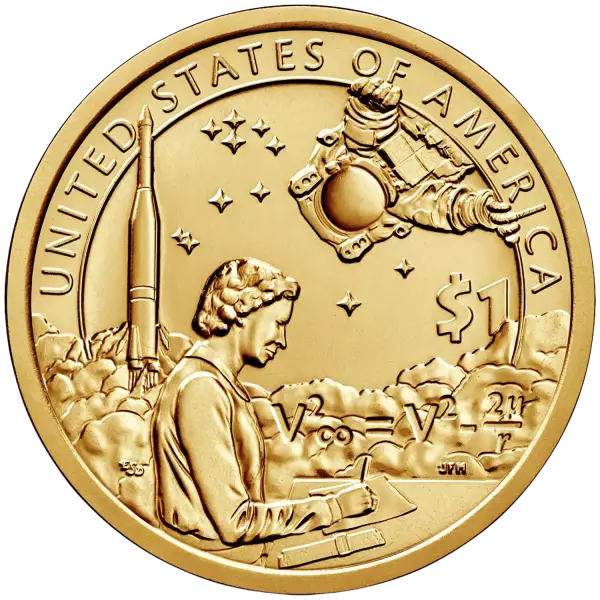


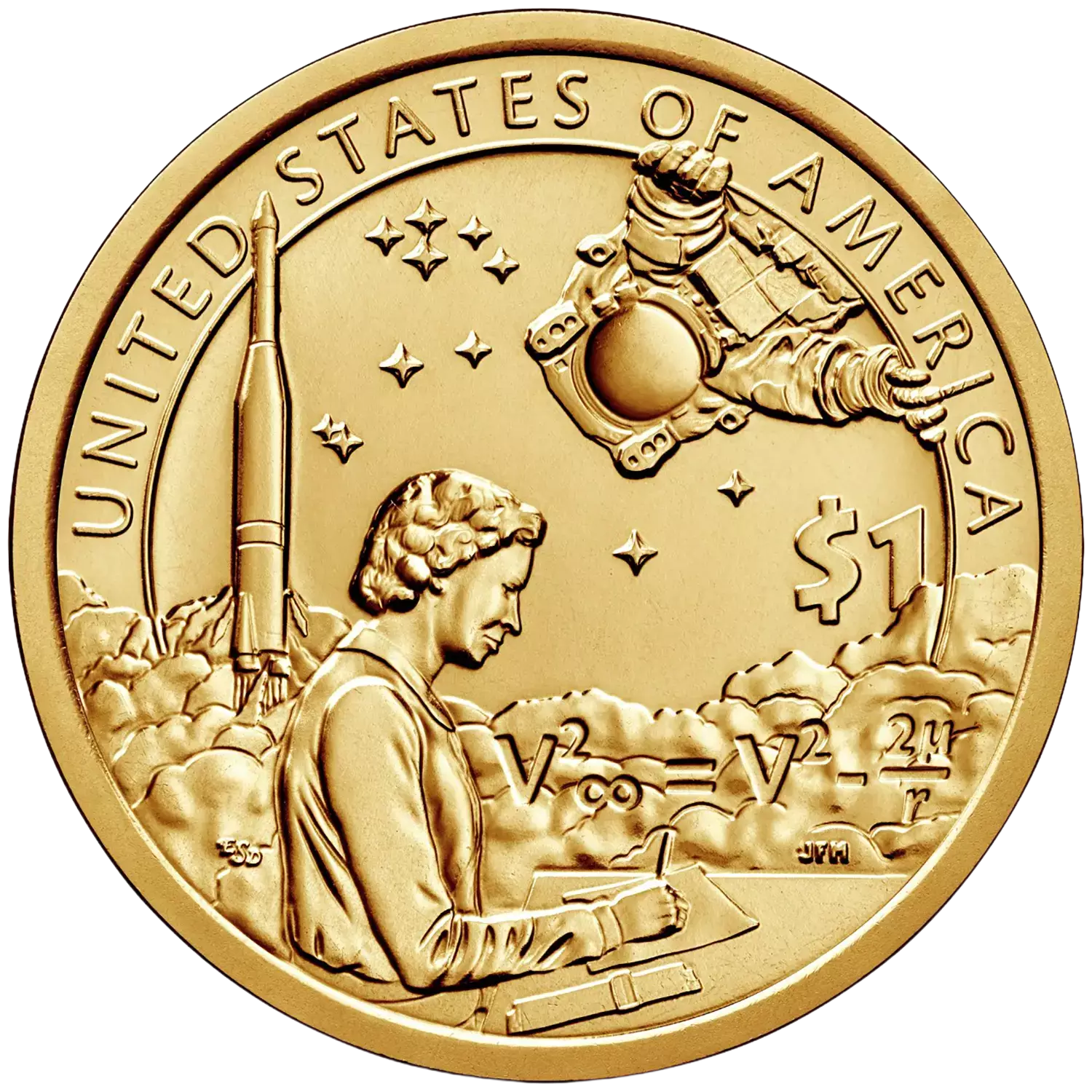
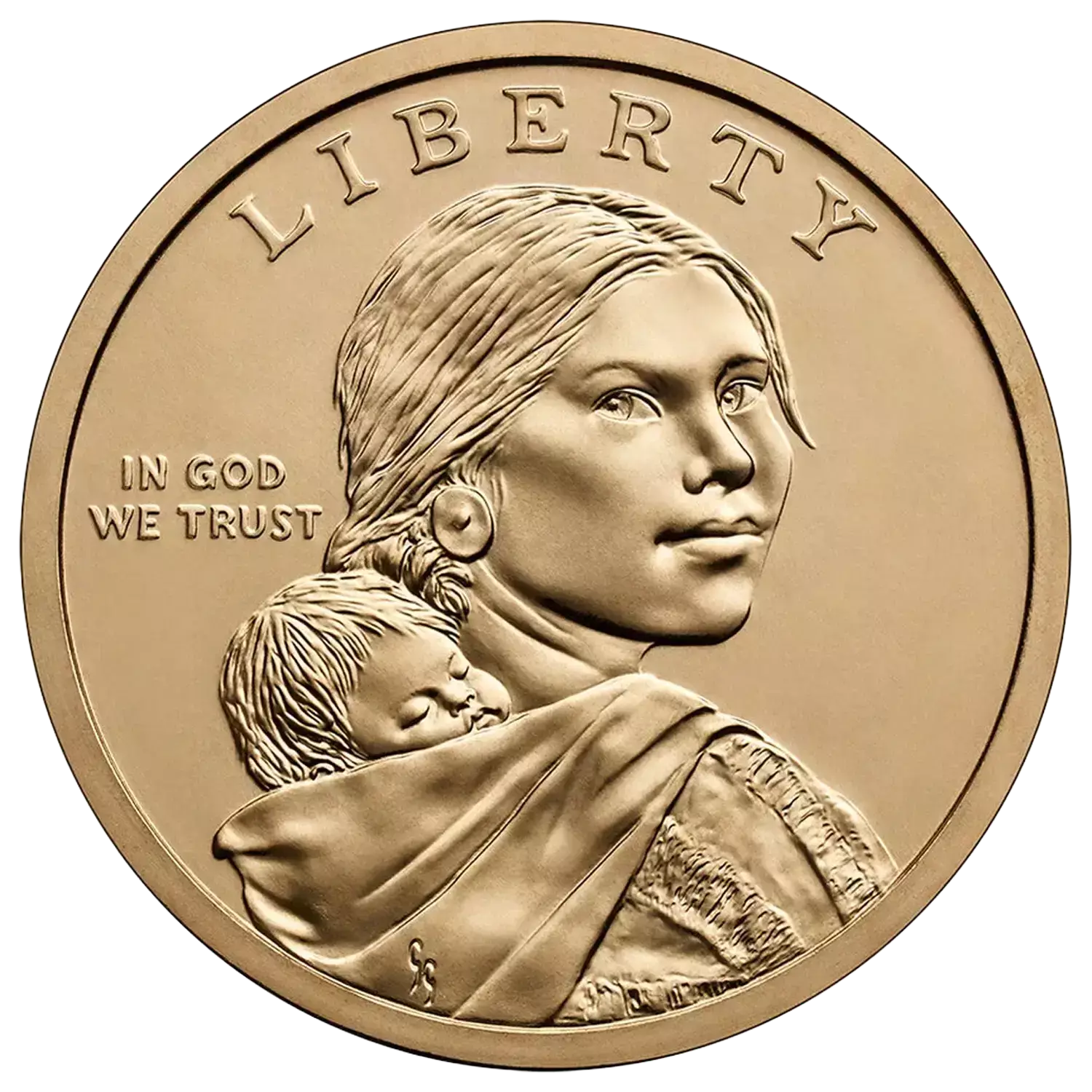
A collectible dollar in which the familiar figure of Sacagawea opens a fresh theme each year. The theme of this issue is "American Indians in the Space Program".
Obverse
The obverse shows a portrait of Sacagawea — a young Shoshone woman, guide of the Lewis and Clark Expedition, carrying her infant son Jean-Baptiste on her back. Flanking it are LIBERTY and IN GOD WE TRUST. It is the most recognizable image of the series, unchanged since 2000. The inscription and portrait set a solemn, recognizable tone for the whole series.
Reverse
The 2019 reverse is a miniature of its own: it depicts an astronaut, a spacewalk and a launching rocket — honoring the contribution of Native Americans to the U.S. space program. Around the rim are UNITED STATES OF AMERICA and the denomination $1, while the year and the motto E PLURIBUS UNUM are lettered on the edge. The relief catches the light as the coin is turned.
Historical context
The series-wide obverse depicts Sacagawea — a young Lemhi Shoshone woman born around 1788 in what is now Idaho. Captured by a rival tribe as a girl, she later became the wife of the trader Toussaint Charbonneau and, already pregnant, joined the Lewis and Clark Expedition in February 1805. Carrying her infant son Jean-Baptiste on her back, she took on the roles of interpreter, guide and peacemaker, without whom the party could hardly have reached the Pacific. Sacagawea became one of the most honored women in U.S. history — with more monuments dedicated to her than to any other American woman.
The 2019 reverse is dedicated to the contribution of Native Americans to the U.S. space program. The coin shows an astronaut, a spacewalk and a launching rocket. Among Native Americans were engineers, technicians and astronauts; notably John Herrington of the Chickasaw Nation became the first enrolled tribal member to fly in space. The coin is a reminder that the path to the stars was also paved by descendants of the continent’s first peoples. Equally suited to a beginning collector and a seasoned numismatist.