
Shopping Cart
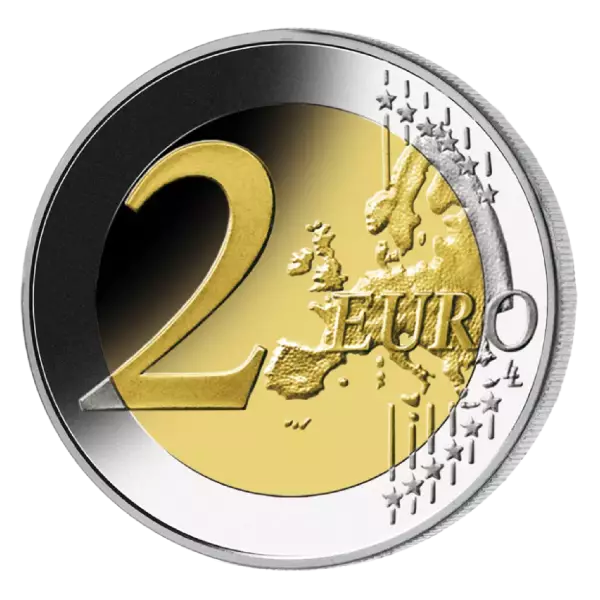

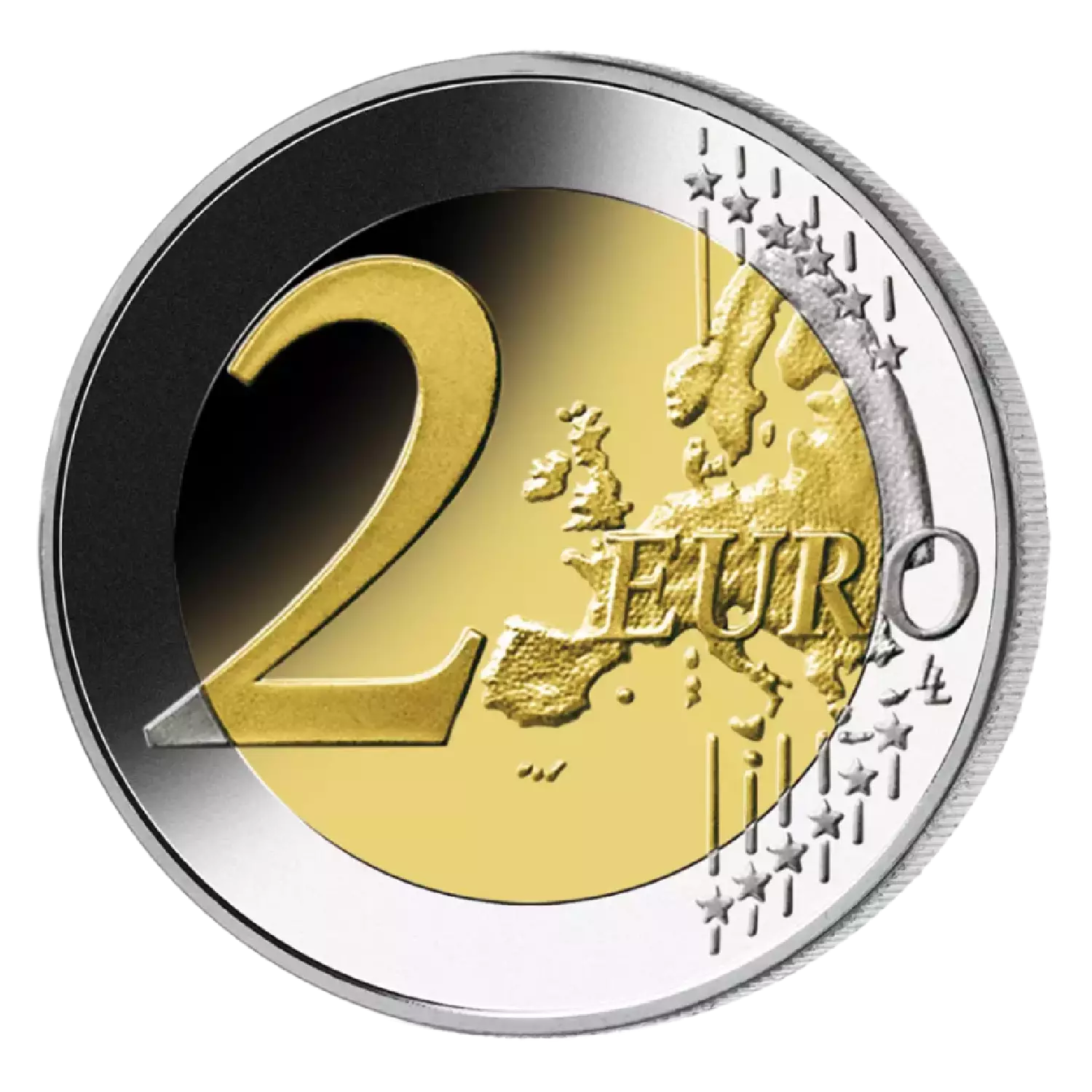
A joint 2-euro commemorative coin issued by Austria in 2012 to mark the 10th anniversary of the introduction of the euro cash. All 17 eurozone countries issued a coin with the same obverse design. The design was chosen by an online vote of EU citizens from five finalists. The designer was Helmut Andexlinder of the Austrian Mint.
Obverse
The centre of the coin depicts a globe in the shape of the euro symbol "€", demonstrating how the euro has become a true global player in ten years. The surrounding symbols represent the euro's meaning in different areas: a family for ordinary people, the Eurotower for the financial world, a ship for trade, a factory for industry, and two wind turbines for energy and research. The initials of the designer "A.H." are hidden between the ship and the Eurotower. At the top is the inscription "REPUBLIK ÖSTERREICH", at the bottom are the dates "2002–2012". On the outer ring are the 12 stars of the EU.
Reverse
The reverse is the updated common side of the 2 euro coins of the second type, designed by Luc Luix. It depicts a map of Europe as a single continent without internal borders. On the left is the denomination "2" and the inscription "EURO", on the right is the map. On the outer ring are the 12 stars of the EU. The band has a fine groove with the inscription "2 EURO ***", repeated four times alternately in the forward and reverse positions.
Historical context
On 1 January 2002, euro coins and banknotes were introduced into cash circulation in 12 European Union member states: Austria, Belgium, Germany, Greece, Spain, Ireland, Italy, Luxembourg, the Netherlands, Portugal, Finland and France. This was an unprecedented scale currency reform - seven billion banknotes and thirty-eight billion coins of national currencies were replaced. The introduction was smooth, and billions of euro coins and banknotes quickly became the usual means of payment for approximately 300 million Europeans. Over the next ten years, the eurozone expanded to include five more countries, and the euro became the world's second-largest reserve currency after the US dollar.