
Shopping Cart
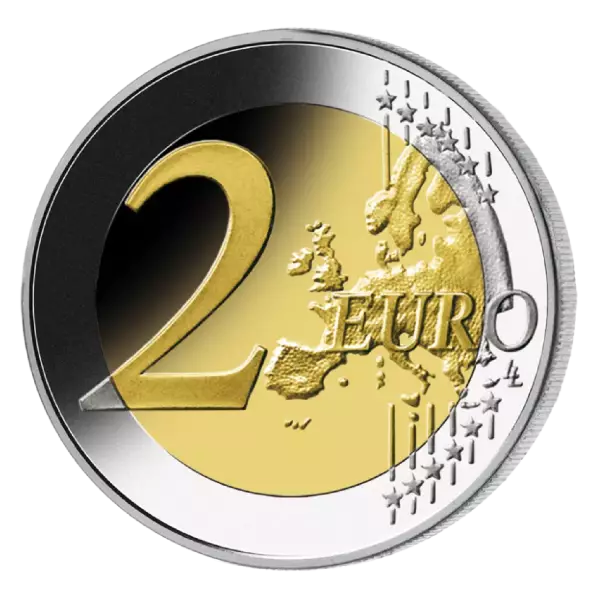

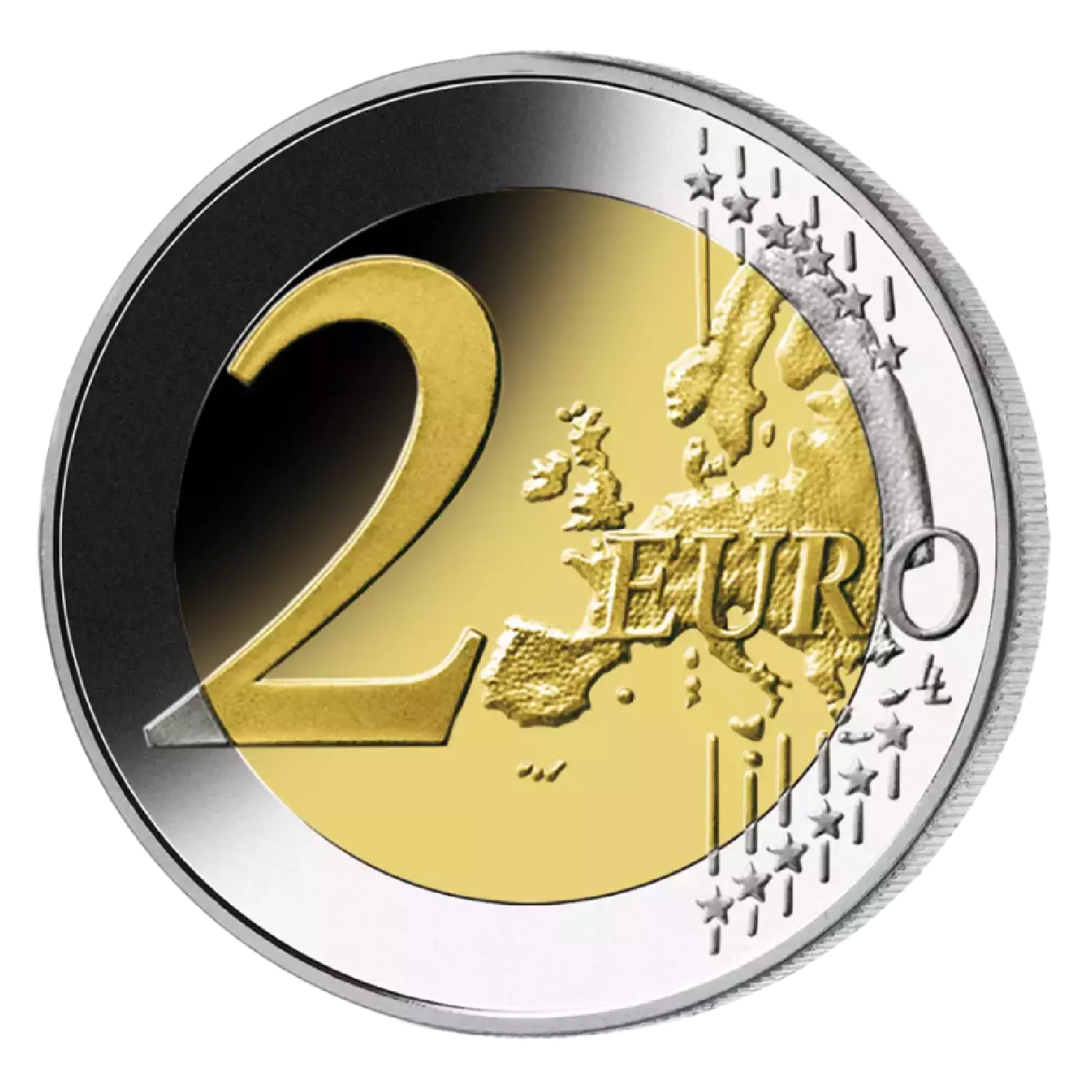
A joint 2 euro commemorative coin issued by Austria in July 2022 as part of a pan-European issue to mark the 35th anniversary of the Erasmus programme. All eurozone countries have issued a coin with the same obverse design. The design was by Joaquín Jiménez. This is the fifth joint 2 euro coin issue in the history of the eurozone.
Obverse
The centre of the coin depicts a stylised figure of a student - on one side, a stylised circle with numerous figures holding hands symbolises the unity, exchange and mobility of European students. The author's signature "JJ" is engraved above the right hand. At the bottom right is the inscription "1987–2022 ERASMUS PROGRAMM REPUBLIK ÖSTERREICH". A geographical map of Western Europe is integrated into the right part of the coin, covering both the outer ring and the inner part. The inscription "2 EURO" is superimposed on the map. On the outer ring - 12 EU stars.
Reverse
The reverse is the common side of the 2 euro coins of the second type, designed by Luc Luix. It depicts a map of Europe without internal borders, on the left - the denomination "2" and the inscription "EURO", on the right - the map. On the outer ring - 12 EU stars. On the band - a fine groove with the inscription "2 EURO ***", repeated four times.
Historical context
The Erasmus program (European Community Action Scheme for the Mobility of University Students) was established on 15 June 1987 by a decision of the European Council. Named after the humanist Erasmus of Rotterdam, the program provides funding for students to study at universities in other European countries for a semester or a year. In 2014, the programme was expanded and renamed Erasmus+, adding support for schools, vocational training, youth and sport. Over 35 years, more than 10 million people have benefited from the programme, making it the most successful education programme in the history of the EU and a powerful tool for European integration and the formation of a European identity among young people.