
Shopping Cart
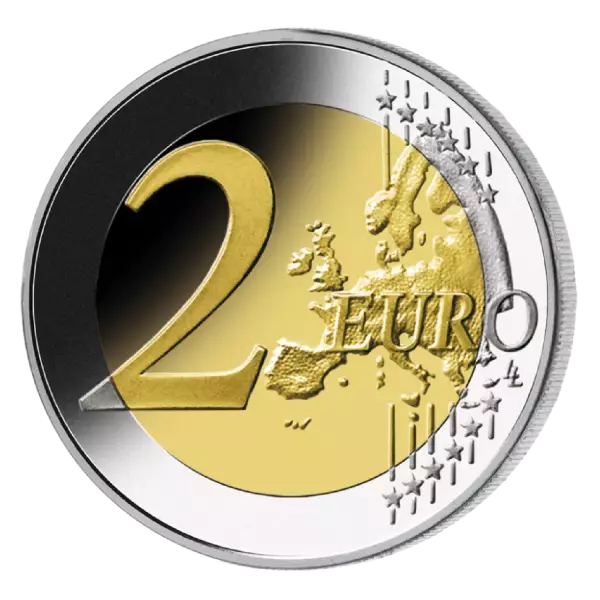

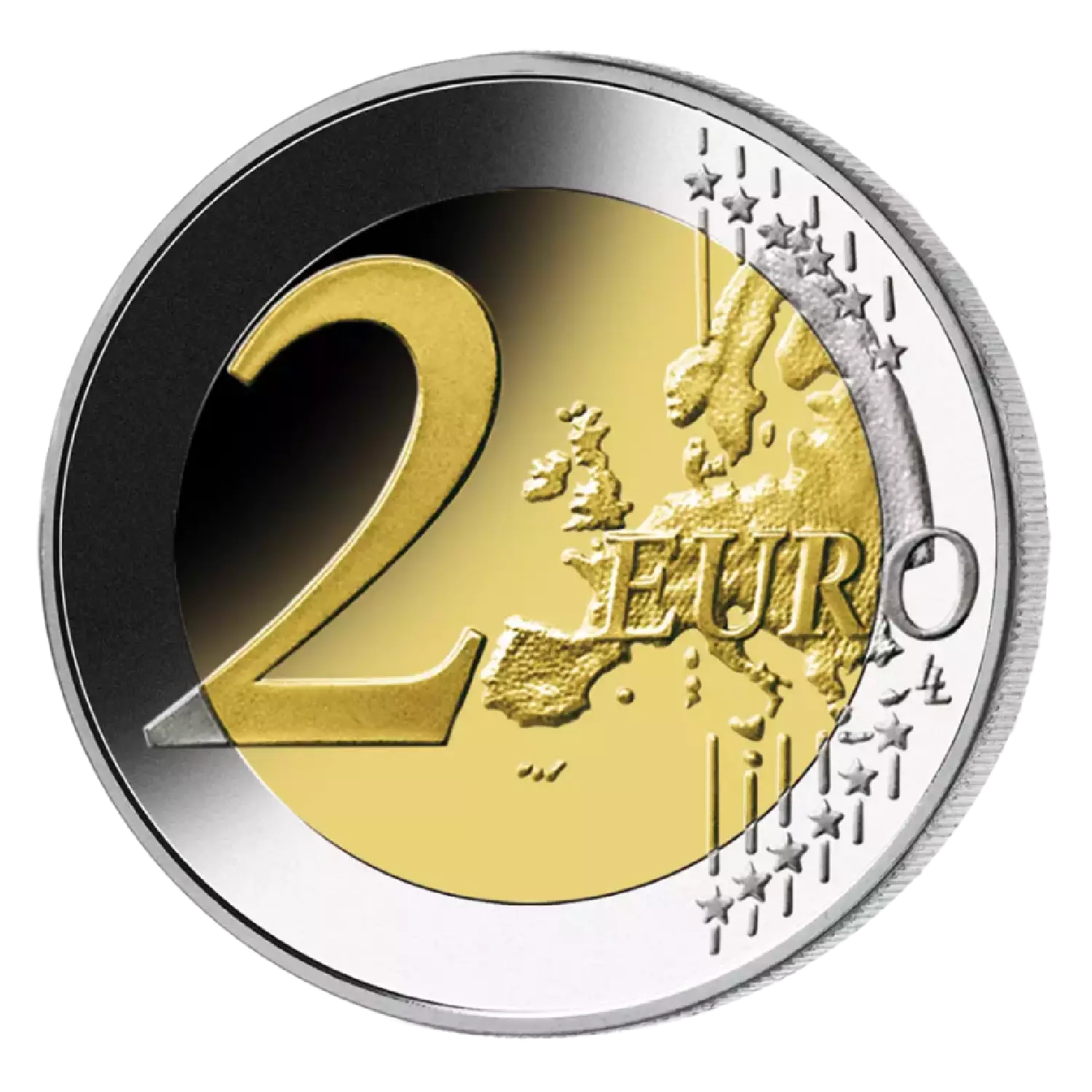
A joint 2 euro commemorative coin of the Kingdom of Belgium, issued in 2007 as part of a pan-European issue to commemorate the 50th anniversary of the Treaties of Rome. All 13 eurozone countries issued a coin with an identical design, differing only in the name of the issuing country. Bimetallic, diameter 25.75 mm, weight 8.5 g.
Obverse
The center of the coin depicts the unfolded document of the Treaty of Rome, signed by the six founding countries, against the backdrop of the paving of the Capitoline Square (Piazza del Campidoglio) in Rome, designed by Michelangelo. Above the document is the inscription "EUROPA". Above, in a semicircle in two lines, is the inscription "PACTUM ROMANUM QUINQUAGENARIUM" (Treaty of Rome, fiftieth anniversary) in Latin. Below, in a semicircle, is the name of the country in the three official languages of Belgium, "BELGIQUE-BELGIE-BELGIEN". The year "2007" is placed, as well as the mint marks and the mint master. On the outer ring are the 12 EU stars.
Reverse
The reverse is the updated common side of the 2 euro coins of the second type, introduced in 2007. Designed by Luc Luix, it depicts a map of Europe as a single continent without national borders. On the left is the denomination "2" and the inscription "EURO", on the right is the map. On the outer ring are the 12 EU stars. The band has a groove with the inscription "2 ★ ★", repeated six times.
Historical context
The Treaties of Rome were signed on 25 March 1957 in the Palazzo dei Conservatori on the Capitoline Hill in Rome by representatives of six countries - Belgium, France, West Germany, Italy, Luxembourg and the Netherlands. The treaties established the European Economic Community (EEC) and the European Atomic Energy Community (Euratom). Belgium, along with Luxembourg and the Netherlands, was one of the Benelux countries - the first Western European integration association, which served as a model for wider European integration. The Treaties of Rome laid the foundations of the modern European Union and led to the creation of the euro in 1999.