
Shopping Cart
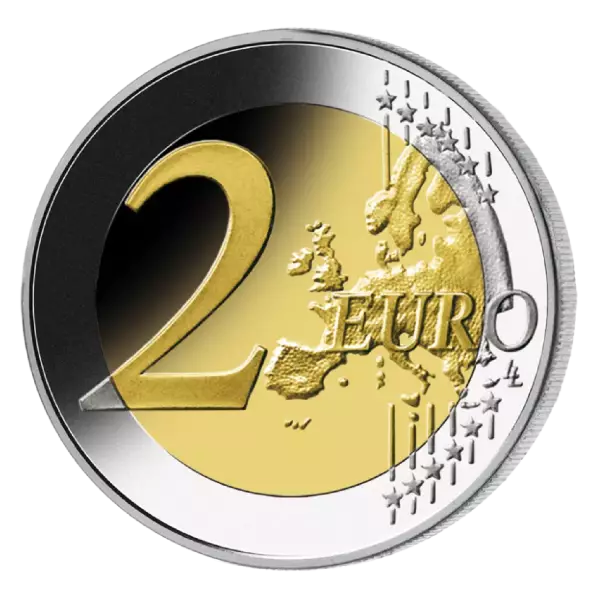

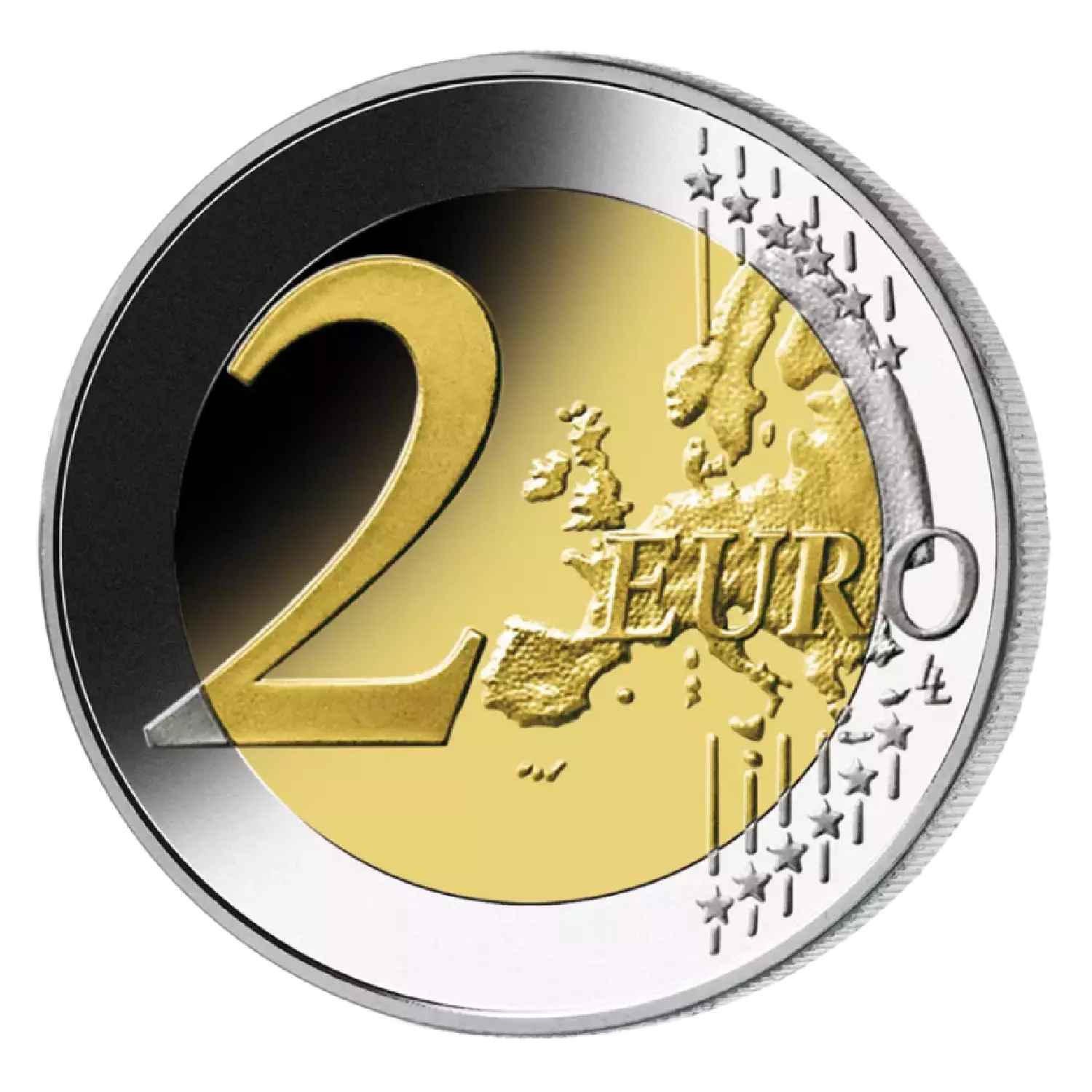
A 2 euro commemorative coin of the Kingdom of Belgium, issued in September 2009 in a circulation of 5 million copies. Dedicated to the 200th anniversary of the birth of Louis Braille. Bimetallic, diameter 25.75 mm, weight 8.5 g.
Obverse
The center of the coin depicts a portrait of Louis Braille with his initials "L" and "B", written in the tactile alphabet he invented. Above the portrait is his name - "LOUIS BRAILLE". Below the portrait - the code of the issuing country "BE" and the dates "1809" and "2009". On the left and right - the mint mark and the signature of the mint master. On the outer ring - the 12 stars of the European Union. The coin was issued simultaneously with an Italian coin on the same theme, making it one of the rare cases when two countries issued different coins for the same event.
Reverse
The reverse is the common side of the 2 euro coins of the second type, designed by Luc Luix. A map of Europe without internal borders, on the left - the denomination "2" and the inscription "EURO", on the right - the map. On the outer ring - the 12 stars of the EU. On the band - a fine groove with the inscription "2 ★ ★", repeated six times.
Historical context
Louis Braille (4 January 1809 - 6 January 1852) was a French educator, inventor of the tactile system of writing and reading for the blind, known as Braille. At the age of three, he lost his sight after an injury. At the age of 15 (1824), Braille developed a system based on combinations of 6 dots in two columns of three, which allowed blind people to read and write independently. His system, published in 1829 and improved in 1837, eventually became the standard for reading by the blind around the world. Braille has been translated into most languages of the world and adapted for musical notes and mathematical formulas. Louis Braille died at the age of 43 from tuberculosis, and 100 years after his death (in 1952) his ashes were transferred to the Panthéon in Paris.