
Shopping Cart
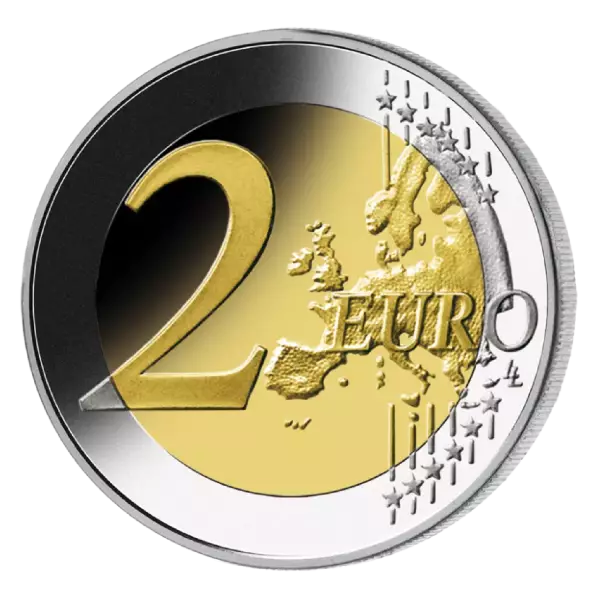

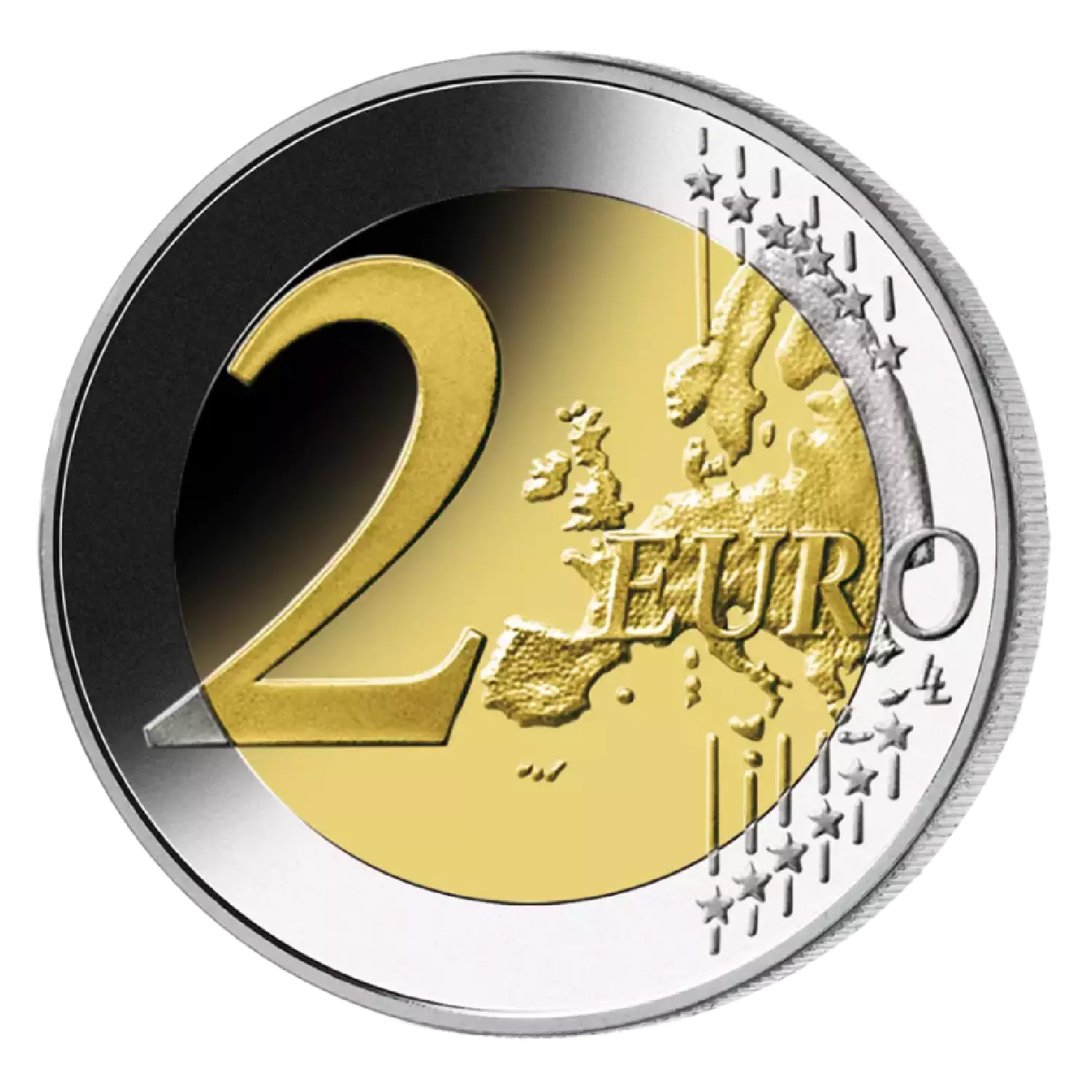
A joint 2 euro commemorative coin of the Kingdom of Belgium, issued in 2012 to commemorate the 10th anniversary of the introduction of the euro cash. All 17 eurozone countries issued a coin with the same obverse design. The design was chosen by an online vote of EU citizens. The designer was Helmut Andexlinder from the Austrian Mint.
Obverse
The center of the coin depicts a globe in the shape of the euro symbol "€", demonstrating how the euro has become a true global player in ten years. The symbols around it are: a family for ordinary people, the Eurotower for the financial world, a ship for trade, a factory for industry, and two wind turbines for energy. The initials of the designer "A.H." are hidden between the ship and the Eurotower. At the top is the designation of the issuing country "BE", at the bottom are the dates "2002–2012". On the outer ring are the 12 EU stars.
Reverse
The reverse is the common side of the 2 euro coins of the second type, designed by Luc Luix. A map of Europe without internal borders, on the left is the denomination "2" and the inscription "EURO", on the right is the map. On the outer ring are the 12 EU stars. On the edge is a fine groove with the inscription "2 ★ ★", repeated six times.
Historical context
On 1 January 2002, euro coins and banknotes were introduced into cash circulation in 12 European Union member states, including Belgium. This was an unprecedented monetary reform in scale. The Belgian franc, the country's currency since 1832, was withdrawn from circulation. Belgium was one of the countries that actively promoted European monetary integration: Brussels remains the key center of EU economic and monetary policy, where the EU headquarters are located. The introduction of the euro has greatly facilitated trade, travel and economic cooperation for the approximately 300 million Europeans who use this currency.