
Shopping Cart

Commemorative coin of the Kingdom of Belgium, issued in 2013. Dedicated to the 100th anniversary of the Royal Meteorological Institute. Bimetallic, diameter 25.75 mm, weight 8.5 g.
Obverse
The obverse of the coin depicts the number "100" in the center, where the first "0" surrounds the abbreviations "KMI" (Koninklijk Meteorologisch Instituut - Dutch) and "IRM" (Institut Royal Météorologique - French), and the second "0" represents the sun. To the left of the sun are depicted isobars (lines of equal atmospheric pressure), raindrops and snowflakes - symbols of meteorological science. At the top is an inscription with the full name of the institute, below it - the country code "BE". Also - the mint and mint master marks. On the outer ring are the 12 stars of the European Union.
Reverse
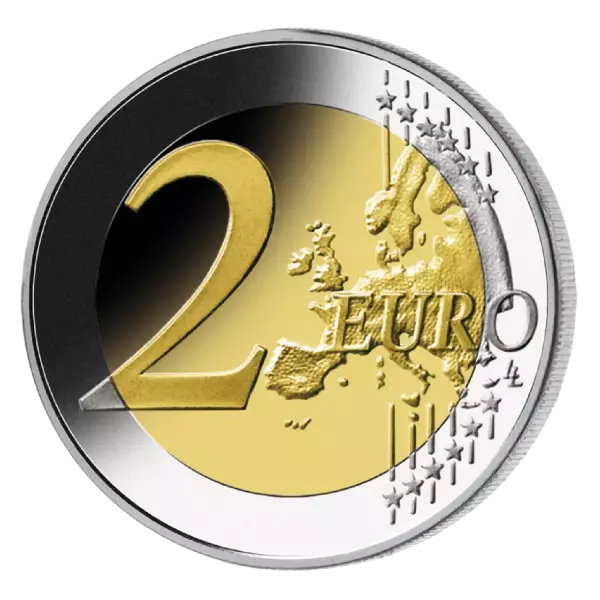
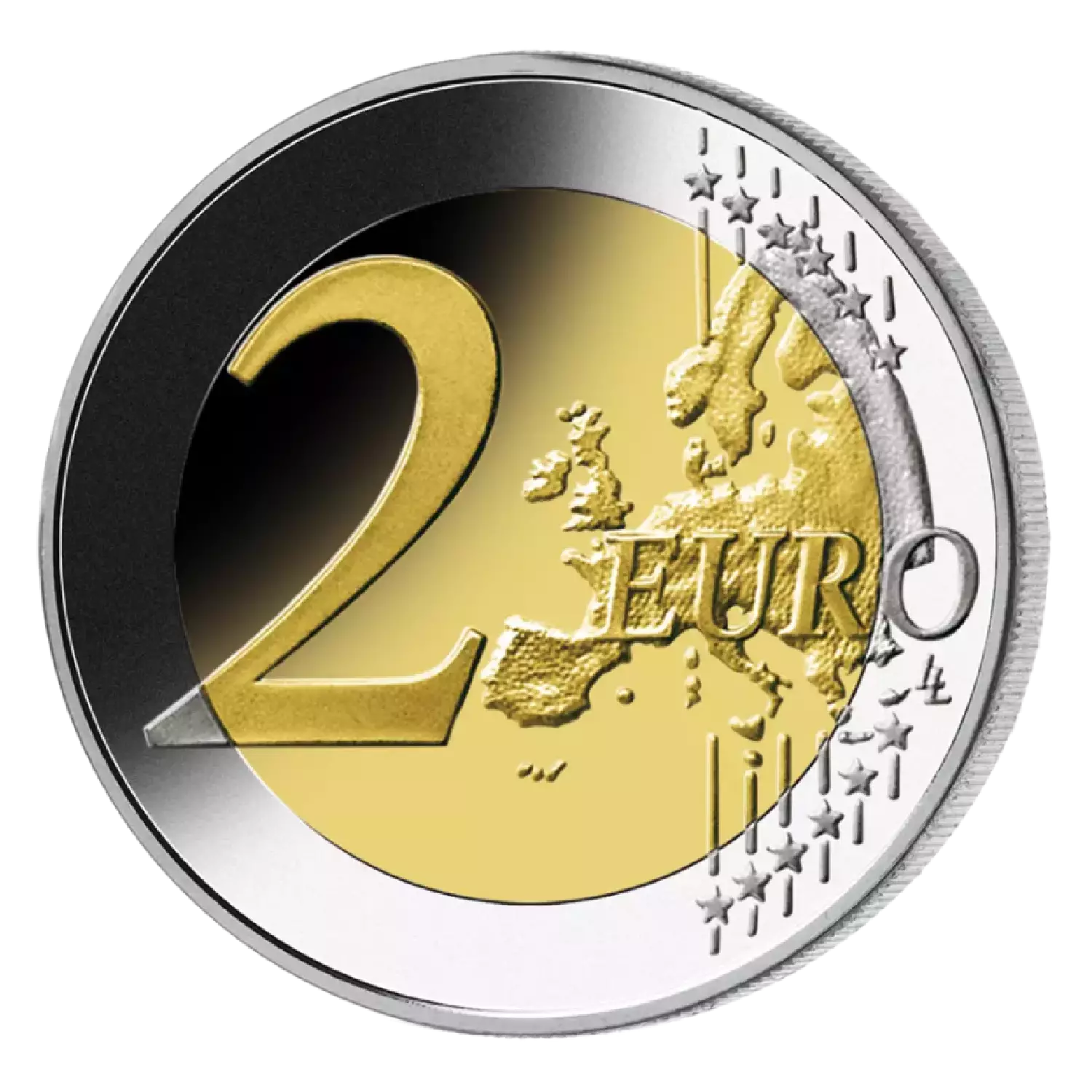
The reverse is the common side of the 2 euro coins of the second type, designed by Luc Luix. A map of Europe without internal borders, on the left is the denomination "2" and the inscription "EURO", on the right is the map. On the outer ring are the 12 stars of the EU. On the band is a groove with the inscription "2 ★ ★", repeated six times.
Historical context
The Royal Meteorological Institute of Belgium (Koninklijk Meteorologisch Instituut / Institut Royal Météorologique — KMI / IRM) was founded on 31 July 1913 by King Albert I. The institute is located in Uccle, a suburb of Brussels, together with the Royal Observatory and the Royal Belgian Institute for Space Aeronomy. The Meteorological Institute is responsible for daily weather forecasts in Belgium, climate observations, climate change research, air quality monitoring, ultraviolet radiation measurements and other atmospheric observations. The Institute is part of the World Meteorological Organization (WMO) and actively cooperates with the European meteorological services within the framework of EUMETSAT and ECMWF.