
Shopping Cart
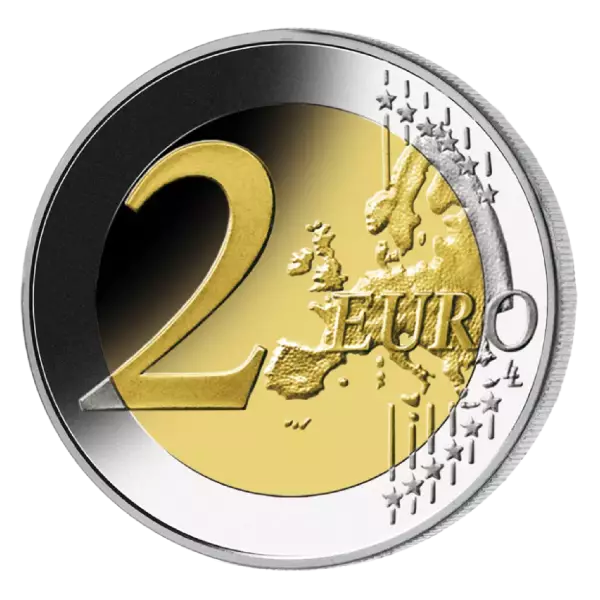

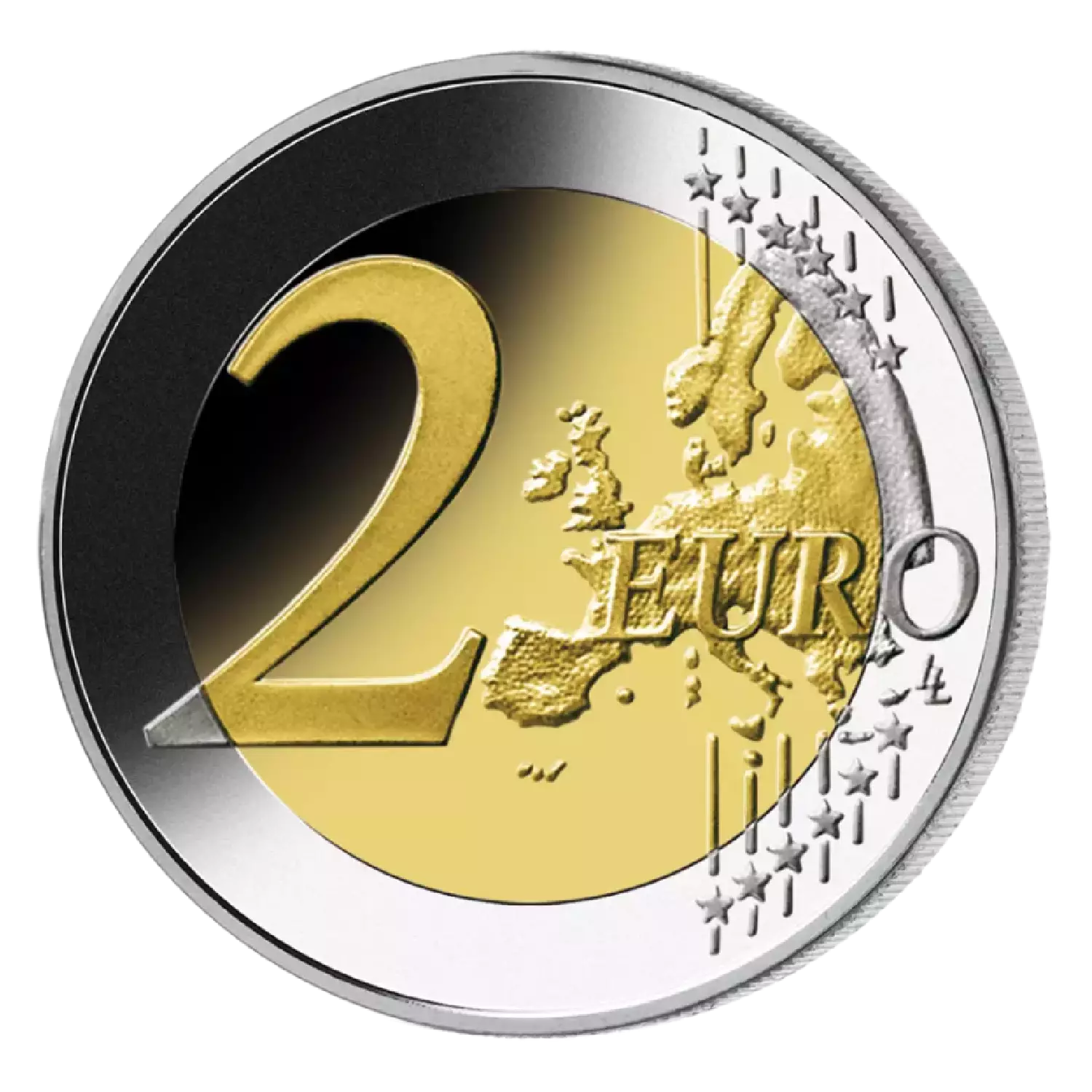
A joint 2 euro commemorative coin of the Kingdom of Belgium, issued in July 2015 to commemorate the 30th anniversary of the European flag. All 19 eurozone countries issued a coin with the same obverse design. The design was by Georgios Stamatopoulos of the Bank of Greece.
Obverse
The centre features the flag of the European Union, symbolising the unity of peoples and cultures. The twelve stars on the flag transform into human figures embracing the birth of a new Europe. The obverse also features the name of the country in the three official languages "BELGIE-BELGIQUE-BELGIEN" and the dates "1985–2015". The mintmarks and the mintmaster's marks are present. On the outer ring - 12 stars of the European Union.
Reverse
The reverse is the common side of the 2 euro coins of the second type, designed by Luc Luix. A map of Europe without internal borders, on the left - the denomination "2" and the inscription "EURO", on the right - the map. On the outer ring - 12 stars of the EU. On the band - a groove with the inscription "2 ★ ★", repeated six times.
Historical context
The flag of Europe - a circle of twelve golden five-pointed stars on a blue background - was adopted by the Council of Europe as its official symbol in 1955. The European Communities (the predecessor of the EU) adopted it as their flag on 29 June 1985 at a meeting of the European Council in Milan, at the proposal of the Adonnino Committee. The number of stars — 12 — is not related to the number of member states, but symbolizes perfection, completeness and unity. Belgium, as one of the founders of the European Communities and the country where the EU capital — Brussels — is located — actively supports European symbols. Today, the flag is the official symbol of the European Union.