
Shopping Cart
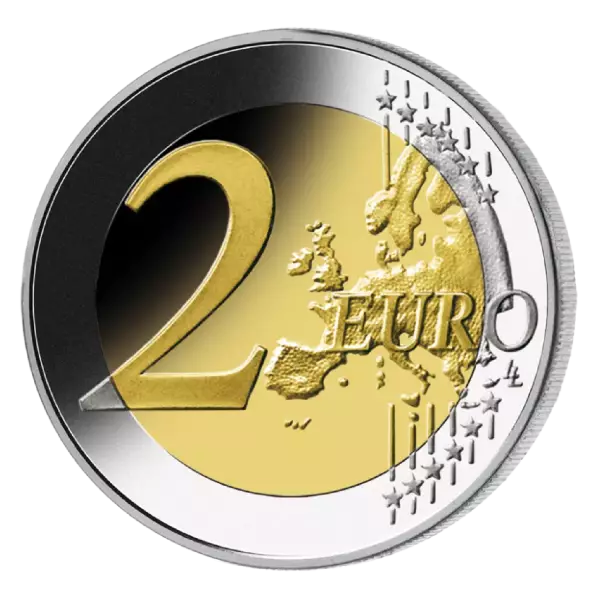

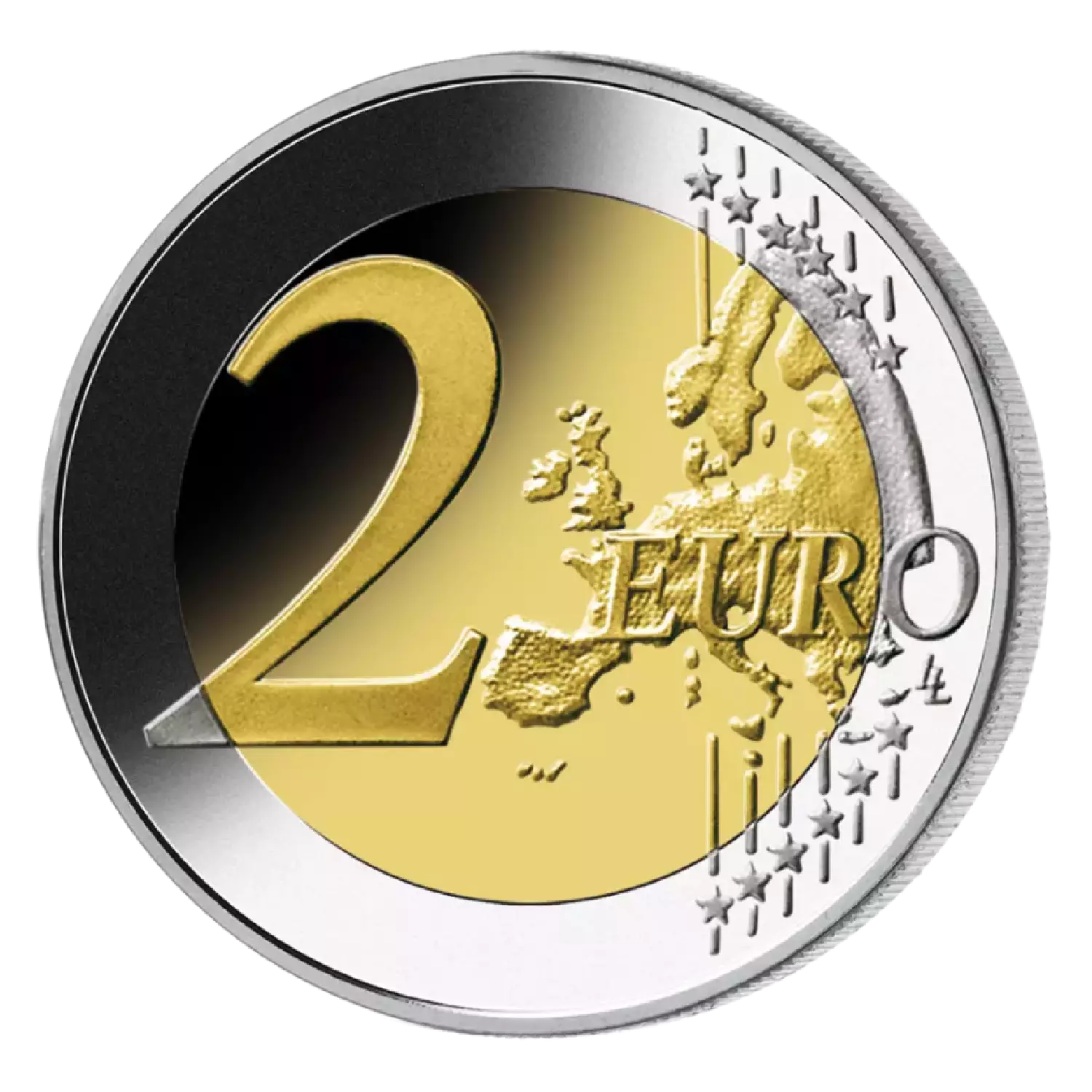
Commemorative coin of the Kingdom of Belgium, 2018. Dedicated to the 50th anniversary of the launch of the ESRO-2B / IRIS satellite. Bimetallic, diameter 25.75 mm, weight 8.5 g.
Obverse
The center of the coin depicts a stylized model of the ESRO-2B satellite in orbit above the globe, with stars and outer space in the background. Around it is the inscription "50 jaar ESRO-2B / 50 ans ESRO-2B" in Dutch and French. Also included is the country code "BE" and the year of issue "2018". The mintmarks (the head of the Archangel Michael) and the director are present. On the outer ring are the 12 stars of the European Union.
Reverse
The reverse is the common side of the 2 euro coins of the second type, designed by Luc Luix. A map of Europe without internal borders, on the left is the denomination "2" and the inscription "EURO", on the right is the map. On the outer ring are the 12 stars of the EU. On the band is a groove with the inscription "2 ★ ★", repeated six times.
Historical context
ESRO-2B (also known as IRIS - International Radiation Investigation Satellite) is a scientific satellite launched on 17 May 1968 from Vandenberg Air Force Base in California by a Scout launch vehicle. It was the first successfully launched satellite of the European Space Research Organization (ESRO) - the predecessor of the European Space Agency (ESA). The satellite's mission was to study cosmic radiation, including solar flares, cosmic rays and the Earth's radiation belts. The satellite operated until May 1971 and provided invaluable scientific data. Belgium was one of the 10 founding countries of ESRO in 1964 and an active participant in the European space program. Today, Belgium is a full member of ESA, and Brussels works closely with the agency on space projects, including the Galileo and Sentinel programs.