
Shopping Cart
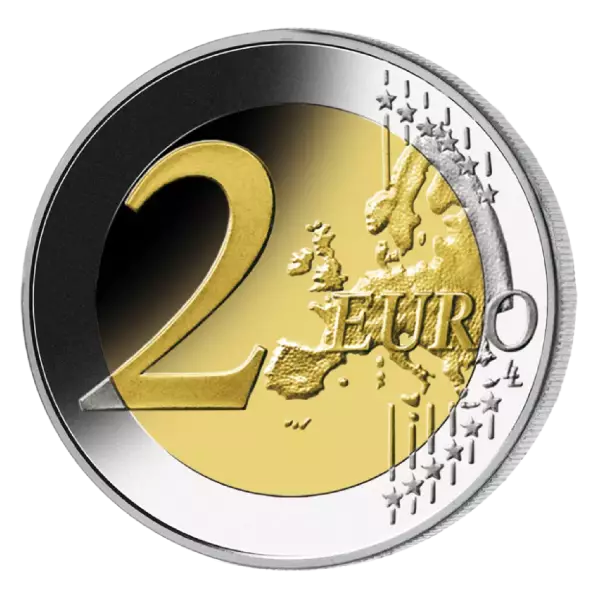

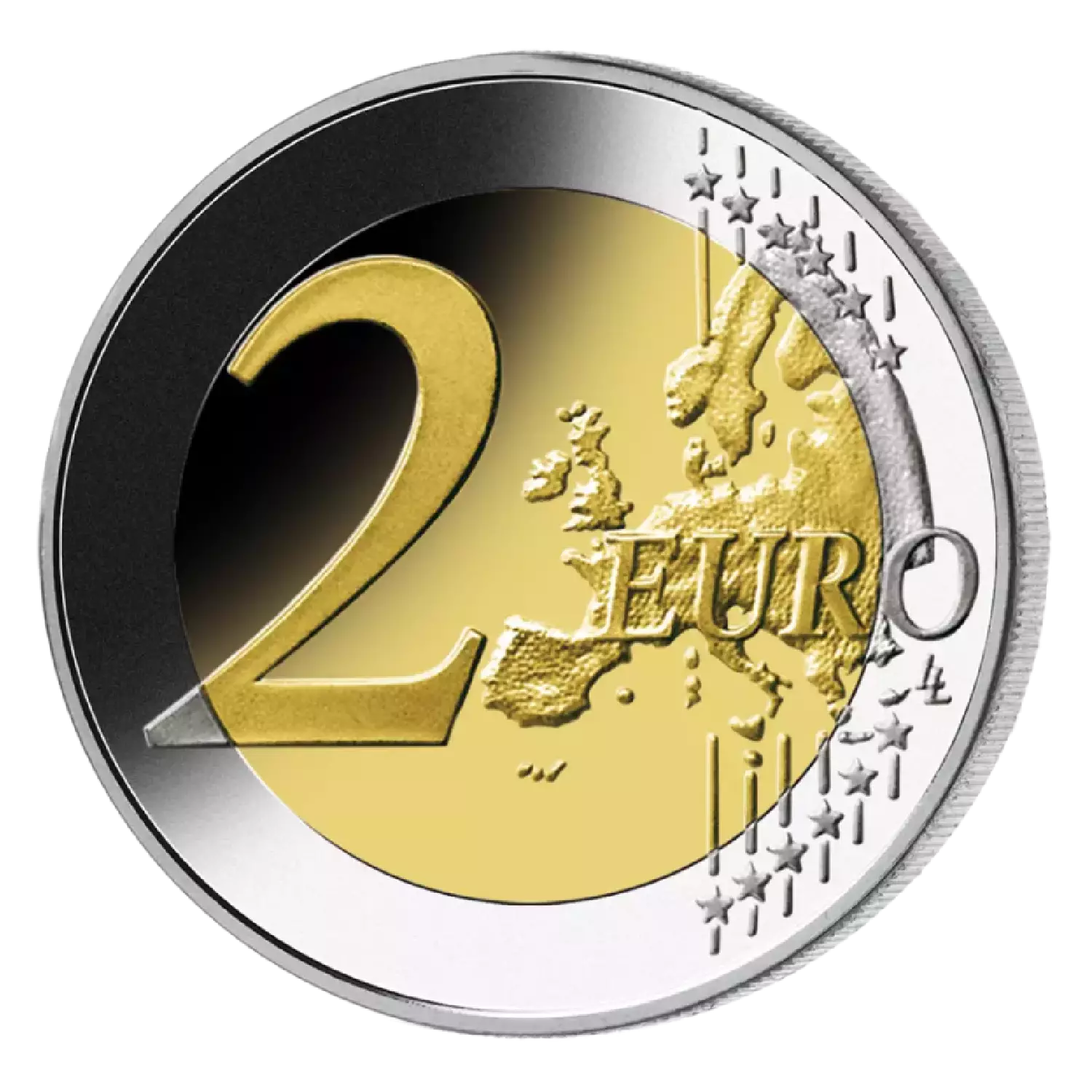
Commemorative coin of the Kingdom of Belgium, issued in 2019. Dedicated to the 25th anniversary of the creation of the European Monetary Institute (EMI). Bimetallic, diameter 25.75 mm, weight 8.5 g.
Obverse
In the left part of the obverse is the abbreviation "EMI", above it is the year "1994", referring to the date of the institution's foundation and the appointment of Lamfalussy as its first president. Below "EMI" are several coins falling on top of each other, with the inscriptions "€", "ECU" and "BEF" (Belgian franc) from top to bottom - symbolizing the transition of national currencies to the single European currency. At the top of the coin is the inscription "European Monetary Institute". On the right is a portrait of Alexandre Lamfalussy with a signature. Also - the year of issue "2019". Mint marks are present. On the outer ring - 12 EU stars.
Reverse
Reverse - the common side of the 2 euro coins of the second type, designed by Luc Luix. A map of Europe without internal borders, on the left - the denomination "2" and the inscription "EURO", on the right - a map. On the outer ring - 12 EU stars. On the band - a groove with the inscription "2 ★ ★", repeated six times.
Historical context
The European Monetary Institute (EMI) is a temporary institution established on 1 January 1994 in Frankfurt am Main to prepare for the introduction of a single European currency. The EMI, the predecessor of the European Central Bank (ECB), was responsible for coordinating the monetary policy of the EU member states and developing the legal, organizational and logistical framework for the future ECB. The first president of the EMI (1994–1997) was the Belgian economist Alexandre Lamfalussy (1929–2015), a prominent figure in European economic policy and the “father of the euro”. The EMI was dissolved on 1 June 1998 with the creation of the ECB, which took over all its functions. The introduction of the euro on 1 January 1999 was the culmination of the EMI’s work.