
Shopping Cart
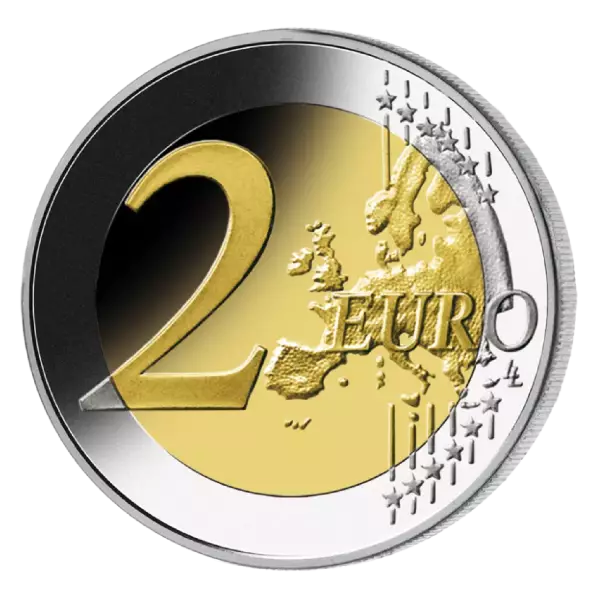

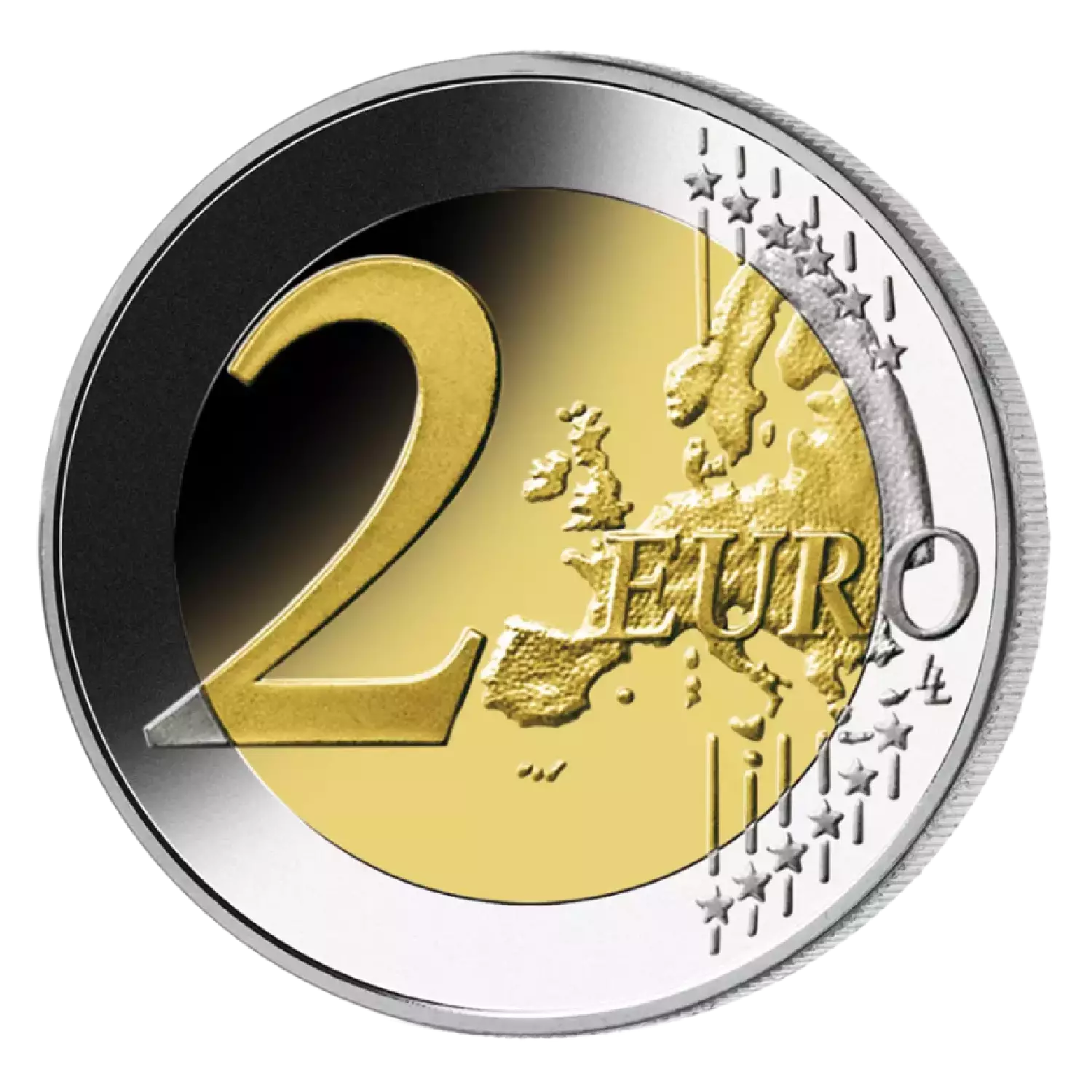
Commemorative coin of the Kingdom of Belgium, issued on October 15, 2020. Dedicated to the 630th anniversary of the birth of Jan van Eyck. Bimetallic, diameter 25.75 mm, weight 8.5 g.
Obverse
The right side of the coin depicts "Portrait of a Man in a Red Turban" (1433) - a work by Jan van Eyck, which many historians consider to be his self-portrait. On the left side are the inscription "J. van Eyck", his signature "Iohannes de Eyck" (taken from the painting "Portrait of the Arnolfini Couple" of 1434) and the artist's palette with the initials of the coin's author "LL" (Luc Luiks). Below are the marks of the Netherlands Mint in Utrecht (caduceus) and the mint director Ingrid van Herzele. On the right edge - the country code "BE" and the year "2020". On the outer ring - 12 stars of the European Union.
Reverse
The reverse is the common side of the 2 euro coins of the second type, designed by Luc Luix. A map of Europe without internal borders, on the left - the denomination "2" and the inscription "EURO", on the right - a map. On the outer ring - 12 stars of the EU. On the band - a groove with the inscription "2 ★ ★", repeated six times.
Historical context
Jan van Eyck (c. 1390 - July 9, 1441) - an outstanding Flemish artist of the early Northern Renaissance, a native of Maaseik (modern Belgium), one of the creators of the Netherlandish school of painting. He worked at the court of Philip III the Good, Duke of Burgundy. He is considered the inventor (or at least the perfecter) of the oil painting technique in Northern Europe, which allowed him to achieve unprecedented realism and detail. His most famous works are the Ghent Altarpiece (1432), created together with his brother Hubert, the Arnolfini Portrait (1434) and the Portrait of a Man in a Red Turban (1433), which is considered a self-portrait of the artist. His work influenced the development of Western European painting for centuries to come.