
Shopping Cart
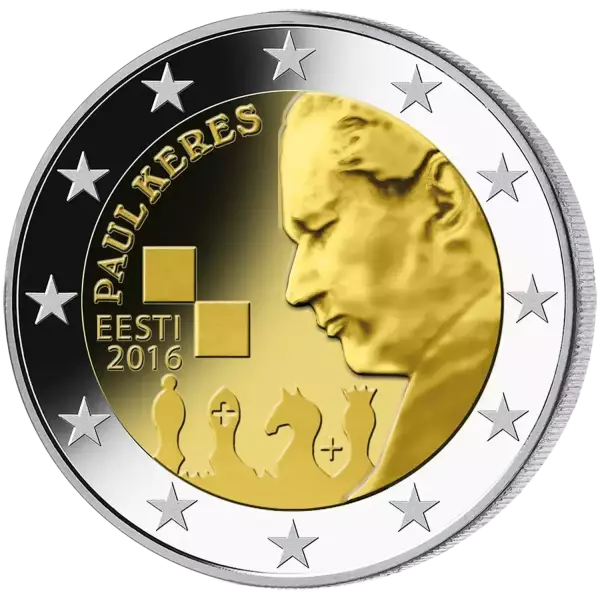


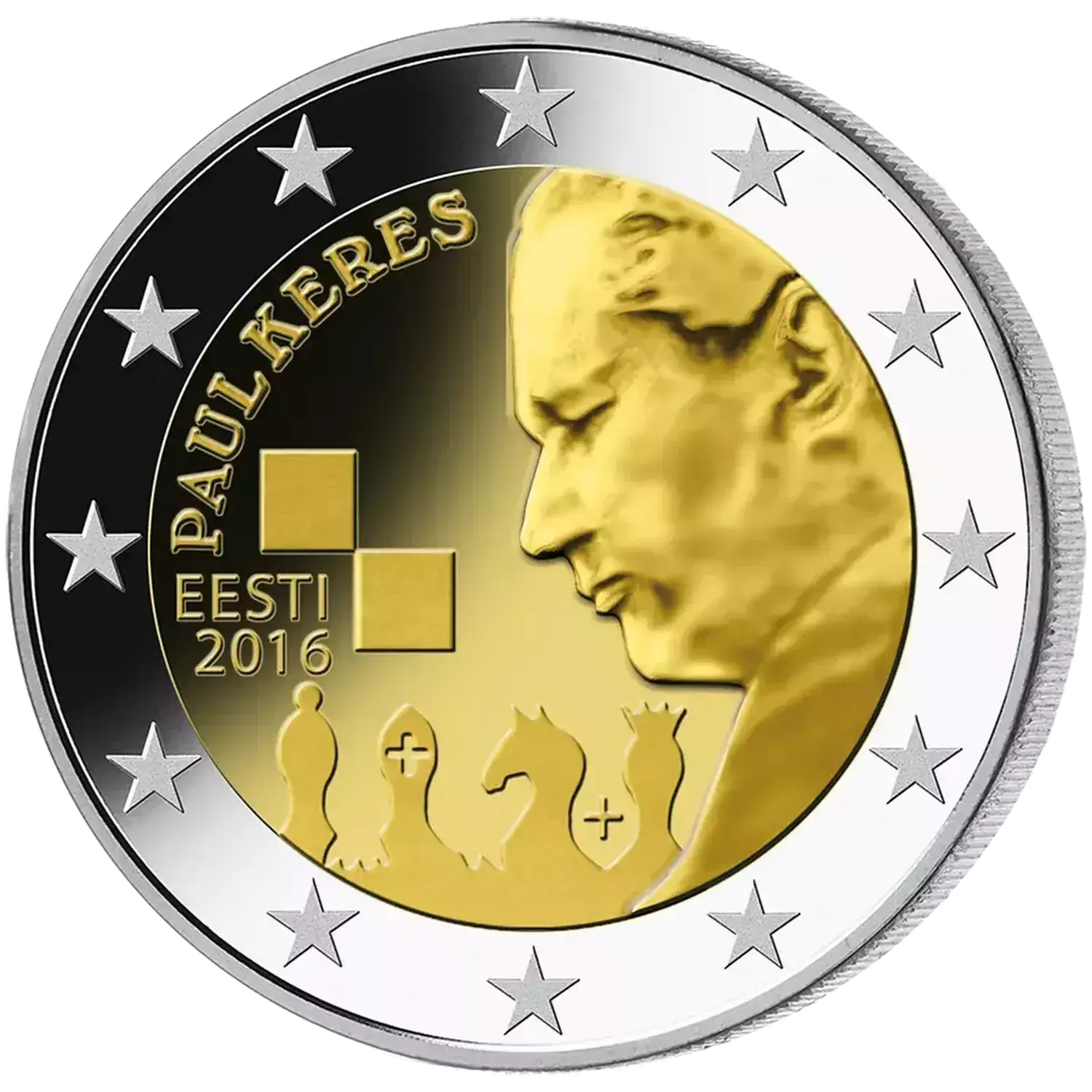
A 2 euro commemorative coin of the Republic of Estonia, issued in 2016 in a circulation of 500,000 copies. Dedicated to the 100th anniversary of the birth of Paul Keres. The author of the design is Mati Veelmaa. Bimetallic, diameter 25.75 mm, weight 8.5 g.
Overse
The center of the coin depicts a portrait of Paul Keres, a great Estonian chess player of the 20th century. The composition includes a chessboard or chess pieces symbolizing his life's calling. Around, in a circle, is an inscription in Estonian: "PAUL KERES 100" and the name of the issuing country "EESTI 2016". Next to it are the years "1916-1975" and the mark of the Estonian Mint. On the outer ring are the 12 stars of the European Union.
Reverse
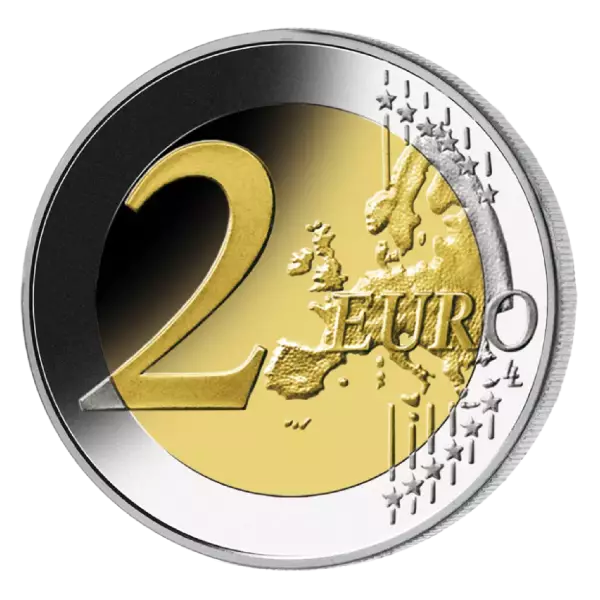
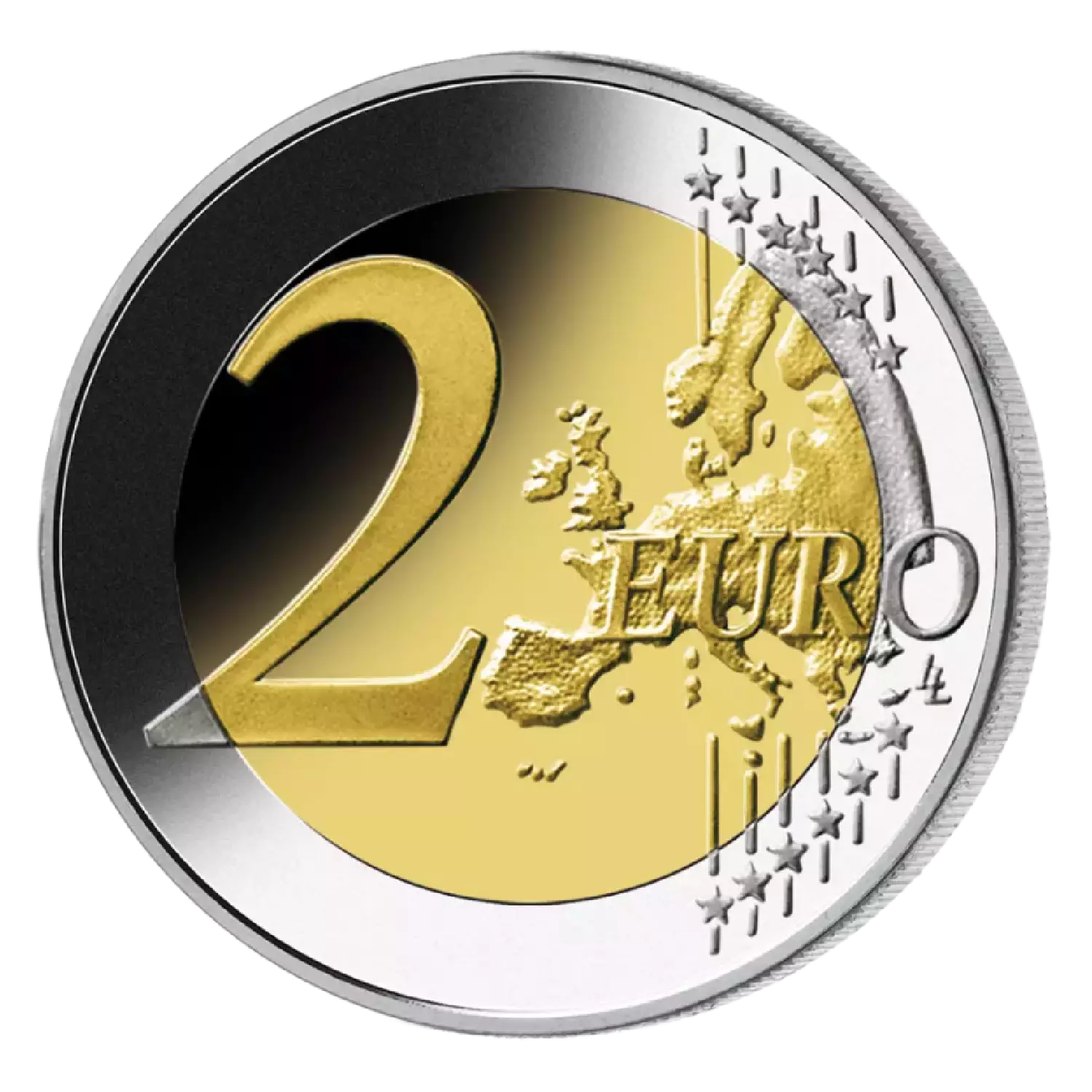
The reverse is the common side of the 2 euro coins of the second type, designed by Luc Luix. It depicts a map of Europe as a single continent without internal borders. On the left is a large denomination "2" and the inscription "EURO", on the right is a map. On the outer ring are the 12 stars of the EU.
Historical context
Paul Keres (1916-1975) is one of the strongest chess players of the 20th century, a grandmaster from Estonia, a national hero. He was born on January 7, 1916 in Narva (then the Russian Empire). At the age of 13, he received the republican title of Estonia. In 1935, he won the tournament in Warsaw at the age of 19, and in 1938, he won the prestigious EURO tournament in Holland with Reuben Fine, which effectively meant the right to challenge the world champion. The planned match with Alexander Alekhine did not take place due to World War II. Keres took 2nd place in the tournaments of candidates for the chess crown 4 times (1953, 1956, 1959, 1962), becoming a symbol of the "forever second" Soviet grandmaster. 8-time champion of the USSR, participant in many international tournaments. Won matches against many future champions. Died on June 5, 1975 in Helsinki from a heart attack. In Estonia, chess is a national game, and Keres remains the most respected sports figure in the country.