
Shopping Cart
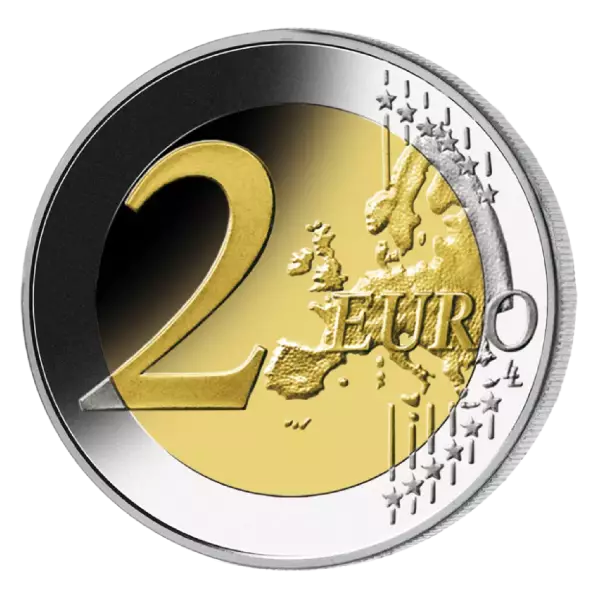

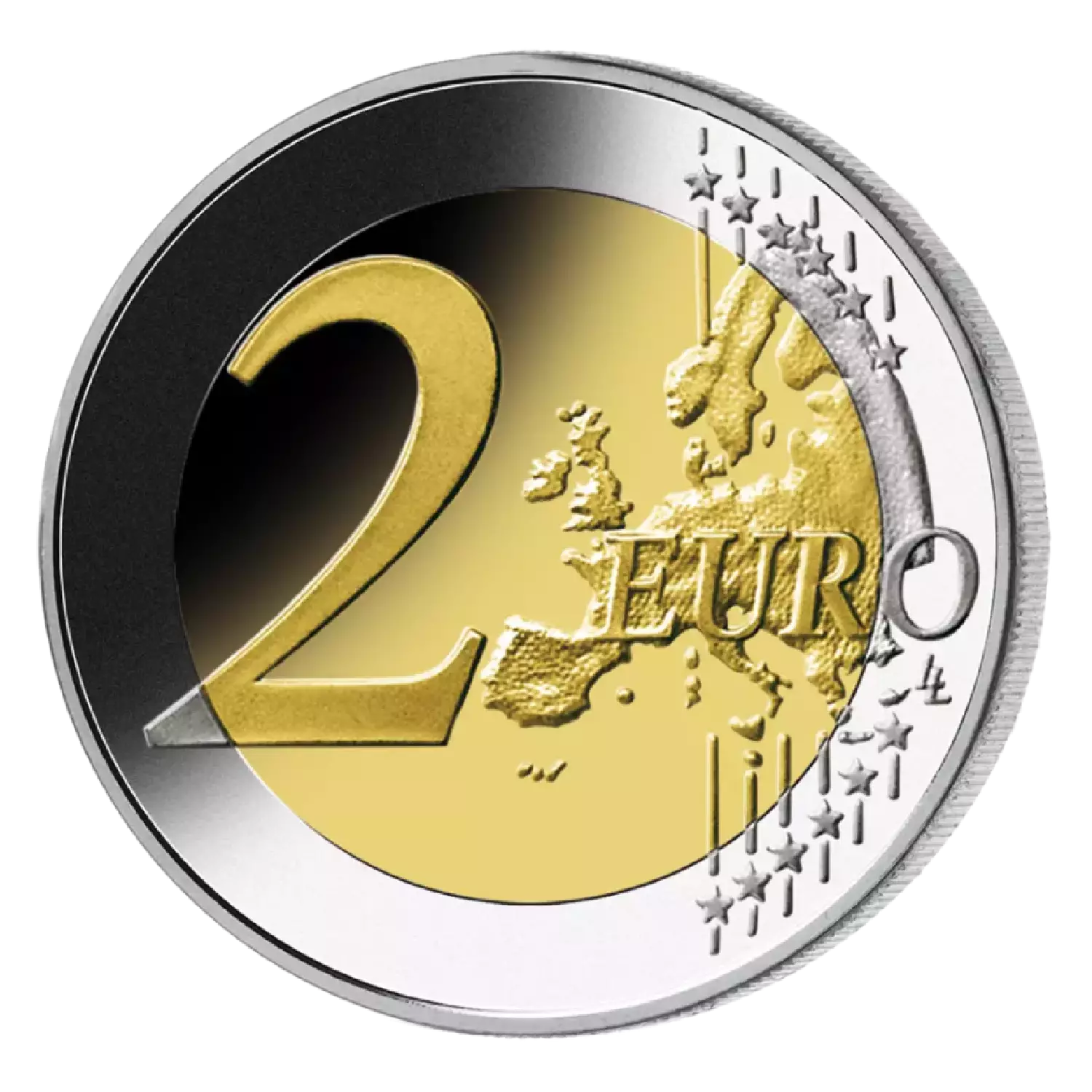
Joint commemorative 2 euro coin of the Republic of Estonia, issued in 2018 in a circulation of 500,000 copies as part of a tripartite series of the three Baltic countries (Estonia, Latvia, Lithuania) in honor of the 100th anniversary of their independence. The author of the joint design is Eustas Petrulis (Lithuania), selected in an international competition. Bimetallic, diameter 25.75 mm, weight 8.5 g. Minted at the Mint of Lithuania.
Obverse
The center of the coin depicts a stylized composition of the three Baltic countries — Estonia, Latvia, and Lithuania — in the form of a braided braid, symbolizing the trinity, common history, and destiny of the three states. The three intertwined lines are reminiscent of the historical solidarity of the Baltic countries, which they demonstrated during the Baltic Way in 1989. Around the composition are the inscription: "EESTI LATI LEEDU" (Estonia, Latvia, Lithuania in Estonian) and the years "1918-2018". The Lithuanian Mint mark. On the outer ring are the 12 stars of the European Union.
Reverse
The reverse is the common side of the 2 euro coins of the second type, designed by Luc Luix. It depicts a map of Europe as a single continent without internal borders. On the left is a large denomination "2" and the inscription "EURO", on the right is a map. On the outer ring are the 12 stars of the European Union. The band is finely fluted and has a national inscription.
Historical context
The three Baltic countries — Estonia, Latvia, and Lithuania — gained independence at the end of World War I in 1918: Lithuania — February 16, Estonia — February 24, Latvia — November 18. All three went through the Wars of Independence (1918-1920) against Soviet Russia and German volunteer formations, gaining recognition after the Riga, Tartu, and Moscow Peace Treaties. In 1940, all three were occupied by the USSR as part of the Molotov-Ribbentrop Pact of 1939. During the "singing revolution" of 1988-1991, the countries regained their independence: Estonia on August 20, 1991, Latvia on August 21, 1991, and Lithuania on March 11, 1990. A well-known symbol of solidarity was the Baltic Way on August 23, 1989, a human chain of 2 million people 675 km long. All three countries joined NATO and the EU in 2004, and the eurozone — Estonia in 2011, Latvia in 2014, and Lithuania in 2015.