
Shopping Cart
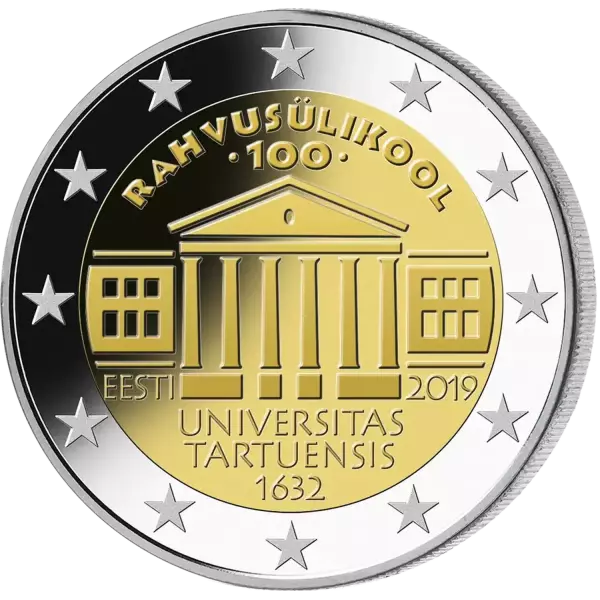
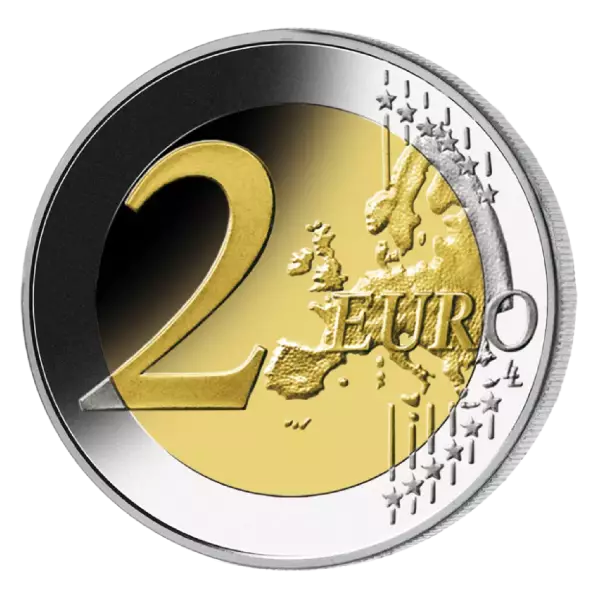


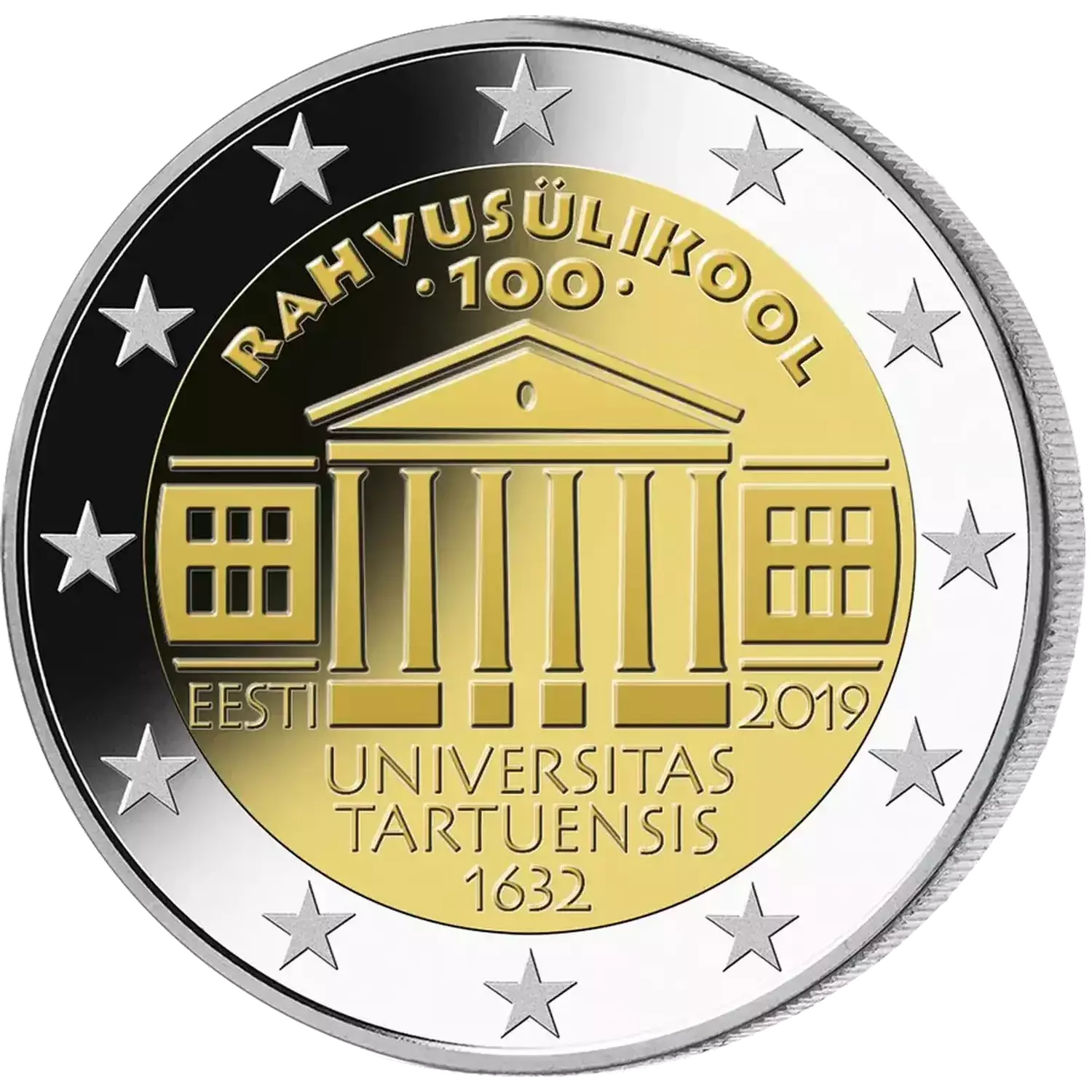
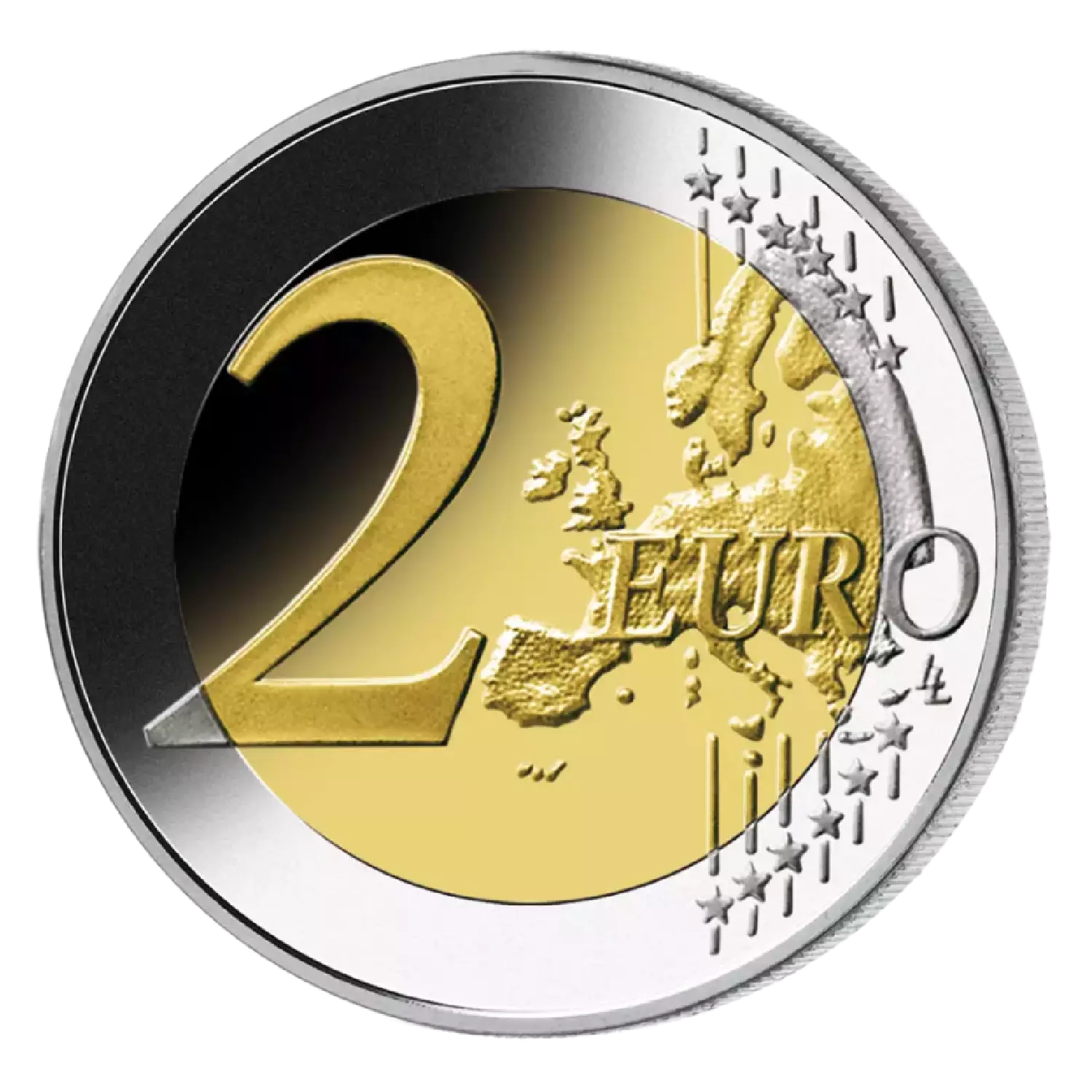
2 euro commemorative coin of the Republic of Estonia, issued in 2019 in a circulation of 1,000,000 copies. Dedicated to the 100th anniversary of the Estonian-speaking University of Tartu. Bimetallic, diameter 25.75 mm, weight 8.5 g.
Obverse
The center of the coin depicts the stylized logo of the University of Tartu, the oldest and most prestigious higher education institution in Estonia. The logo consists of the abbreviation "UT" together with characteristic classical elements. Around it are the inscriptions "TARTU ÜLIKOOL 100" (University of Tartu 100 years) and "EESTI 2019". Mintmark of the Estonian Mint. On the outer ring - 12 stars of the European Union.
Reverse
The reverse is the common side of the 2 euro coins of the second type, designed by Luc Luix. It depicts a map of Europe as a single continent without internal borders. On the left - a large denomination "2" and the inscription "EURO", on the right - a map. On the outer ring - 12 stars of the European Union. The band - with fine ribbing and national inscription.
Historical context
The University of Tartu (Academia Gustaviana, Tartu Ülikool) is the oldest and largest university in Estonia, one of the most important scientific and educational centers in Northeastern Europe. It was founded on June 30, 1632 by the Swedish King Gustav II Adolf in the city of Dorpat (now Tartu) as the second university in the Kingdom of Sweden after Uppsala. The university has experienced several relocations (including to Pärnu in 1699-1710), suspensions and restorations. After Estonia became part of the Russian Empire (1710), it operated in 1802-1918 as the Imperial Dorpat University. On December 1, 1919, after the restoration of Estonia's independence, the University was officially reorganized into the national University of Tartu with teaching in Estonian - this was a turning point in the cultural history of Estonia. Today, more than 13 thousand students study here, and almost all fields of science are taught. The university is among the top 500 in the world.