
Shopping Cart
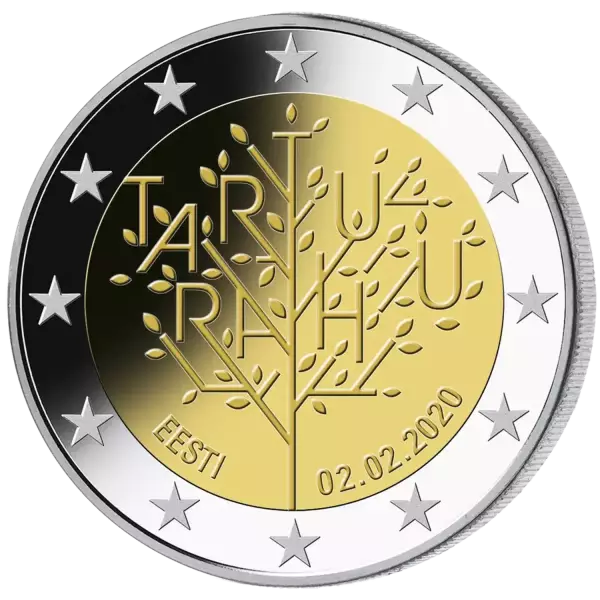
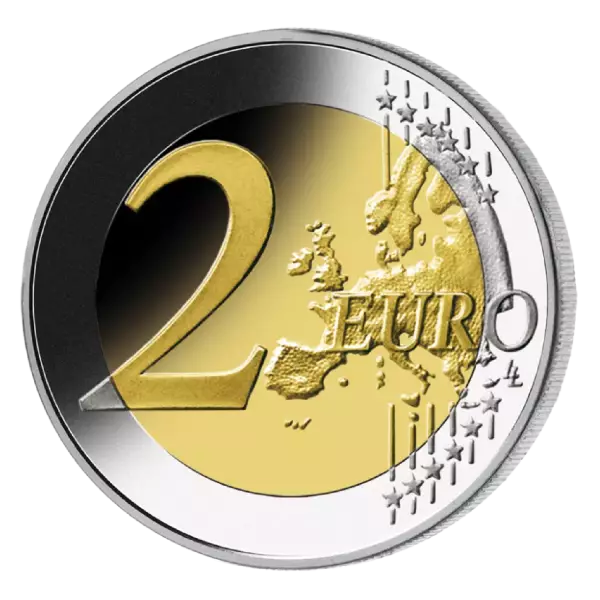


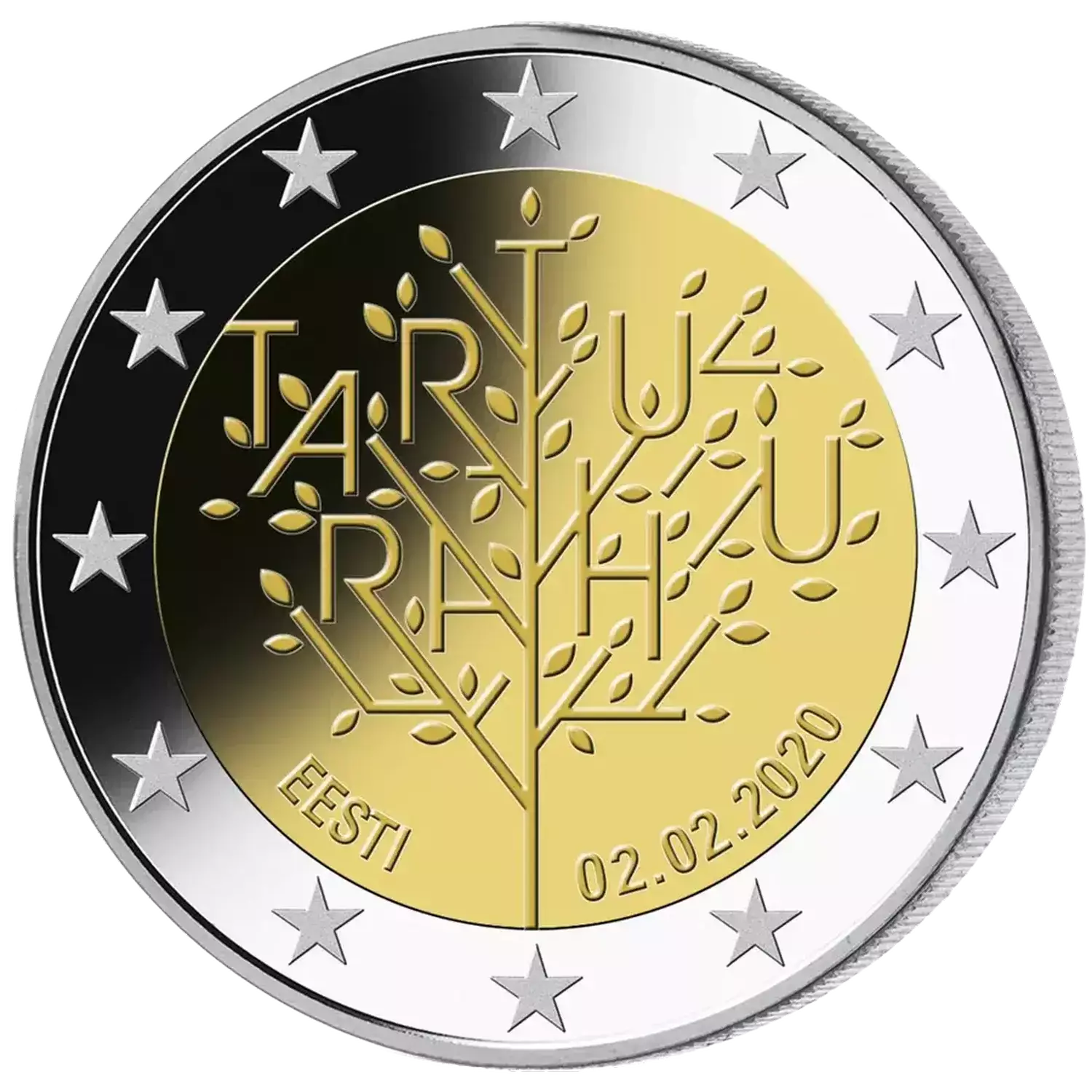
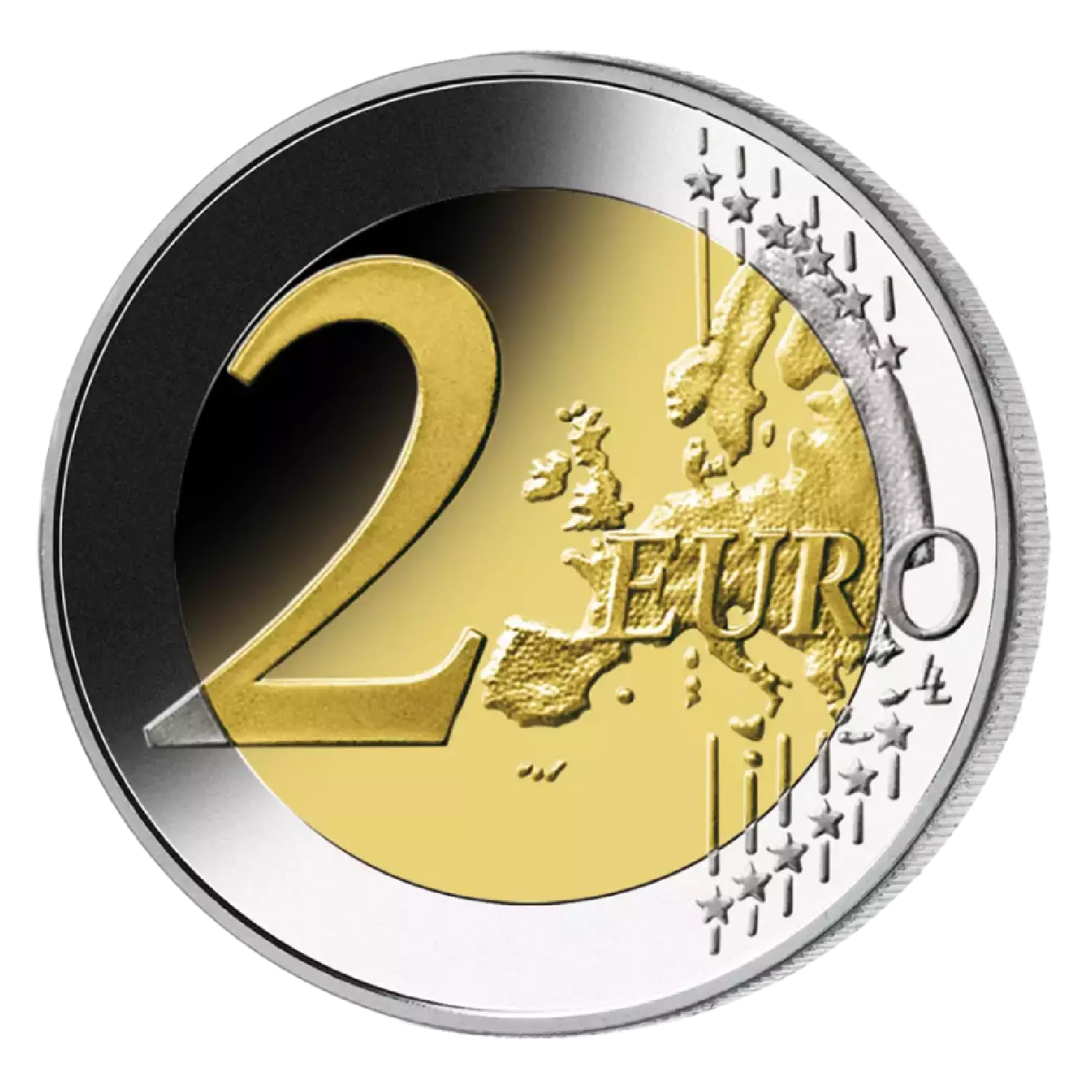
2 euro commemorative coin of the Republic of Estonia, issued in 2020 in a circulation of 1,000,000 copies. Dedicated to the 100th anniversary of the Tartu Peace Treaty. Bimetallic, diameter 25.75 mm, weight 8.5 g.
Obverse
The center of the coin depicts a symbolic composition of the Tartu Peace Treaty - possibly with a stylized document, a dove of peace and silhouettes of the city of Tartu. Around it is an inscription in Estonian: "TARTU RAHULEPING" (Tartu Peace Treaty), "EESTI" and the years "1920-2020". The Estonian Mint mark. On the outer ring are the 12 stars of the European Union.
Reverse
The reverse is the common side of the 2 euro coins of the second type, designed by Luc Luiks. Depicts a map of Europe as a single continent without internal borders. On the left is a large denomination "2" and the inscription "EURO", on the right is a map. On the outer ring are the 12 stars of the European Union. The band is finely fluted and has a national inscription.
Historical context
The Treaty of Tartu is a peace treaty between the Republic of Estonia and the Russian Soviet Federative Socialist Republic, signed on February 2, 1920 in Tartu (Estonia), which ended the Estonian War of Independence (1918-1920). The treaty was the first international peace treaty in history signed by Soviet Russia. The Russian delegation was headed by Adolf Joffe, the Estonian delegation by Jaan Poska. According to the treaty, the RSFSR "unconditionally" recognized the independence of Estonia "for all time", renounced sovereign rights to Estonian territories. The treaty defined the Estonian-Russian border (Narova-Paanvar-Vastselina) and provided for a number of economic concessions to Estonia, including 15 million rubles in gold. The treaty ensured peace between the two countries for 20 years until the Soviet occupation of Estonia in 1940. For Estonia, the Treaty of Tartu remains a symbol and legal basis of national statehood, and its 100th anniversary was celebrated throughout the country with large-scale events.