
Shopping Cart


2 euro commemorative coin of the Republic of Estonia, issued in 2020 in a circulation of 750,000 copies. Dedicated to the 200th anniversary of the discovery of Antarctica. Bimetallic, diameter 25.75 mm, weight 8.5 g.
Overse
The center of the coin depicts a stylized map of Antarctica, the continent discovered by the Russian expedition of Admiral Bellingshausen. The design resembles a map that explorers in 1820 might have seen. Around, in a circle, are the inscriptions: "ANTARKTIKA AVASTAMINE" (Discovery of Antarctica) and "EESTI 2020". Years "1820-2020". Mark of the Estonian Mint. On the outer ring - 12 stars of the European Union.
Reverse
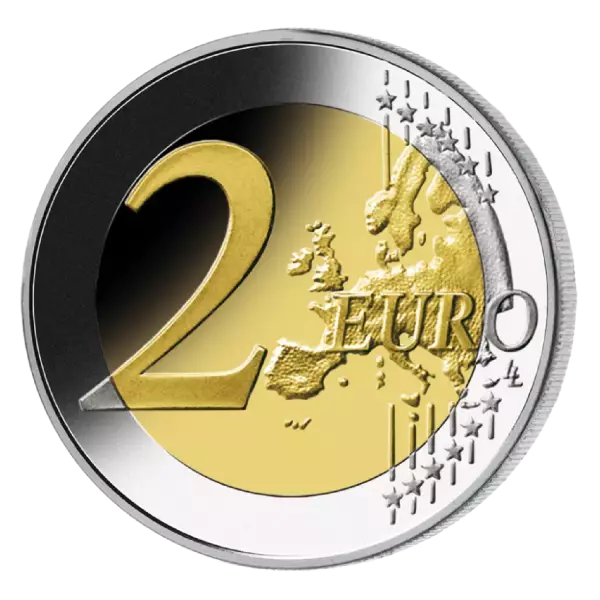
The reverse is the common side of the 2 euro coins of the second type, designed by Luc Luix. It depicts a map of Europe as a single continent without internal borders. On the left - a large denomination "2" and the inscription "EURO", on the right - a map. On the outer ring - 12 stars of the European Union. The edge - with fine ribbing and a national inscription.
Historical context
The discovery of Antarctica took place on January 28, 1820, when a Russian scientific expedition under the command of Fabian Gottlieb von Bellingshausen (1778-1852) on the sloops "Vostok" and "Mirny" first saw the Antarctic continent - the Princess Martha Ice Shelf. Bellingshausen was born in Pillguz on the island of Ösel (now Saaremaa, Estonia), then part of the Russian Empire. From 1803 to 1806, he participated in the first Russian circumnavigation of the globe by Kruzenshtern. The Antarctic expedition of 1819–1821, organized by Alexander I, aimed to explore the high southern latitudes. The sloop Mirny under the command of Mikhail Lazarev and Bellingshausen's Vostok made a unique voyage, surveying a vast part of the Southern Ocean and confirming the existence of a southern continent. The discovery of Antarctica is a significant event in the history of geography and a symbol of the Estonian contribution to world maritime exploration.