
Shopping Cart
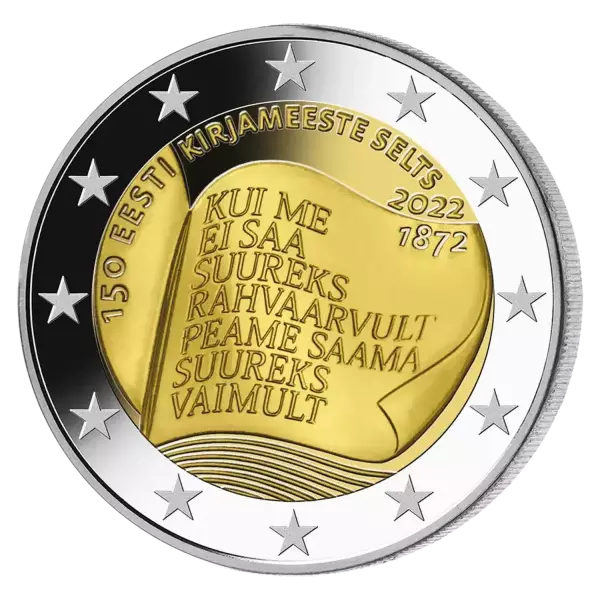


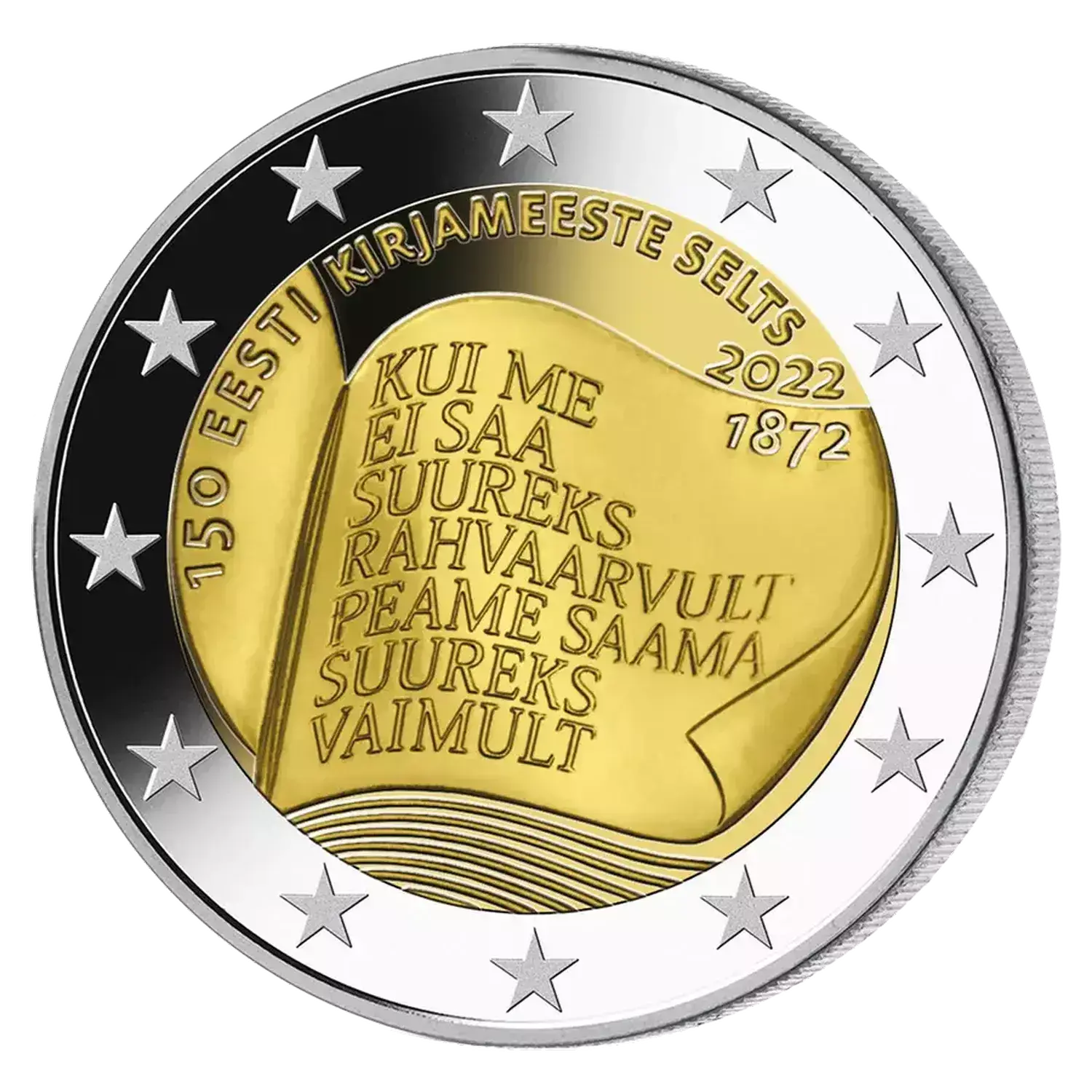
A 2 euro commemorative coin of the Republic of Estonia, issued in 2022 in a circulation of 500,000 copies. Dedicated to the 150th anniversary of the Estonian Literary Society. Bimetallic, diameter 25.75 mm, weight 8.5 g.
Overse
The center of the coin depicts a stylized open book - a symbol of literature and written culture. Historical elements - a quill, an inkwell, Estonian folk motifs - may also be depicted. Around, in a circle, the inscription "EESTI KIRJAMEESTE SELTSI 150" (150 years of the Estonian Literary Society) and "EESTI 2022" are placed. The Estonian Mint mark. On the outer ring are the 12 stars of the European Union.
Reverse
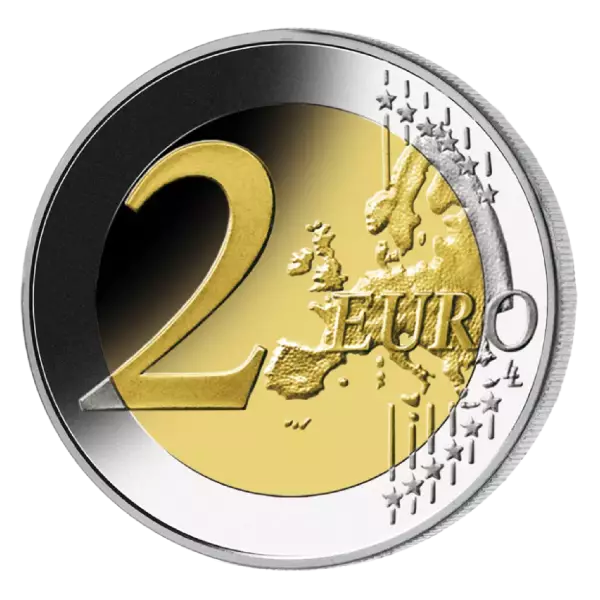
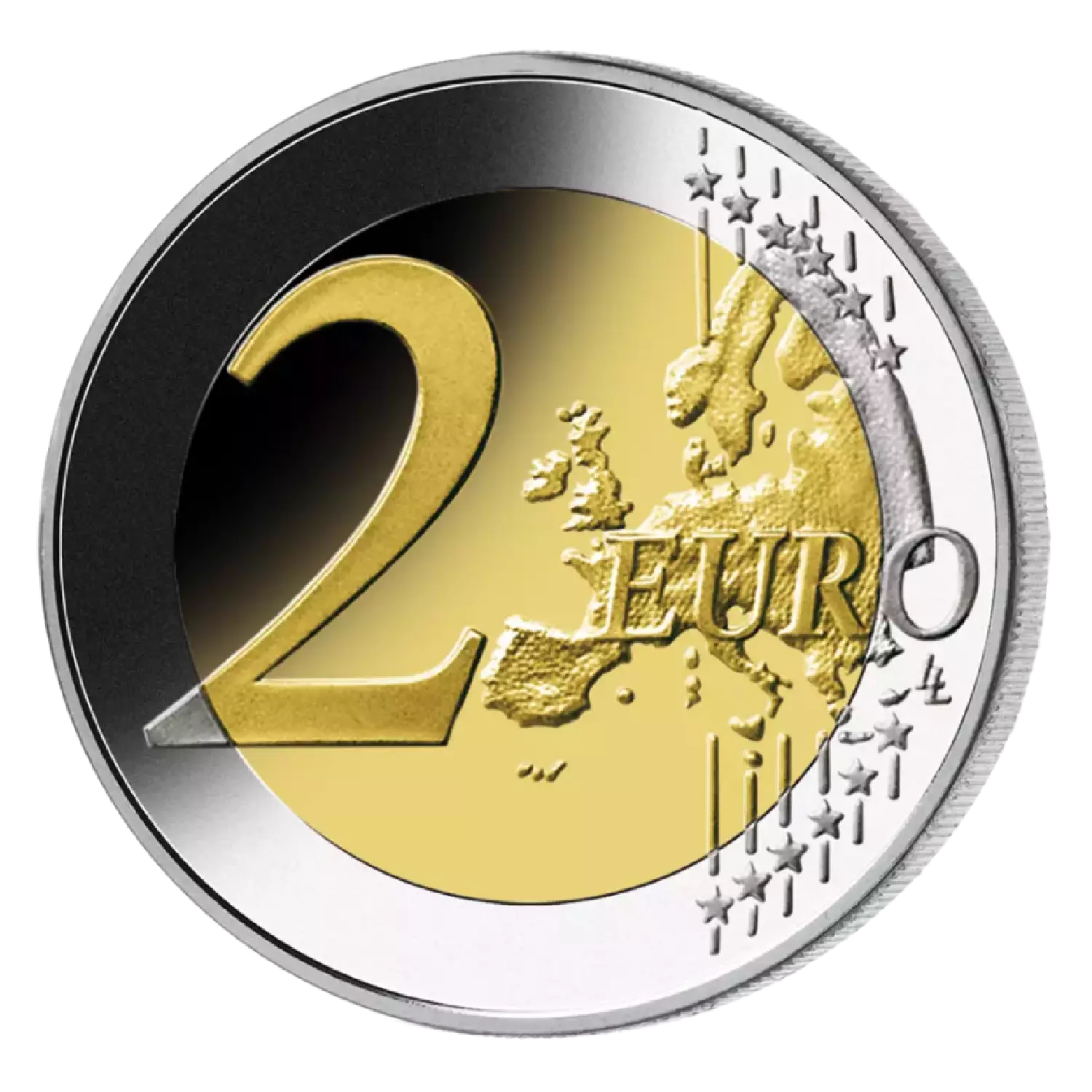
The reverse is the common side of the 2 euro coins of the second type, designed by Luc Luiks. It depicts a map of Europe as a single continent without internal borders. On the left is a large denomination "2" and the inscription "EURO", on the right is a map. On the outer ring are the 12 stars of the European Union. The band is with fine ribbing and a national inscription.
Historical context
The Estonian Literary Society (Eesti Kirjameeste Selts, EKmS) is the first national cultural society of Estonia, founded on 29 March 1872 in Tartu during an important stage of the Estonian national awakening. Among the founders were Jakob Hurt, Karl Robert Jakobson, Mihkel Veski, Johann Köler and other key figures of the Estonian intelligentsia of the time. The society was engaged in the development and standardization of the Estonian literary language, the publication of books and newspapers in Estonian, the collection and publication of folk folklore, and the popularization of Estonian history and education. The society published the newspaper "Eesti Kirjamees", prepared dictionaries and textbooks. In 1893, the society was dissolved by the tsarist authorities as "politically suspicious". It was revived in 1907 as the Estonian Literature Society (Eesti Kirjanduse Selts), which continues to operate to this day. The legacy of the EKmS is a fundamental contribution to the formation of modern Estonian literary culture.