
Shopping Cart
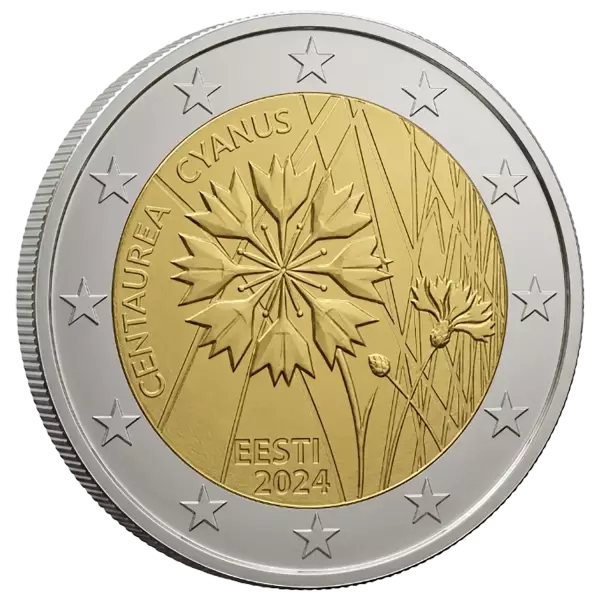


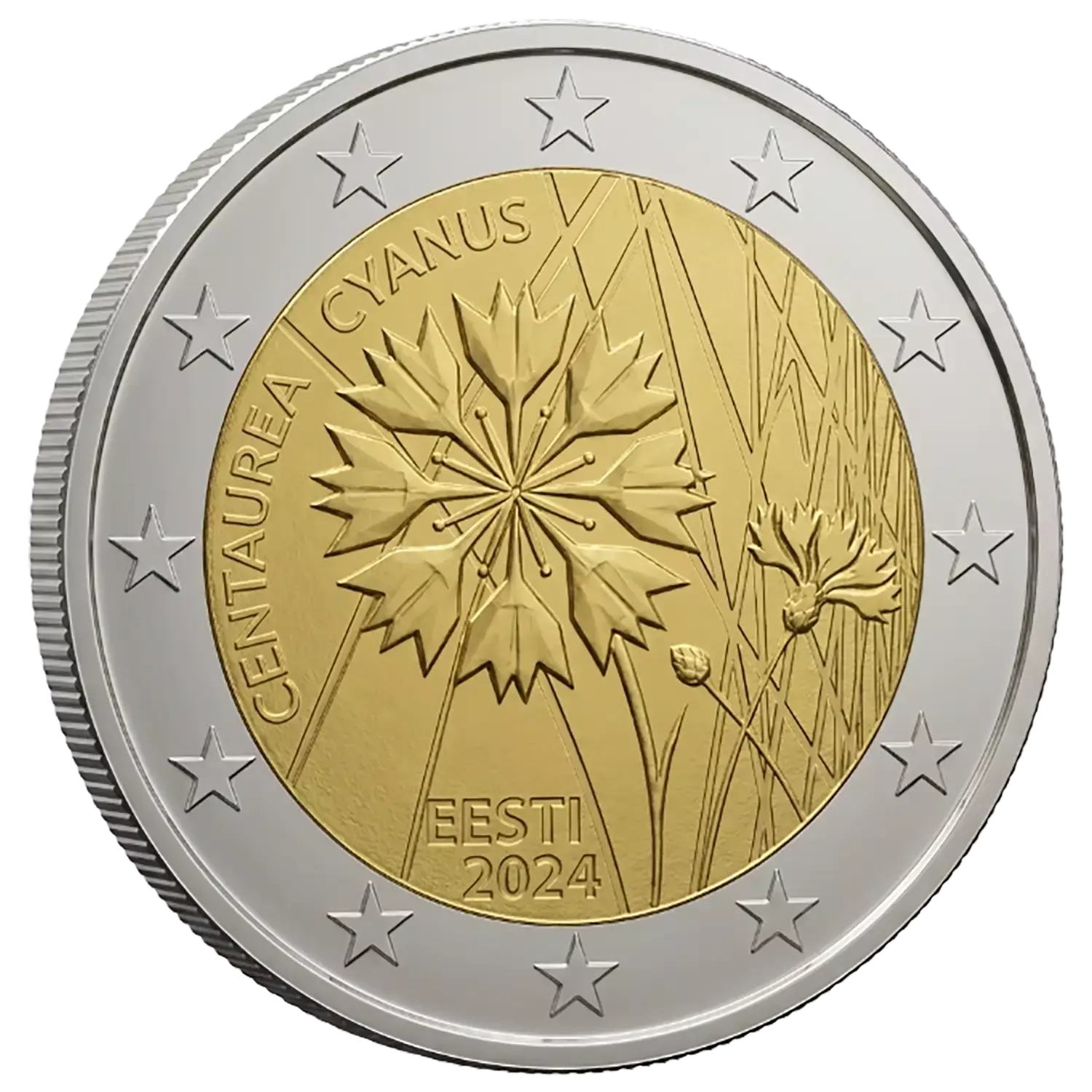
2 euro commemorative coin of the Republic of Estonia, issued in 2024 in a circulation of 500,000 copies. Coin from the series "National Symbols of Estonia", dedicated to the cornflower. Bimetallic, diameter 25.75 mm, weight 8.5 g.
Overse
The center of the coin depicts a stylized blue cornflower (Centaurea cyanus) - the national flower of Estonia. The composition conveys the tenderness and characteristic rounded shape of the flower with thin petals. Around, in a circle, the inscription "RUKKILILL" (cornflower in Estonian) and "EESTI 2024" are placed. Mintmark of the Estonian Mint. On the outer ring - 12 stars of the European Union.
Reverse
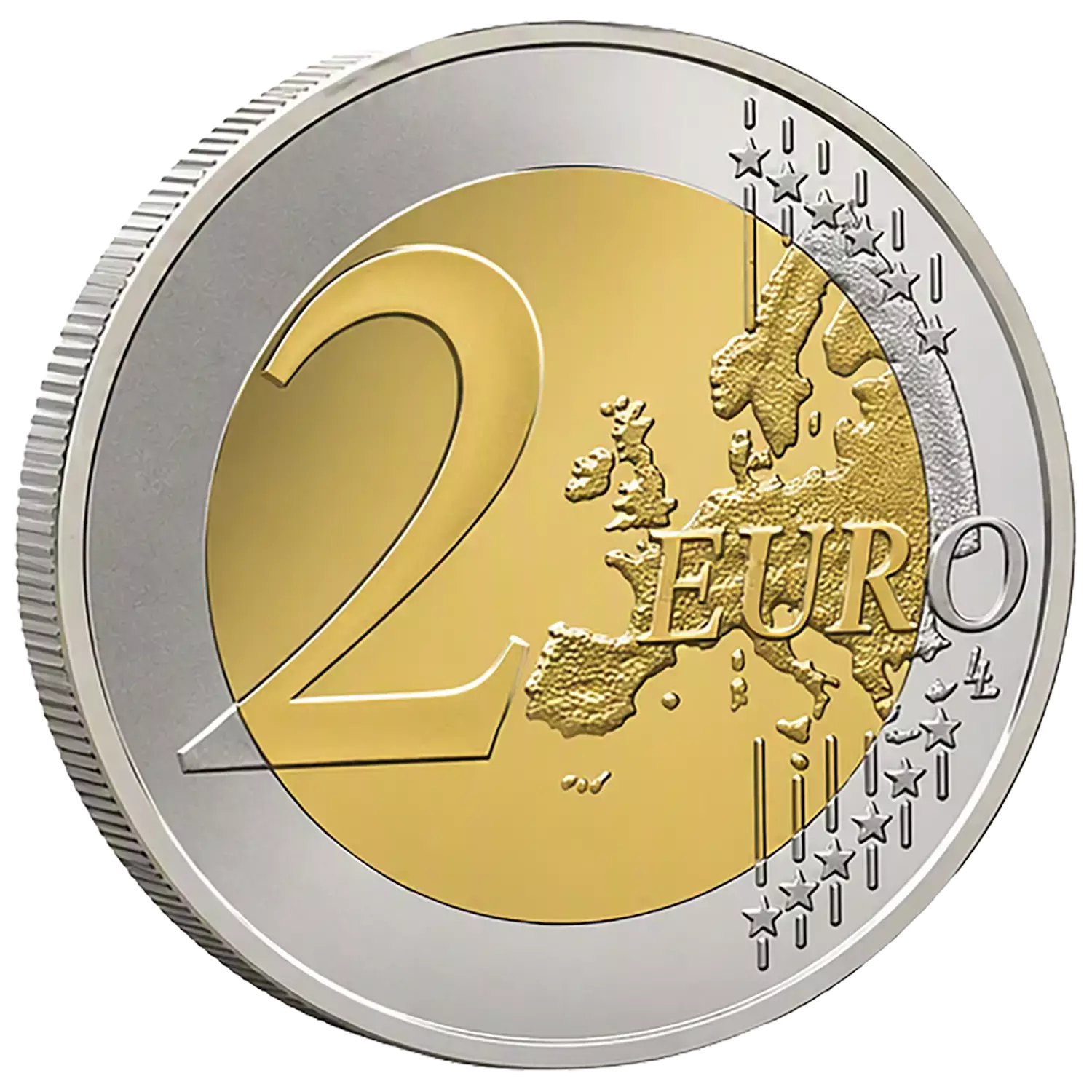
The reverse is the common side of the 2 euro coins of the second type, designed by Luc Luix. It depicts a map of Europe as a single continent without internal borders. On the left - a large denomination "2" and the inscription "EURO", on the right - a map. On the outer ring - 12 stars of the European Union. The edge - with fine ribbing and a national inscription.
Historical context
The blue cornflower (Centaurea cyanus, in Estonian "rukkilill" - literally "rye flower") is the national flower of Estonia, chosen in 1968 in a competition organized by the Society of Naturalists. The cornflower is a field plant with characteristic bright blue (cornflower) flowers that grows among rye and other cereals. This is the most common wild flower in Estonia, a symbol of simplicity, sincerity, connection with the native land and folk life. The cornflower is the national flower not only of Estonia, but also of Belarus and Germany. In Estonia, the cornflower is associated with summer, rural life, and haymaking. In folk poetry, it is often sung as a gentle and faithful flower. The blue color of the cornflower is close to the blue stripe of the Estonian flag. Cornflowers are also a sign of ecologically clean fields, as they disappear where herbicides are actively used. The issue of a coin with a cornflower in 2024 continued the series "Estonian National Symbols".