
Shopping Cart
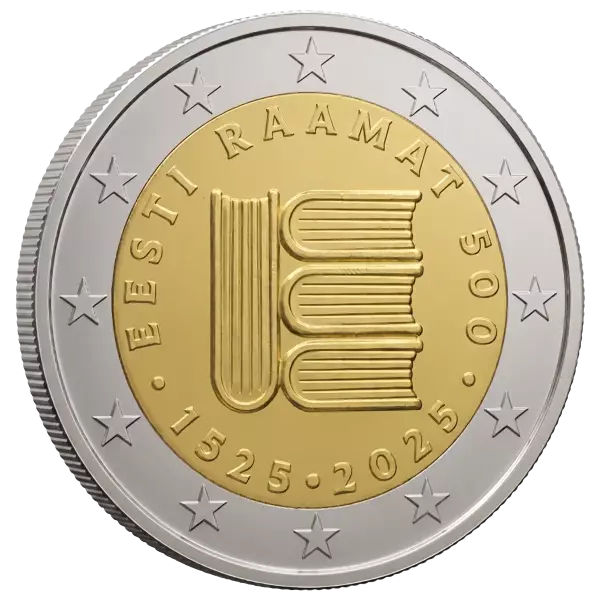


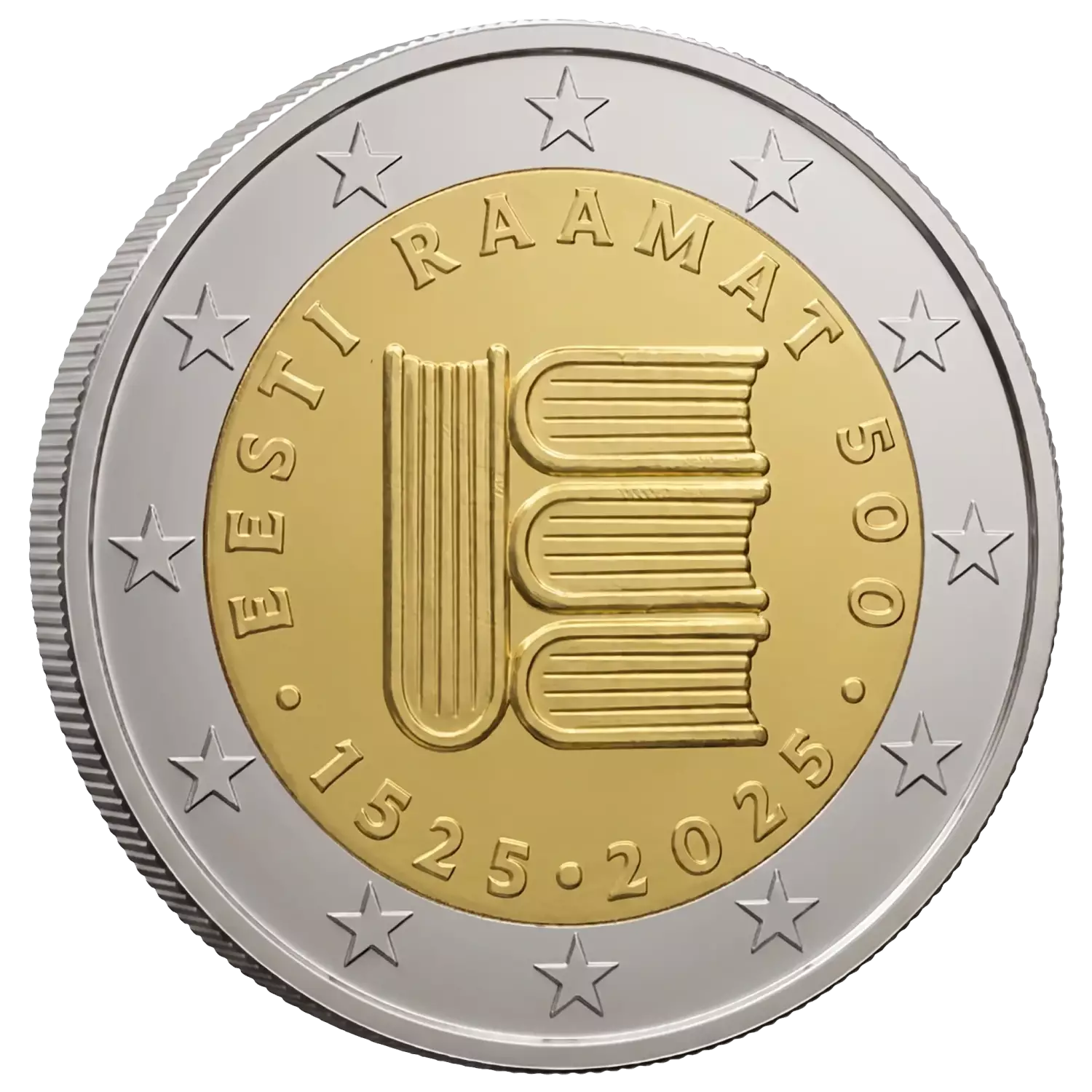
2 euro commemorative coin of the Republic of Estonia, issued in 2025 in a circulation of 500,000 copies. Dedicated to the 500th anniversary of books in Estonian. Bimetallic, diameter 25.75 mm, weight 8.5 g.
Obverse
The center of the coin depicts a stylized composition with an open book and a historical font - symbols of Estonian written culture. The book shows characteristic Gothic letters reminiscent of the first printed Estonian texts. Around it are the inscriptions "500 AASTAT EESTIKEELSET RAAMATUT" (500 years of books in Estonian), "EESTI" and "2025". On the outer ring - 12 stars of the European Union.
Reverse
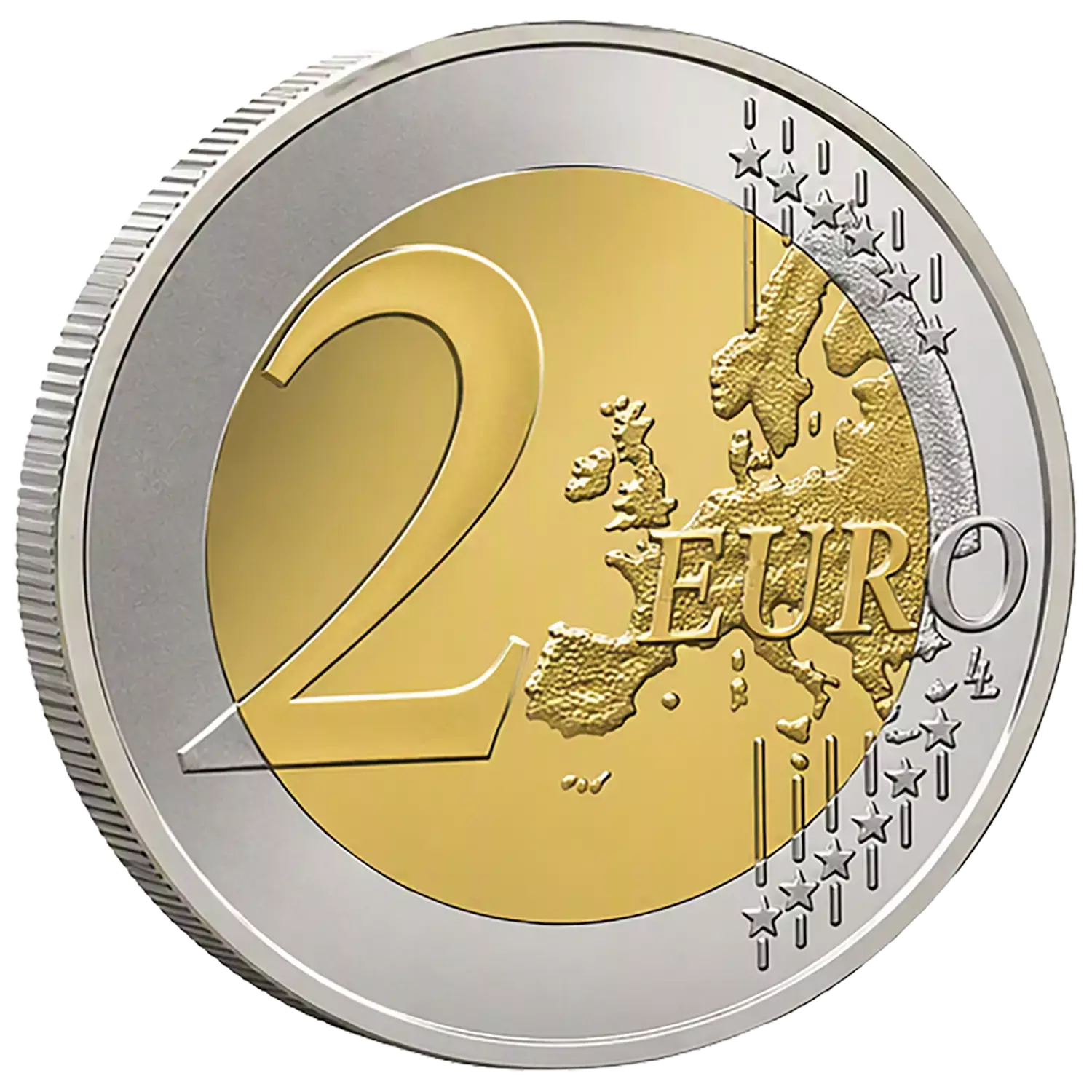
The reverse is the common side of the 2 euro coins of the second type, designed by Luc Luix. It depicts a map of Europe as a single continent without internal borders. On the left - a large denomination "2" and the inscription "EURO", on the right - a map. On the outer ring - 12 stars of the European Union. The edge - with fine ribbing and a national inscription.
Historical context
500 years of books in Estonian is an anniversary marking the beginning of Estonian written culture. The first known printed book in Estonian was a catechism printed in Lübeck (Hanseatic League) in 1525 for use in the newly converted Protestant parishes of Livonia. Only fragments of this edition have survived. In 1535, Simon Vannert and Johannes Koel printed the Vannert-Koel catechism, the oldest fully preserved printed book in Estonian. Since then, the Estonian language has developed slowly: the Holy Scriptures were fully translated into Estonian only in 1739. Starting in the 19th century, with the national awakening, Estonian book publishing flourished - newspapers were founded, epics ("Kalevipoeg", 1857-1861, Friedrich Roinold Fellmann and Friedrich Reinhold Kreuzwald), dictionaries, and scientific texts were published. Today, in Estonia, with a population of 1.3 million, more than 4,000 books are published in Estonian every year - a significant achievement for such a small nation.