
Shopping Cart
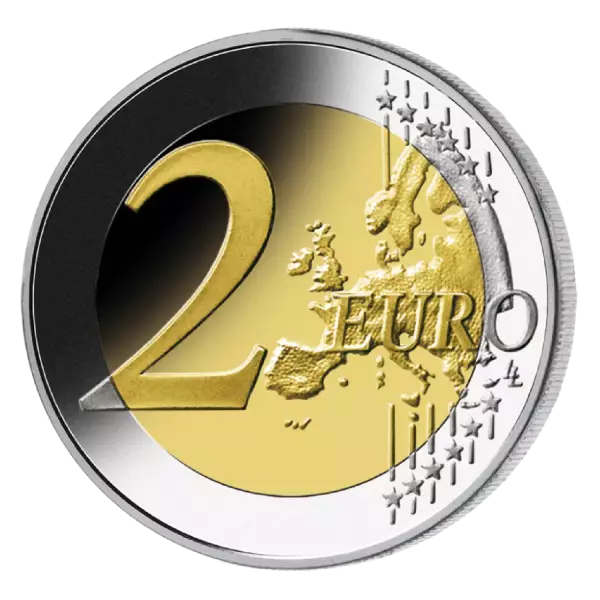

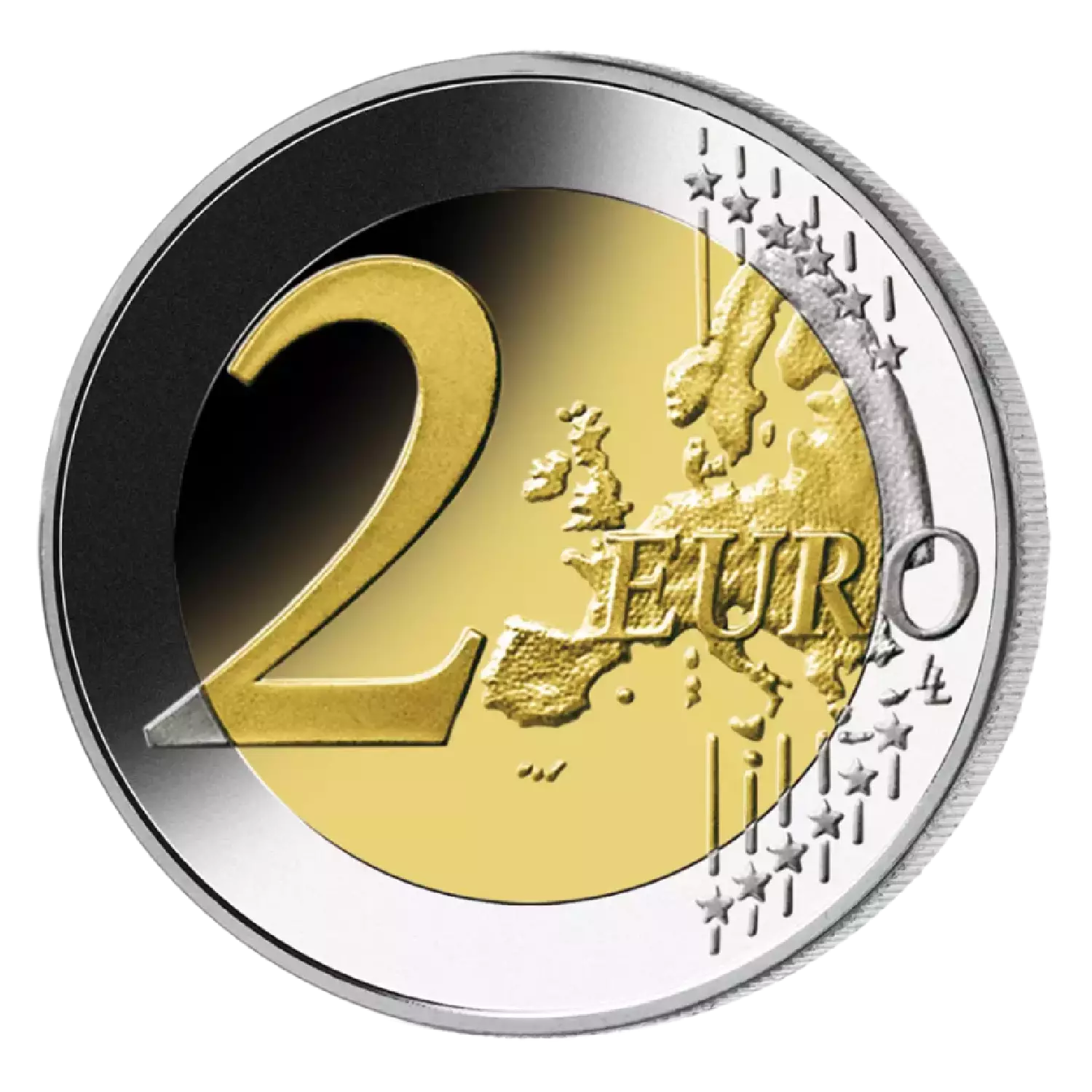
A 2 euro commemorative coin of the Hellenic Republic, issued in 2010 in a circulation of 2,500,000 copies. Dedicated to the 2500th anniversary of the Battle of Marathon. Bimetallic, diameter 25.75 mm, weight 8.5 g. Minted at the Hellenic Mint in Chalandri.
Obverse
In the center of the coin is a stylized shield depicting a runner at the moment of transmitting the message of victory - a symbolic allusion to the legend of the marathon runner Pheidippides. Next to it are feathers, symbolizing flight and speed. Around the image, in a circle, are the inscriptions in Greek: "ΜΑΡΑΘΩΝΑΣ 490 π.Χ. — 2010 μ.Χ." (Marathon 490 BC - 2010 AD) and "ΕΛΛΗΝΙΚΗ ΔΗΜΟΚΡΑΤΙΑ" (Hellenic Republic). Mintmark - Greek palmette. On the outer ring - 12 EU stars.
Reverse
The reverse is the common side of the 2 euro coins of the second type, designed by Luc Luix. It depicts a map of Europe as a single continent without internal borders. On the left - a large denomination "2" and the inscription "EURO", on the right - a map. On the outer ring - 12 EU stars. Edge - with fine ribbing and inscription.
Historical context
The Battle of Marathon took place in September 490 BC. on the coast of Attica near the city of Marathon — about 42 km northeast of Athens. The Athenian army of about 10 thousand soldiers under the command of the strategist Miltiades, supported by 1 thousand Plataeans, entered into battle with the Persian army of up to 25 thousand soldiers, sent by King Darius I. Despite the huge numerical superiority of the Persians, the Greeks inflicted a crushing defeat on them — the Persians lost about 6,400 soldiers, the Greeks — only 192. The victory at Marathon saved Greek civilization and democracy from the Persian conquest and became one of the most important victories in history. According to legend, the messenger Pheidippides ran from Marathon to Athens to announce the victory, shouted "We have won!" ("Nenikēkamen!") and died of exhaustion. This legend became the basis of modern marathon running - one of the most prestigious disciplines at the Olympics.