
Shopping Cart
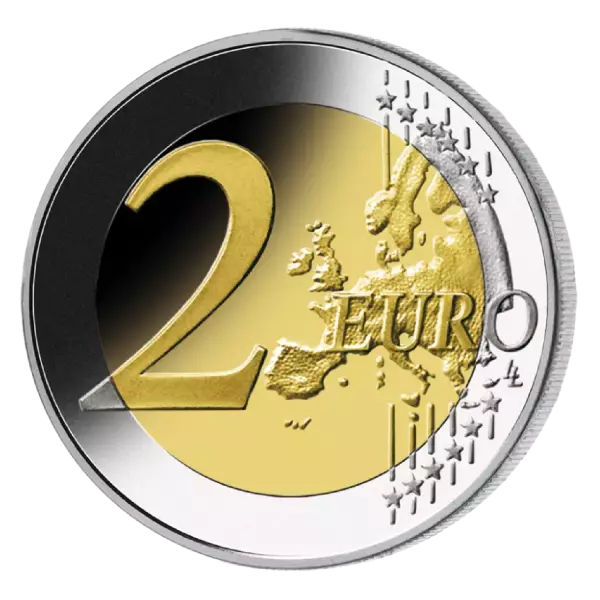

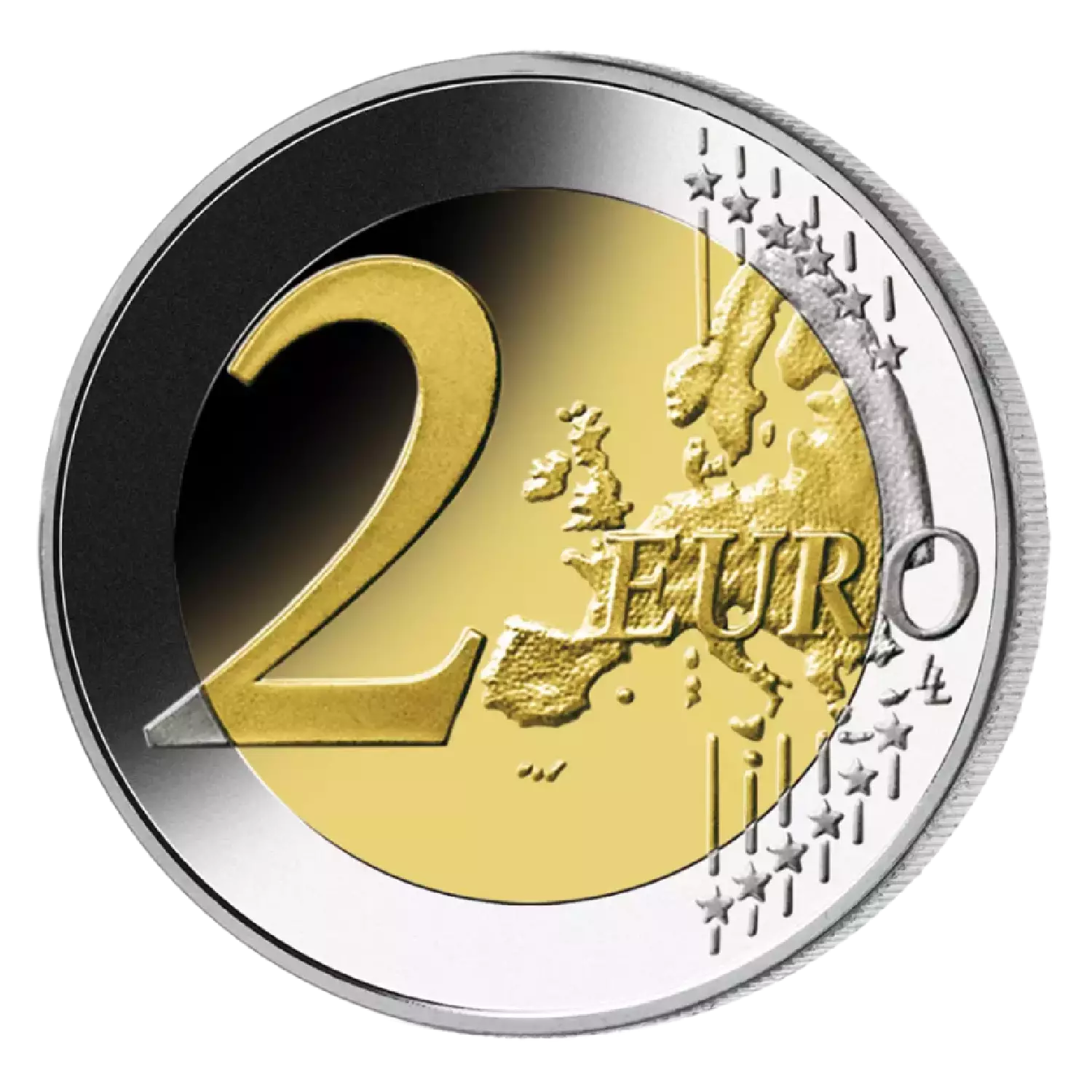
A 2 euro commemorative coin of the Hellenic Republic, issued in 2014 in a circulation of 750,000 copies. Dedicated to the 150th anniversary of the unification of the Ionian Islands with Greece. The authors are Maria Andonatou and Georgios Stamatopoulos. Bimetallic, diameter 25.75 mm, weight 8.5 g.
Obverse
The inner part of the coin depicts a seven-pointed star with the Greek inscription "150 ΧΡΟΝΙΑ ΑΠΟ ΤΗΝ ΕΝΩΣΗ ΤΟΝ ΙΟΝΙΩΝ ΝΗΣΩΝ (ΕΠΤΑΝΗΣΑ) ΜΕ ΤΗΝ ΕΛΛΑΔΑ 1864-2014" (150 years since the unification of the Ionian Islands (Heptanes) with Greece 1864-2014), the name of the issuing country "ΕΛΛΗΝΙΚΗ ΔΗΜΟΚΡΑΤΙΑ" and the mark of the Hellenic Mint. Between the rays of the star are the symbols of the seven Ionian Islands: a rudderless ship ("apedalos naus") for Corfu, Apollo's sacrificial tripod for Zakynthos, Odysseus in a pilos for Ithaca, Poseidon's trident for Pax and others. The composition is surrounded by a decorative wavy motif - a symbol of the sea. On the outer ring - 12 EU stars.
Reverse
The reverse is the common side of the 2 euro coins of the second type, designed by Luc Luix. It depicts a map of Europe as a single continent without internal borders. On the left - a large denomination "2" and the inscription "EURO", on the right - a map. On the outer ring - 12 EU stars.
Historical context
The unification of the Ionian Islands with Greece on 21 May 1864 was the first expansion of the borders of the modern Greek state after gaining independence in 1830. The Ionian Islands (Heptanese, "Seven Islands")—Corfu, Zakynthos, Cephalonia, Ithaca, Lefkada, Pax, Kythira—passed through several foreign rule: from 1204 by the Republic of Venice, then by France (from 1797, Napoleon), the Russian and Ottoman Empires (Septinsulian Republic 1800–1807), again by France, and finally from 1815 by the British Empire as the United Kingdom of the Ionian Islands. In 1862, Britain decided to transfer the islands to Greece as a gesture of support for the new King of Greece, George I. After a formal referendum, Britain transferred the islands on 2 May 1864. The Heptanes gave Greece prominent artists, poets (Solomos, Kalliaos), musicians, politicians, and patriarchs of Greek culture.