
Shopping Cart
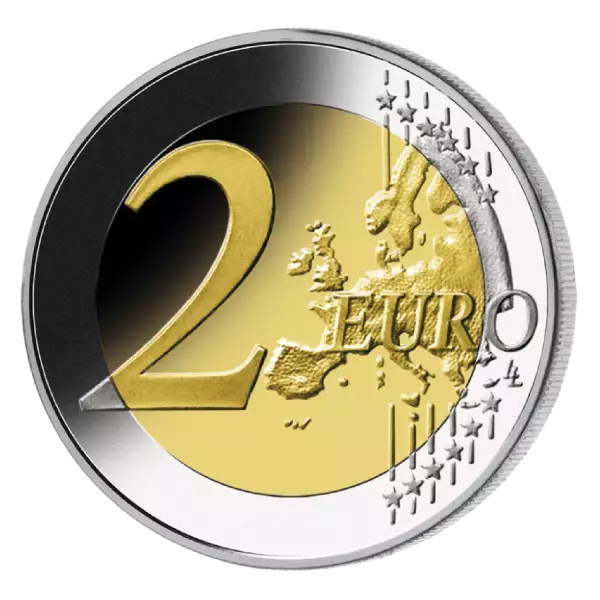

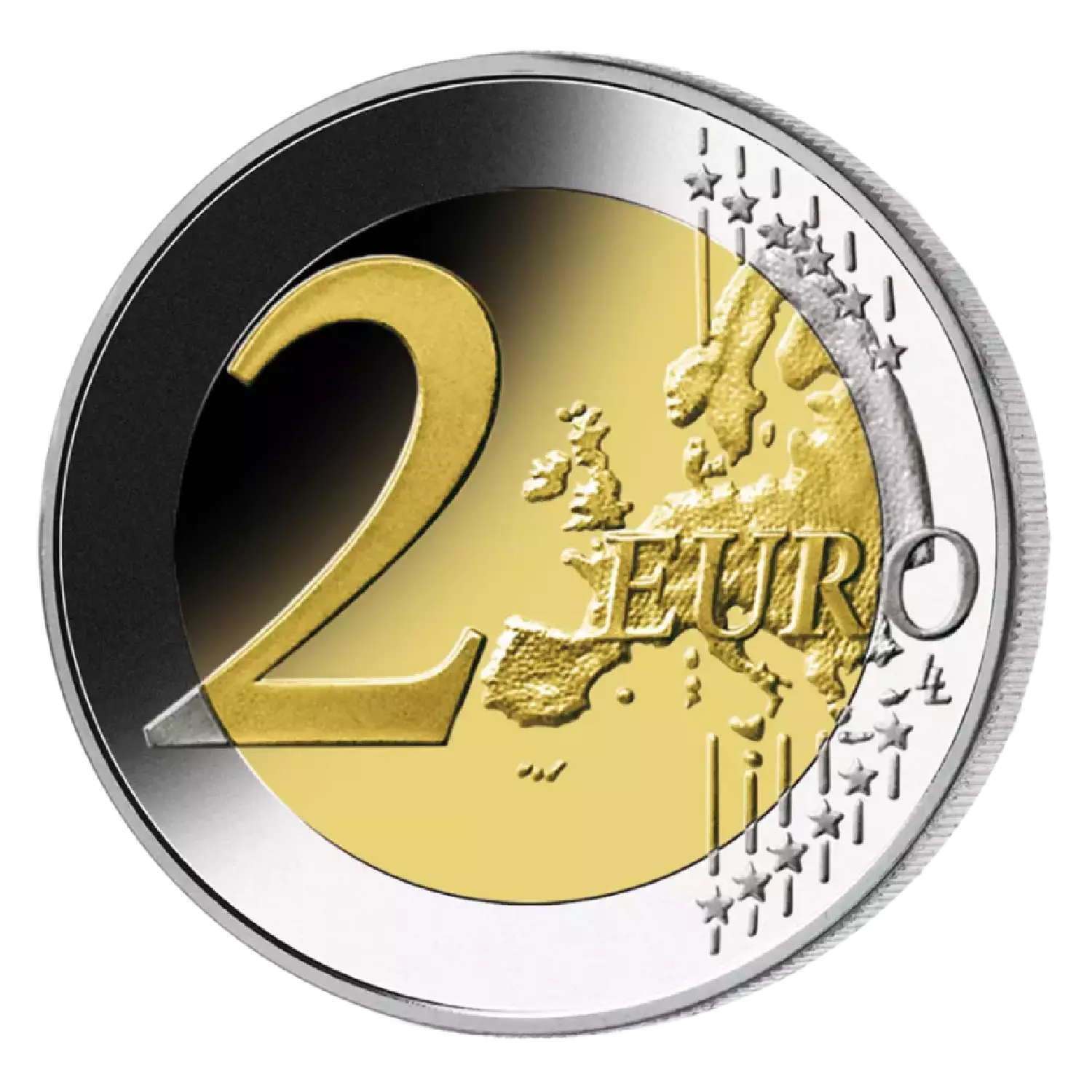
A 2 euro commemorative coin of the Hellenic Republic, issued in 2014 in a circulation of 750,000 copies. Dedicated to the 400th anniversary of the death of El Greco. The author of the design is Georgios Stamatopoulos. Bimetallic, diameter 25.75 mm, weight 8.5 g. Minted at the Hellenic Mint in Chalandri.
Obverse
In the center is a portrait of Domenico Theotokopoulos (El Greco), taken from his famous self-portrait (c. 1595-1600). In the background are examples of his characteristic technique and style - elongated figures with expressive coloring. On the left is the year of issue "2014" and the artist's signature below. On the right is the symbol of the Athens Mint. The inscription "ΕΛΛΗΝΙΚΗ ΔΗΜΟΚΡΑΤΙΑ" (Hellenic Republic) is placed at the top, and "DOMENIKOS THEOTOKOPOULOS 1541-1614" is placed directly below it. The outer ring contains the 12 stars of the European Union.
Reverse
The reverse is the common side of the 2 euro coins of the second type, designed by Luc Luix. It depicts a map of Europe as a single continent without internal borders. On the left is a large denomination "2" and the inscription "EURO", on the right is a map. On the outer ring are the 12 stars of the EU.
Historical context
Domenikos Theotokopoulos, known as El Greco (El Greco - "Greek" in Spanish, 1541-1614) is one of the most prominent artists of the Late Renaissance, a forerunner of expressionism and cubism. Born in Crete (then part of the Venetian Republic), the center of post-Byzantine art. He studied icon painting at the Cretan school, then went to Venice (c. 1567), where he studied in Titian's workshop and under the influence of Tintoretto. In 1570 he moved to Rome, and in 1577 he settled in Toledo (Spain), where he created his most famous masterpieces - "The Burial of Count Orgas" (1586-1588), "The Removal of the Fifths of Christ's Garments", "View of Toledo". The characteristic features of his style are elongated figures, dramatic angles, intense colors and mystical content. The artist signed his works in Greek letters with his full name. He died on April 7, 1614 in Toledo. El Greco's influence on 20th-century art is enormous — Picasso, Cézanne, Malevich, and Francis Bacon were inspired by his works.