
Shopping Cart
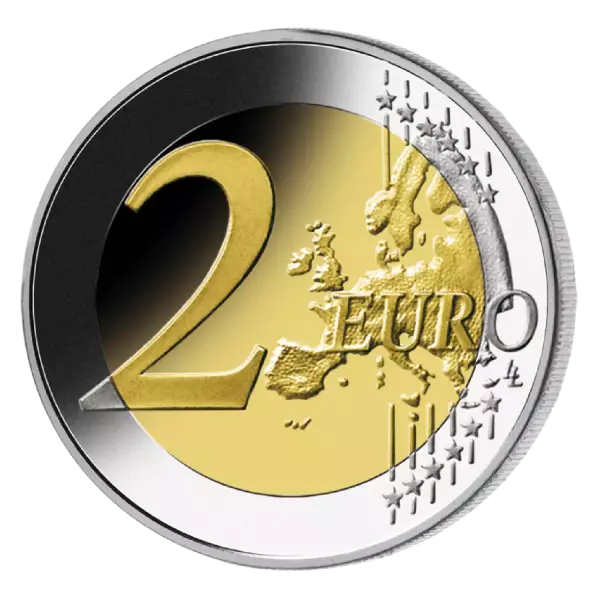

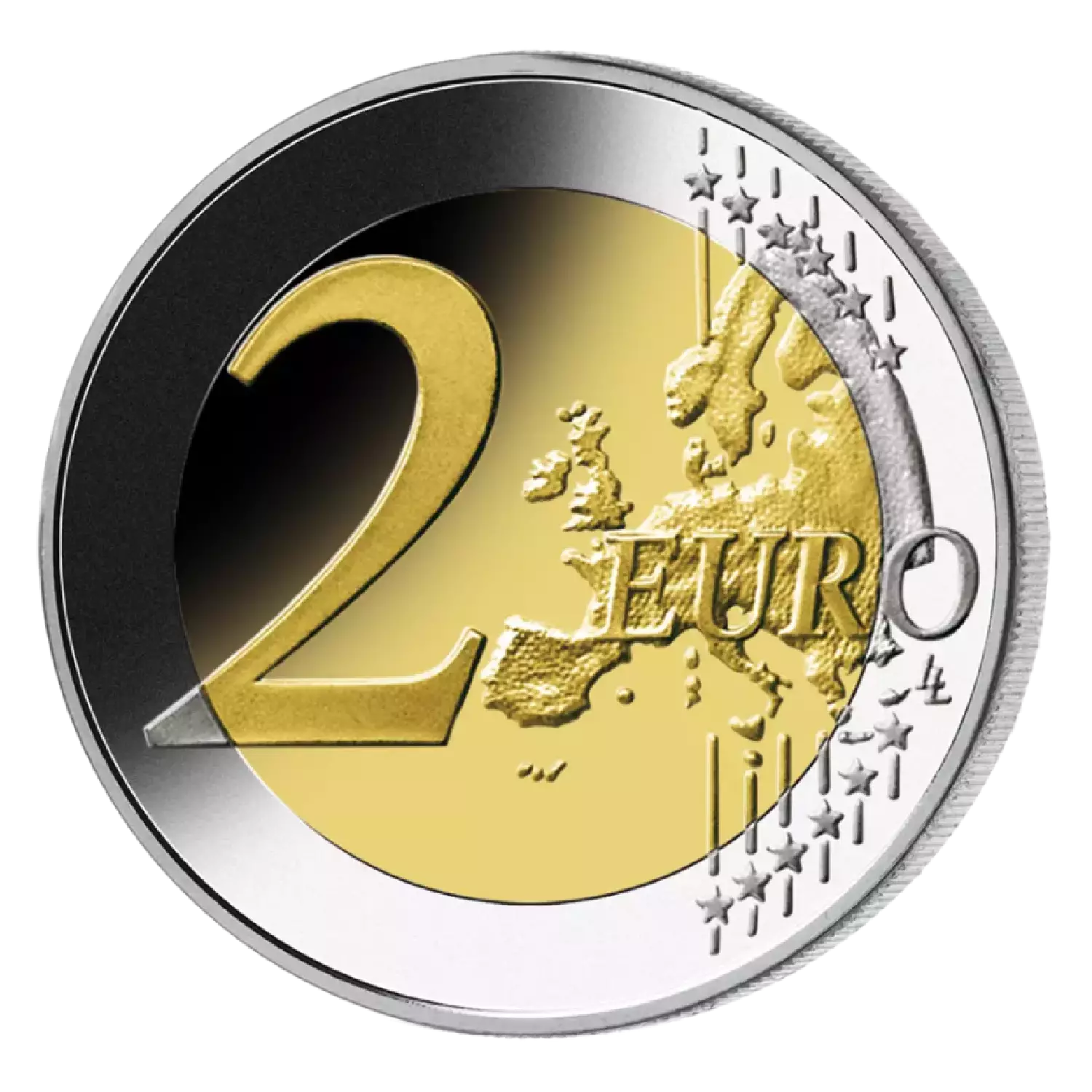
A 2 euro commemorative coin of the Hellenic Republic, issued in 2015 in a circulation of 750,000 copies. Dedicated to the 75th anniversary of the memory of Spyros Louis. The author of the design is Georgios Stamatopoulos. Bimetallic, diameter 25.75 mm, weight 8.5 g.
Obverse
The center of the coin depicts a portrait of Spyros Louis - a Greek runner, winner of the marathon at the first modern Olympic Games in 1896 - with the Breal's Cup, which he received as a reward. In the background is the Panathenaic Stadium (Kallimaramo) in Athens, where the victorious marathon ended. At the top left is the inscription "ΕΛΛΗΝΙΚΗ ΔΗΜΟΚΡΑΤΙΑ" (Hellenic Republic). At the bottom left is the inscription "75 ΧΡΟΝΙΑ ΜΝΗΜΗΣ ΣΠΥΡΟΥ ΛΟΥΗ" (75 years of memory of Spyros Louis). Directly above the cup is the year of issue "2015". To the right of the cup is the symbol of the Athens Mint (palm tree). On the outer ring are the 12 stars of the European Union.
Reverse
The reverse is the common side of the 2 euro coins of the second type, designed by Luc Luix. It depicts a map of Europe as a single continent without internal borders. On the left is a large denomination "2" and the inscription "EURO", on the right is a map. On the outer ring are the 12 stars of the EU.
Historical context
Spyros Louis (Σπύρος Λούης, 1873-1940) was a Greek marathon runner, a national hero of Greece, and the winner of the marathon at the first modern Olympic Games, held in Athens in 1896. He was born on January 12, 1873 in the village of Marousi near Athens, into a water carrier family. On April 10, 1896, Louis ran the distance from Marathon to Athens (about 40 km) in 2 hours 58 minutes 50 seconds, arriving first at the Panathenaic Stadium to the enthusiastic "Ελλάς! Ελλάς!" (Hellenia!) of 80,000 spectators, including King George I and Crown Prince Constantine. It was the most anticipated event of the Games - the Greek victory in the marathon, symbolizing the ancient Greek legend of Pheidippides, was perceived as a national holiday. Louis received the Brale Cup (donated by French professor Michel Brale), a medal, an olive branch and a number of prizes from the fans. After 1896, he gave up professional sports. He died on March 26, 1940. The 2004 stadium in Athens was named after him.