
Shopping Cart
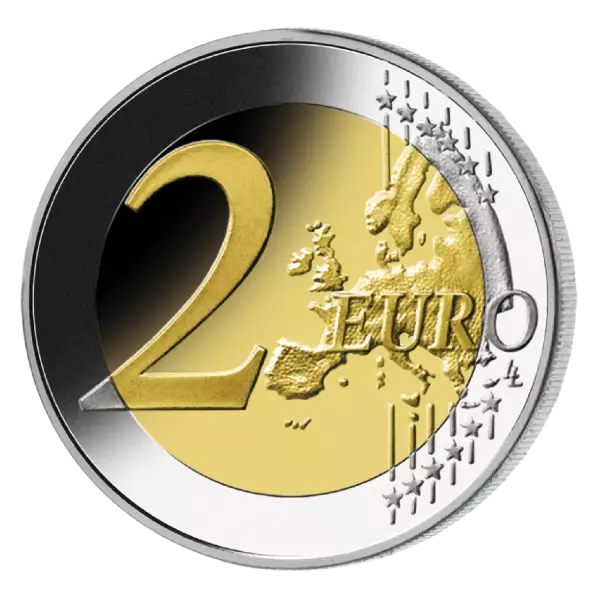

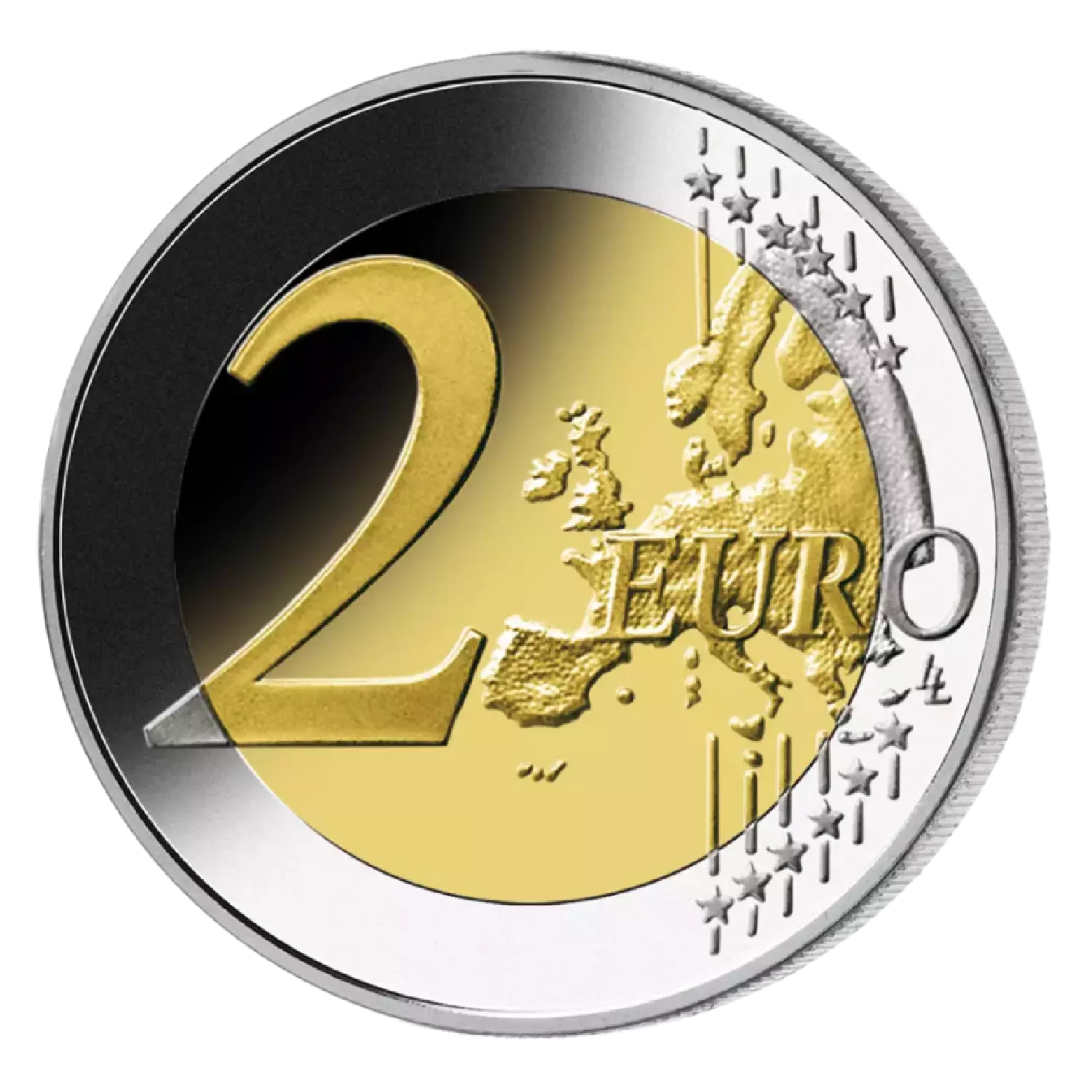
A 2 euro commemorative coin of the Hellenic Republic, issued in 2016 in a circulation of 750,000 copies. Dedicated to the 150th anniversary of the burning of the Arkadi Monastery. The author of the design is Georgios Stamatopoulos. Bimetallic, diameter 25.75 mm, weight 8.5 g.
Obverse
The center of the coin depicts the famous facade of the Arkadi Monastery with its characteristic 16th-century stone architecture in the Venetian Baroque style. The monastery is located in the mountains of central Crete, near Rethymno. At the top of the coin, in a semicircle, there is the Greek inscription "ΜΟΝΗ ΑΡΚΑΔΙΟΥ" (Arkadi Monastery), at the bottom - "1866-2016" and "ΕΛΛΗΝΙΚΗ ΔΗΜΟΚΡΑΤΙΑ" (Hellenic Republic). The mint mark is a Greek palmette. The author's initials "ΣΤΑΜ" are placed at the bottom left. On the outer ring are the 12 stars of the European Union.
Reverse
The reverse is the common side of the 2 euro coins of the second type, designed by Luc Luix. It depicts a map of Europe as a single continent without internal borders. On the left is a large denomination "2" and the inscription "EURO", on the right is a map. On the outer ring are the 12 stars of the EU.
Historical context
The Arkadi Monastery (Μονή Αρκαδίου) is an Orthodox monastery of the 11th-16th centuries in the mountains of central Crete, 25 km from Rethymno. In November 1866, it became the site of one of the most tragic and at the same time most heroic events in Cretan history. During the Great Cretan Uprising of 1866-1869 against Turkish rule, about 964 people - rebels, women, children, the elderly - found refuge in the monastery. On November 8, 1866, a 15,000-strong Turkish army surrounded the monastery. After a two-day defense, when it became clear that resistance was impossible, Abbot Gabriel and the rebels decided not to surrender. On November 9, 1866, Kostas Yannatos set fire to a supply of gunpowder in the hall, which led to a massive explosion that killed about 900 rebels along with many Turkish soldiers. This self-sacrifice became a symbol of the Cretans' desire for freedom and caused a wave of sympathy for Greece in Europe. UNESCO and the Council of Europe recognized the Arkadi Monastery as a monument to freedom in 1866.