
Shopping Cart
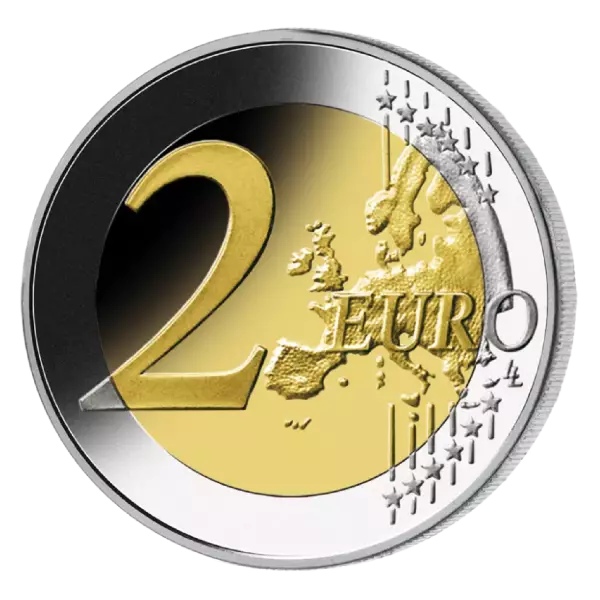

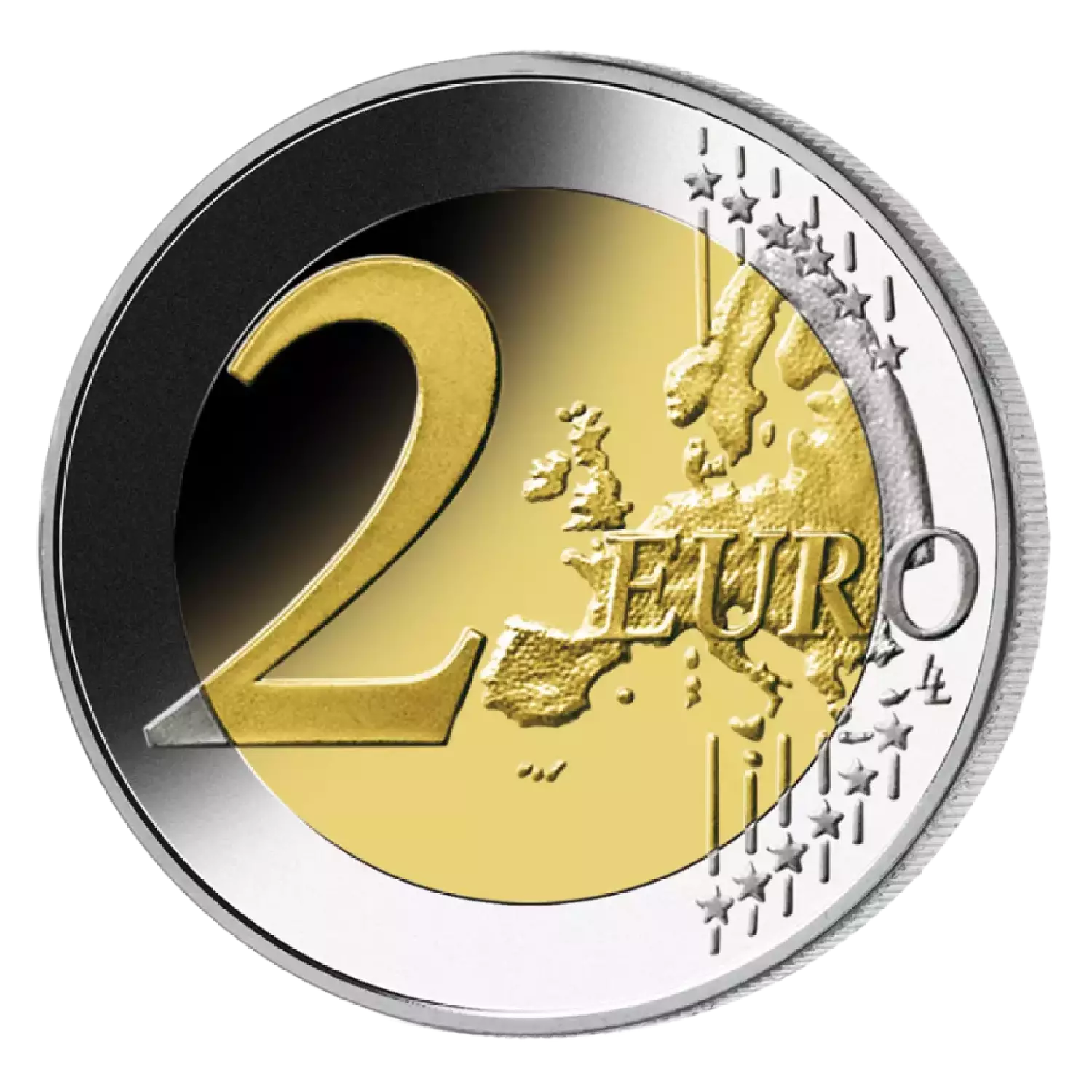
A 2 euro commemorative coin of the Hellenic Republic, issued in 2017 in a circulation of 750,000 copies. Dedicated to the 60th anniversary of the death of Nikos Kazantzakis. The author of the design is Georgios Stamatopoulos. Bimetallic, diameter 25.75 mm, weight 8.5 g.
Overse
The center of the coin depicts a portrait of Nikos Kazantzakis in profile with characteristic facial features - a high forehead, a piercing gaze, a strong-willed chin. Around the portrait, in a semicircle, are the inscriptions in Greek: "ΝΙΚΟΣ ΚΑΖΑΝΤΖΑΚΗΣ" (Nikos Kazantzakis) and "ΕΛΛΗΝΙΚΗ ΔΗΜΟΚΡΑΤΙΑ". The years "1957-2017" are at the bottom. The mint mark is a Greek palmette. The author's initials "ΣΤΑΜ". On the outer ring are the 12 stars of the European Union.
Reverse
The reverse is the common side of the 2 euro coins of the second type, designed by Luc Luix. It depicts a map of Europe as a single continent without internal borders. On the left is a large denomination "2" and the inscription "EURO", on the right is a map. On the outer ring are the 12 stars of the EU.
Historical context
Nikos Kazantzakis (Νίκος Καζαντζάκης, 1883-1957) is one of the most prominent Greek writers, poets, playwrights and philosophers of the 20th century, nominated 9 times for the Nobel Prize in Literature. He was born on February 18, 1883 in Heraklion, Crete, then still under Turkish occupation. He studied law in Athens and philosophy in Paris (a student of Henri Bergson). He traveled extensively - lived in Russia, China, Japan, Egypt, and Germany. He is the author of the epic poem "The Odyssey: A Modern Continuation" (1938) with 33,333 verses, and the novels "Zorba the Greek" (1946), "The Last Temptation of Christ" (1951, condemned by the Vatican), "Captain Michalis" (1953), and "Christ Crucified Again" (1948). His philosophical worldview combined Christianity, Buddhism, Nietzscheanism, and communism. He died on October 26, 1957 in Freiburg (Germany). He was buried in Heraklion. On his grave is the epitaph: "I hope for nothing. I fear nothing. I am free."