
Shopping Cart
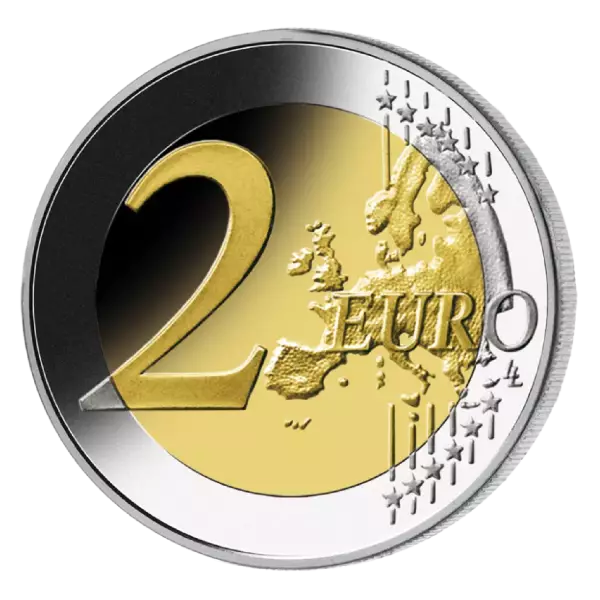

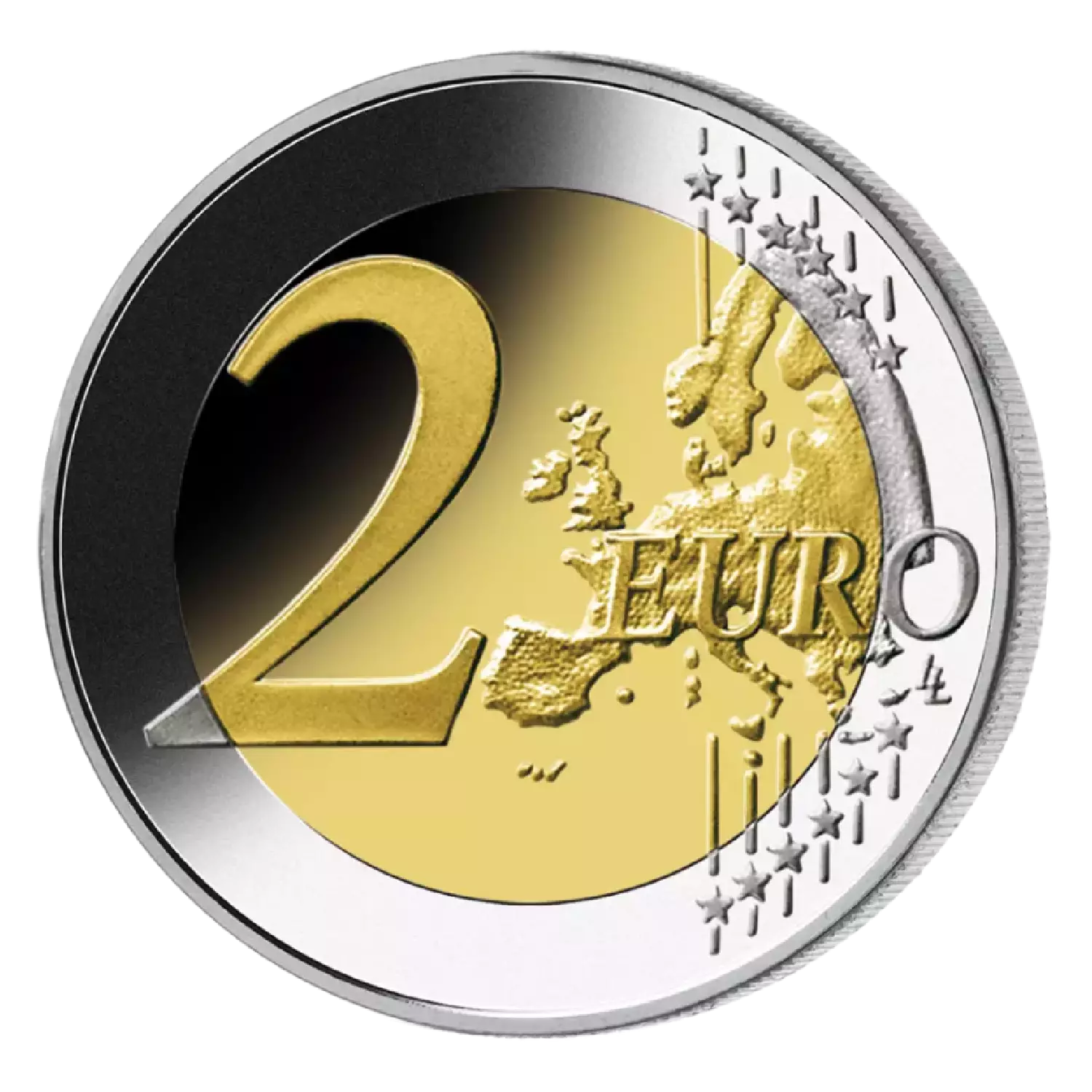
A 2 euro commemorative coin of the Hellenic Republic, issued in 2018 in a circulation of 750,000 copies. Dedicated to the 75th anniversary of the death of Kostis Palamas (after correction - according to the ECB it is the 75th anniversary). The author of the design is Georgios Stamatopoulos. Bimetallic, diameter 25.75 mm, weight 8.5 g.
Overse
The center of the coin depicts a portrait of Kostis Palamas (1859-1943) - a Greek poet, critic and playwright. The portrait conveys the characteristic features of a mature Palamas - with a mustache and a thoughtful look. On the inner left edge are placed in Greek: "ΕΛΛΗΝΙΚΗ ΔΗΜΟΚΡΑΤΙΑ" (Hellenic Republic) and the name "ΚΩΣΤΗΣ ΠΑΛΑΜΑΣ" (Kostís Palamas). On the right is the Greek mint mark (palm tree) and the year "2018". At the bottom left is the monogram of the author - Georgios Stamatopoulos ("ΣΤΑΜ"). On the outer ring - 12 stars of the European Union.
Reverse
The reverse is the common side of the 2 euro coins of the second type, designed by Luc Luix. It depicts a map of Europe as a single continent without internal borders. On the left is a large denomination "2" and the inscription "EURO", on the right is a map. On the outer ring - 12 stars of the EU.
Historical context
Kostis Palamas (Κωστής Παλαμάς, 1859-1943) - a great Greek poet, writer, critic and playwright, the central figure of the "New Athenian School", one of the most influential Greek writers of the turn of the 19th-20th centuries. Born on January 13, 1859 in Patras. Known for his multifaceted work: lyric collections "Still Life" (1904), "Inalienable Iambics and Anapests", the epic poem "Twelve Songs of a Gypsy" (1907), dramas and essays. His poetry is a bold mixture of demotic Greek with classical tradition, addressing national themes and philosophical searches. Palamas wrote the words of the 1896 Olympic Hymn to music by Spyros Samaras, which is always played during the ceremonies of the Olympics. He headed the Athens Academy and was nominated for the Nobel Prize in Literature 14 times. He died on February 27, 1943 in Athens under Nazi occupation; the funeral turned into a patriotic demonstration with tens of thousands of Greeks.