
Shopping Cart
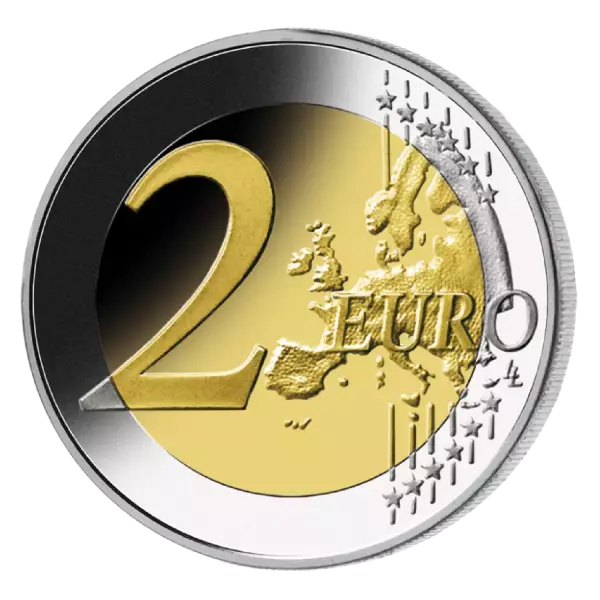

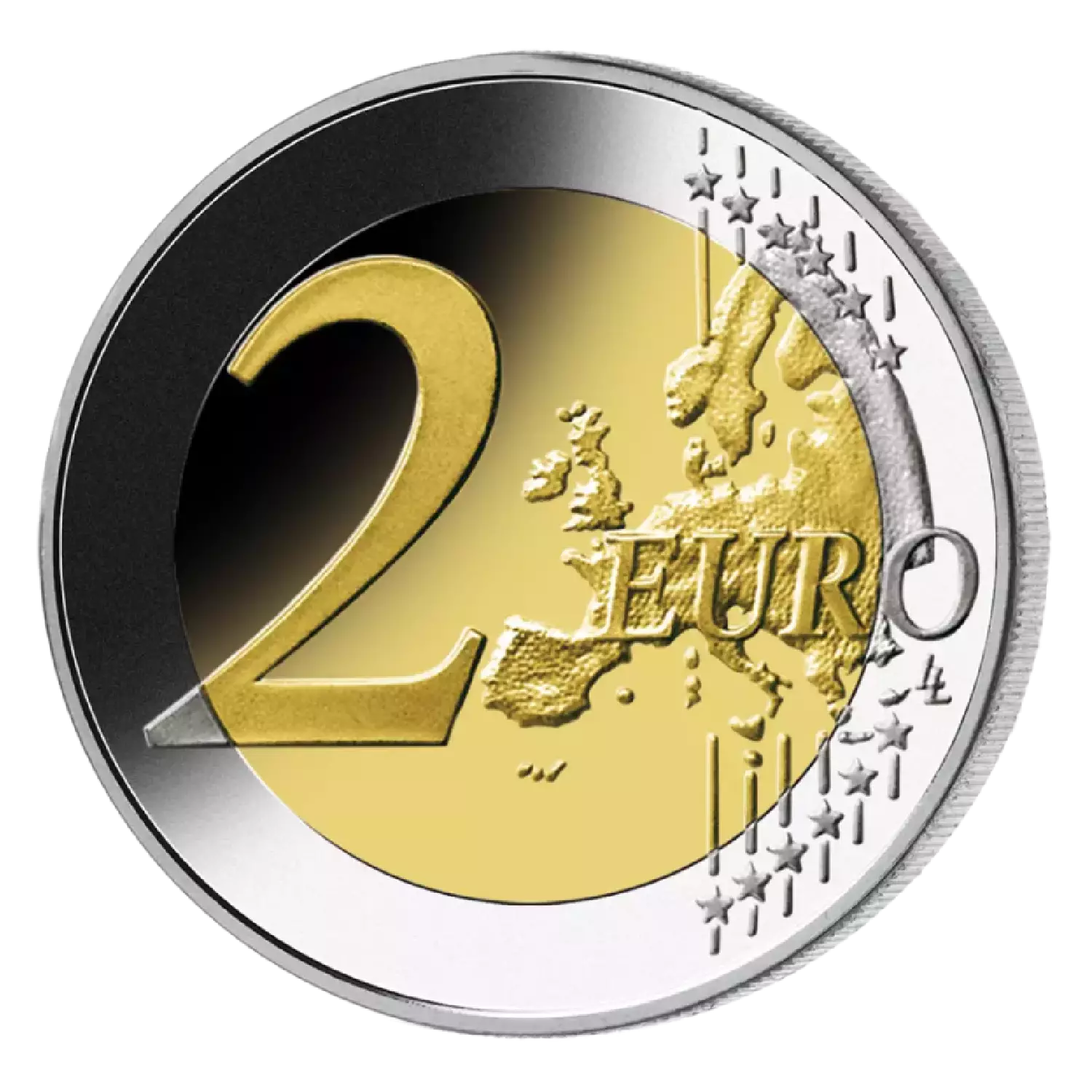
A 2 euro commemorative coin of the Hellenic Republic, issued in 2019 in a circulation of 750,000 copies. Dedicated to the 100th anniversary of the birth of Manolis Andronikos. The author of the design is Georgios Stamatopoulos. Bimetallic, diameter 25.75 mm, weight 8.5 g.
Obverse
The center of the coin depicts a portrait of Manolis Andronikos, a great Greek archaeologist of the 20th century. Around it are the Greek inscriptions: "MANOLIS ANDRONIKOS 1919-1992" and "ΕΛΛΗΝΙΚΗ ΔΗΜΟΚΡΑΤΙΑ 2019". The Greek mint mark is a palmette. The author's initials are "ΣΤΑΜ". On the outer ring are the 12 stars of the European Union.
Reverse
The reverse is the common side of the 2 euro coins of the second type, designed by Luc Luix. It depicts a map of Europe as a single continent without internal borders. On the left is a large denomination "2" and the inscription "EURO", on the right is a map. On the outer ring are the 12 stars of the EU.
Historical context
Manolis Andronikos (Μανόλης Ανδρόνικος, 1919-1992) is one of the most famous Greek archaeologists of the 20th century, a professor at the Aristotle University of Thessaloniki. Born on October 23, 1919 in Brus (Asia Minor), his family fled to Greece after the Greco-Turkish War of 1919-1922. He studied in Thessaloniki, Oxford and Paris. His most notable discovery was the royal tombs at Vergina (ancient Aegis) in November 1977. In the intact Tomb II, the body of Philip II of Macedon (359–336 BC), father of Alexander the Great, and his wife, possibly Cleopatra, were found. The tomb contained a golden larnax with bones decorated with the famous "sixteen-pointed star of Vergina"—the symbol of the Macedonian Argead dynasty—a golden crown of oak leaves, silver vessels, armor, and works of art. This discovery was one of the most important archaeological events of the 20th century. Andronikos died on 30 March 1992 in Thessaloniki.