
Shopping Cart
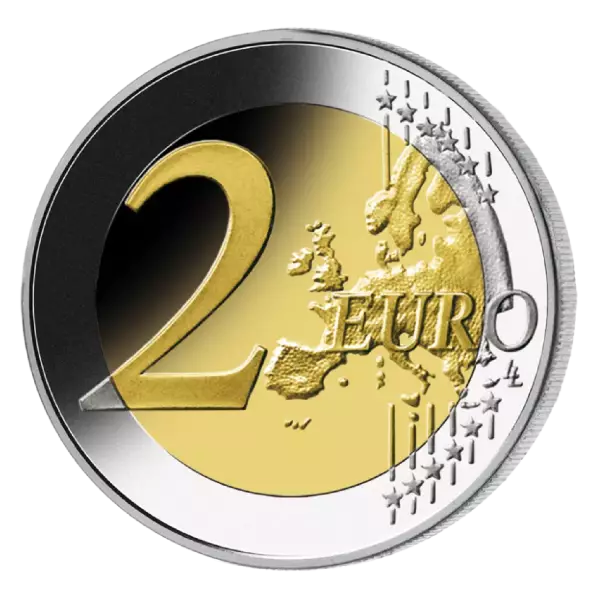

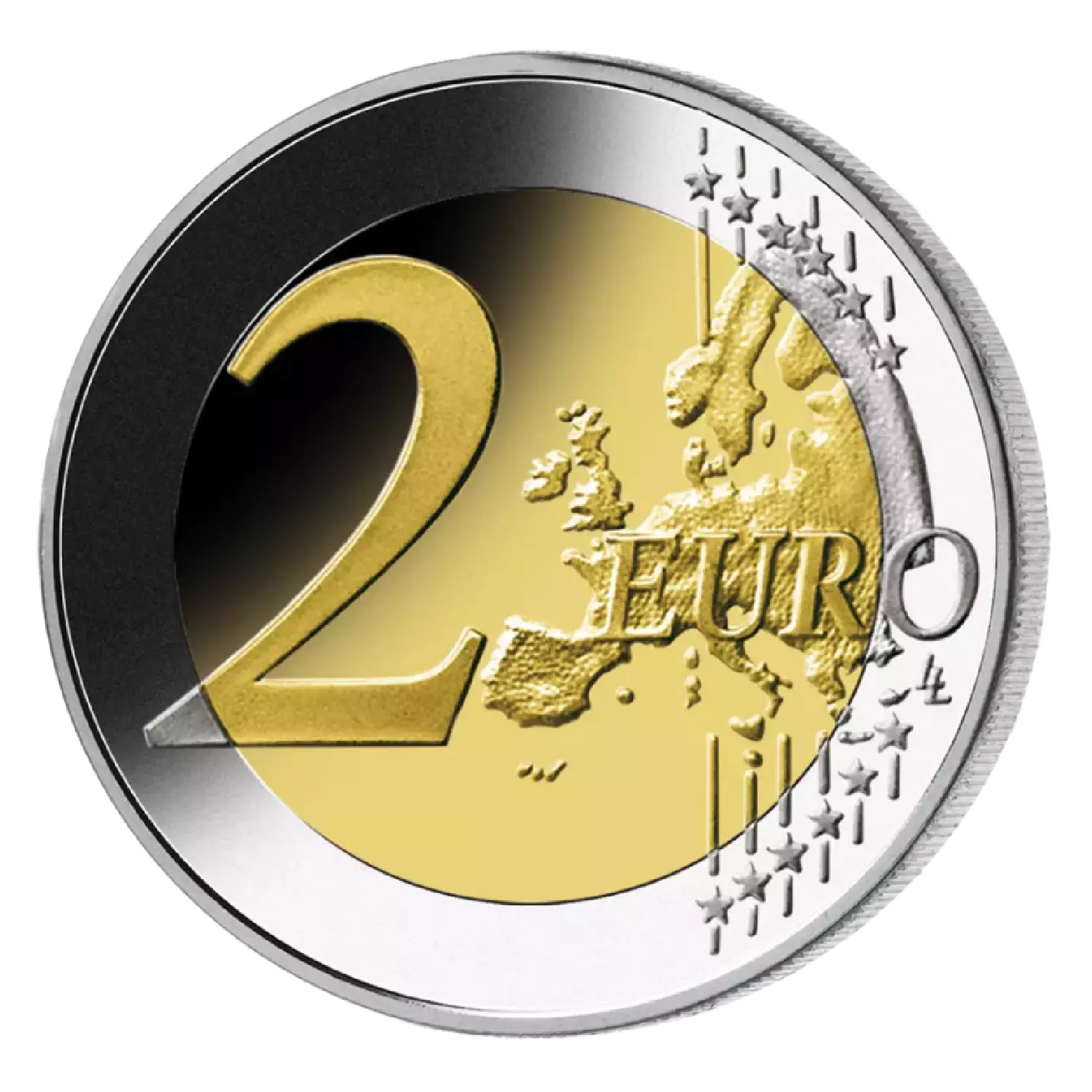
A 2 euro commemorative coin of the Hellenic Republic, issued in 2019 in a circulation of 750,000 copies. Dedicated to the 150th anniversary of the death of Andreas Kalvos. The author of the design is Georgios Stamatopoulos. Bimetallic, diameter 25.75 mm, weight 8.5 g.
Overse
The center of the coin depicts a portrait of Andreas Kalvos, a Greek poet of the era of national awakening. Around the image, in a semicircle, are the Greek inscriptions: "ANDREAS KALVOS 1792-1869" and "ΕΛΛΗΝΙΚΗ ΔΗΜΟΚΡΑΤΙΑ 2019". The mark of the Greek mint is a palmette. The initials of the author are "ΣΤΑΜ". On the outer ring are the 12 stars of the European Union.
Reverse
The reverse is the common side of the 2 euro coins of the second type, designed by Luc Luix. It depicts a map of Europe as a single continent without internal borders. On the left is a large denomination "2" and the inscription "EURO", on the right is a map. On the outer ring are the 12 stars of the EU.
Historical context
Andreas Kalvos (Ανδρέας Κάλβος, 1792-1869) is an outstanding Greek romantic poet, one of the most important figures of modern Greek literature, a contemporary of Dionysius Solomos. He was born on the island of Zakynthos (Ionian Islands, then under Venetian rule). He traveled a lot - he lived in Italy (a student of Ugo Foscolo in Milan), Switzerland, and London. In 1824, in Geneva, he published a collection of 10 odes, "Lyra", dedicated to Greece and its War of Liberation against the Ottoman Empire (1821-1829). In 1826, "New Odes" (another 10 odes) in Paris. His poetry combines the classical Greek tradition with the enthusiasm of the modern nationalist movement; it is imbued with love for freedom, homeland, and ancient virtues. He spent the last years of his life in Great Britain, teaching Greek. He died on November 3, 1869 in London. After a long oblivion, his work was rediscovered in the 20th century and is now considered one of the pinnacles of Greek literature. Kalvos' works are mandatory in Greek schools.