
Shopping Cart
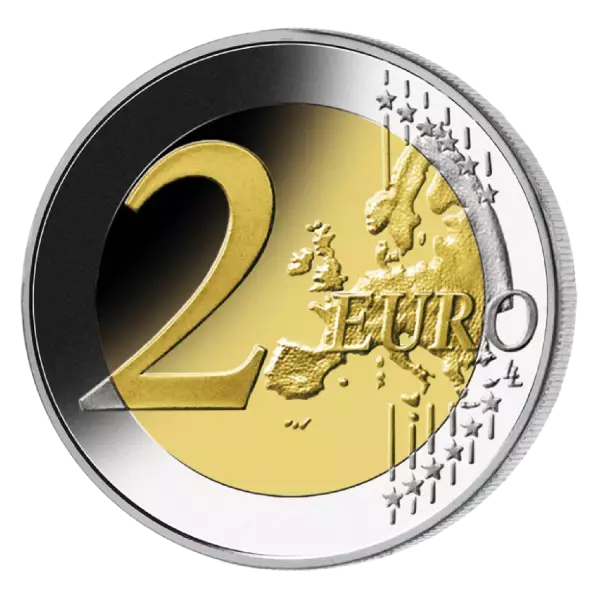

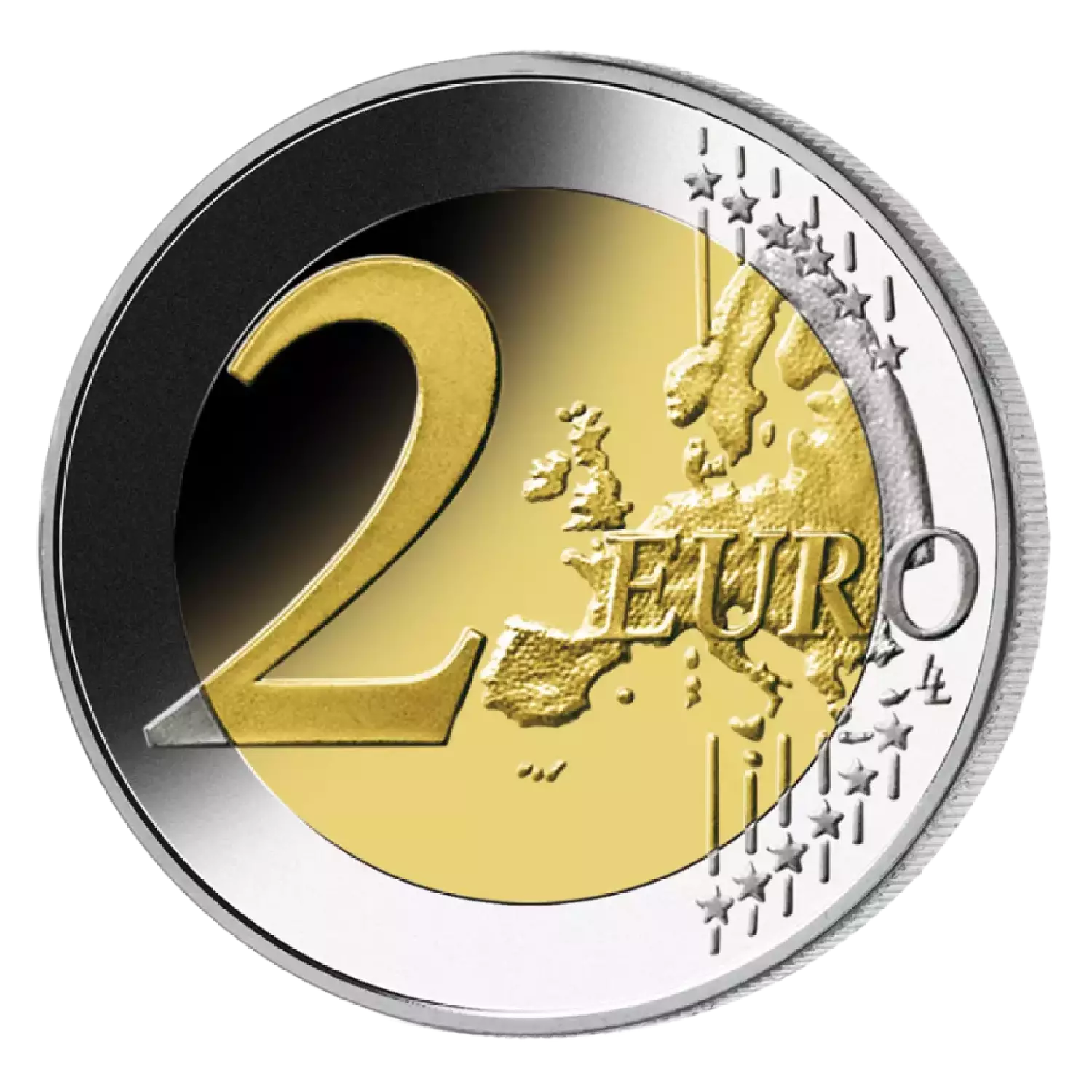
A joint 2 euro commemorative coin issued by Greece in 2022 as part of a pan-European issue to celebrate the 35th anniversary of the Erasmus programme. All eurozone countries issued this coin with an identical design, distinguished only by the name of the issuing country. The author of the joint design is Joaquin Jimenez, France. The circulation of the Greek version is 745,500 copies. Bimetallic, diameter 25.75 mm, weight 8.5 g.
Obverse
The center of the coin depicts a stylized portrait of Erasmus of Rotterdam (1466-1536), a Dutch Renaissance humanist, after whom the programme is named (also as the acronym EuRopean community Action Scheme for the Mobility of University Students). The embroidery around the portrait symbolizes the movement of students and ideas across Europe. Along the perimeter are the inscriptions: "35 ans" (35 years) and the name of the program "ERASMUS PROGRAMME", as well as in Greek "ΕΛΛΗΝΙΚΗ ΔΗΜΟΚΡΑΤΙΑ 2022". The mint mark of the Athens Mint is an anthemion. On the outer ring are the 12 stars of the European Union.
Reverse
The reverse is the common side of the 2 euro coins of the second type, designed by Luc Luix. It depicts a map of Europe as a single continent without internal borders. On the left is a large denomination "2" and the inscription "EURO", on the right is a map. On the outer ring are the 12 stars of the EU.
Historical context
The Erasmus program (European Region Action Scheme for the Mobility of University Students) is one of the most successful programs of the European Union, established by a decision of the Council of the European Communities on June 15, 1987. It is named after the outstanding Dutch humanist Erasmus of Rotterdam (Desiderius Erasmus Roterodamus, 1466-1536), who himself traveled extensively through European universities. The program allows students, teachers, and young people to spend part of their studies or training in another participating country. Since 2014, the program has been called "Erasmus+" and covers not only education, but also youth work and sport. Over the 35 years of its existence, more than 13 million people from over 200 partner countries have participated in it. In 2022, the program turned 35 years old, and the European Commission proposed that all eurozone countries issue a common commemorative coin to commemorate this event.