
Shopping Cart
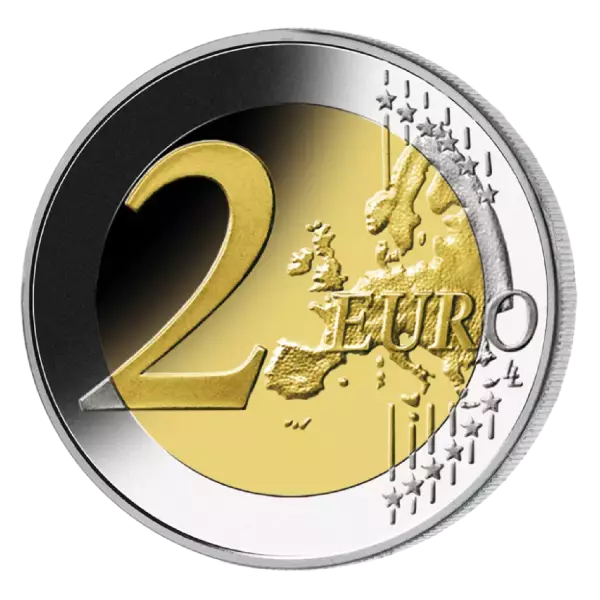

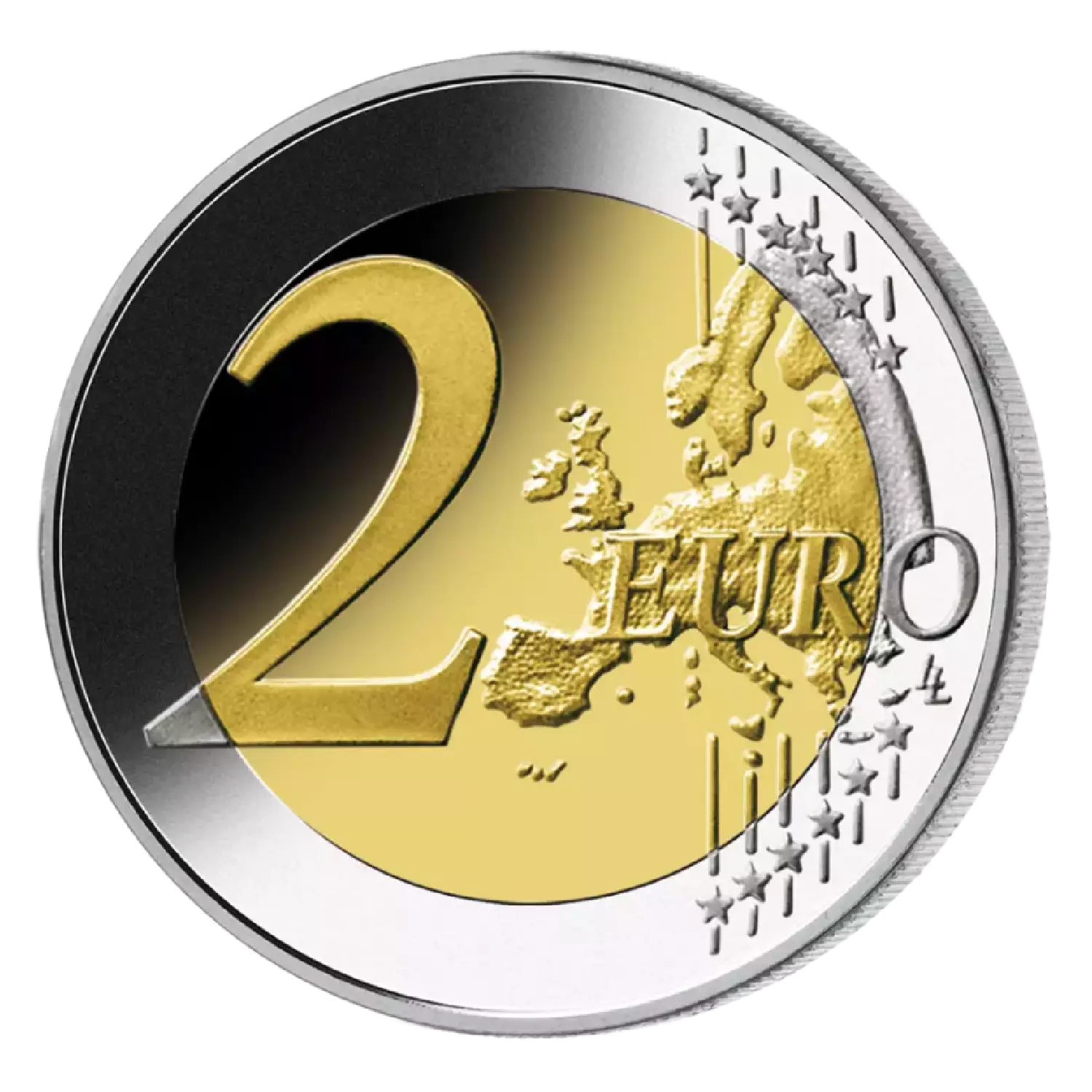
A common 2 euro commemorative coin issued by Ireland in 2007 as part of a pan-European issue to commemorate the 50th anniversary of the Treaties of Rome. The Irish version has a mintage of 4,630,000. Bimetallic, diameter 25.75 mm, weight 8.5 g. It was struck at the Irish Mint in Dublin.
Obverse
The centre depicts the unfolded document of the Treaty of Rome against the backdrop of the paving of the Piazza del Campidoglio (Capitol Square) in Rome, designed by Michelangelo. Above the document is the inscription "EUROPE". Around it are the inscriptions in Irish: "CONRADH NA RÓIMHE 50 BLIAIN" (Treaty of Rome 50 years), "AN EORAIP" (Europe) and "ÉIRE 2007" (Ireland 2007). On the outer ring - 12 EU stars.
Reverse
The reverse is the common side of the 2 euro coins of the second type, designed by Luc Luix. It depicts a map of Europe as a single continent without internal borders. On the left - a large denomination "2" and the inscription "EURO", on the right - a map. On the outer ring - 12 stars of the European Union. The edge - with fine ribbing and national inscription.
Historical context
The Treaties of Rome were signed on 25 March 1957 by representatives of the six founding countries - Belgium, France, West Germany, Italy, Luxembourg and the Netherlands - in the Palazzo delle Conservatori on Capitoline Hill in Rome. The treaties established the European Economic Community (EEC) and the European Atomic Energy Community (Euratom). They introduced a common market, a customs union and the removal of trade barriers. These documents laid the foundation for European integration, which led to the creation of the European Union in 1992 and the introduction of the euro in 1999. Ireland joined the European Communities on 1 January 1973, together with the United Kingdom and Denmark, becoming the 7th member. Ireland was one of the first 12 countries to join the eurozone on 1 January 1999. EU membership has radically transformed Ireland's economy and society, transforming it from one of the poorest to one of the most developed countries in Europe.