
Shopping Cart
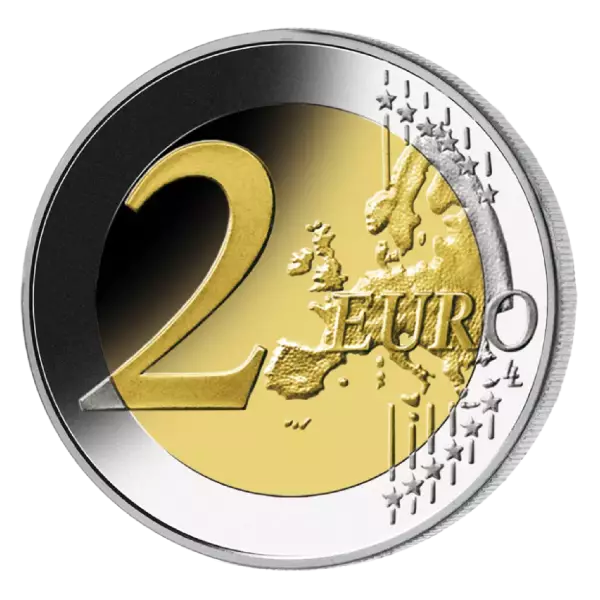

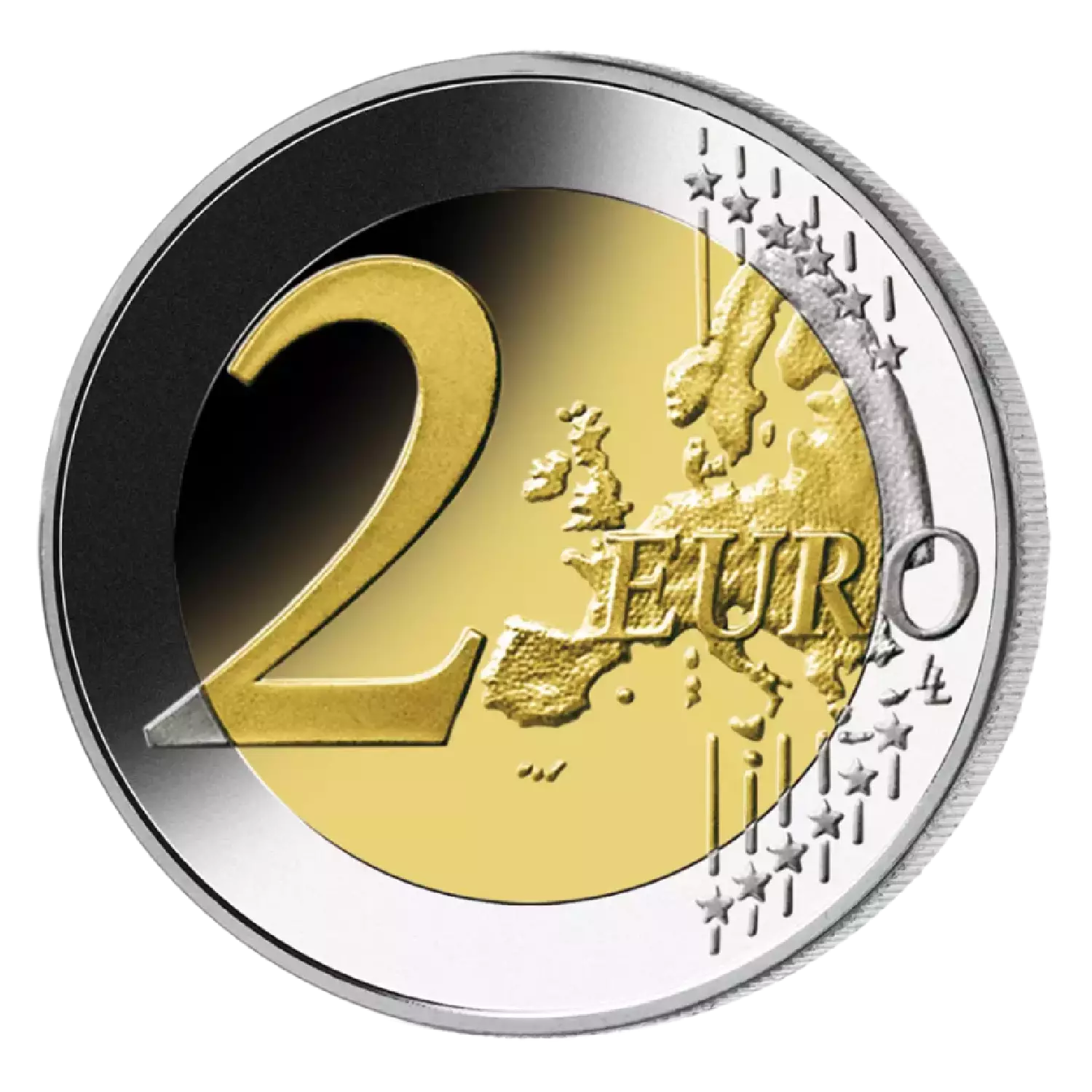
A joint 2 euro commemorative coin issued by Ireland in 2012 as part of a pan-European issue to mark the 10th anniversary of the introduction of euro coins and banknotes. The design was by Helmut Andexinger (Austria). The Irish version has a mintage of 1,350,000. Bimetallic, diameter 25.75 mm, weight 8.5 g.
Obverse
The centre features the euro symbol "€", surrounded by a stylized depiction of the world - with people (family), a bank (EZB Tower), transport (ship), industry (factory), and wind power (windmills). This symbolises how the euro has become a global player and an integral part of European everyday life over the 10 years of circulation. Surrounding: "ÉIRE" (Ireland) and "2002-2012". The author's initials "A.H." placed between the ship and the bank. On the outer ring - 12 EU stars.
Reverse
The reverse is the common side of the 2 euro coins of the second type, designed by Luc Luix. It depicts a map of Europe as a single continent without internal borders. On the left - a large denomination "2" and the inscription "EURO", on the right - a map. On the outer ring - 12 stars of the European Union. The edge - with fine ribbing and national inscription.
Historical context
January 1, 2002 - a historic day when euro banknotes and coins began to circulate in 12 eurozone member states, replacing national currencies. This was the largest currency operation in human history - the ECB and national central banks prepared 15 billion banknotes and 52 billion coins with a total value of about 660 billion euros. The changeover campaign lasted from January to February. Ireland replaced its pound (punt Éireannach) with the euro at a fixed rate of 0.787564 pounds to 1 euro. The changeover in Ireland took place quickly and without any major problems: in the first week of 2002, more than 90% of cash payments were already made in euros. The Irish received a "euro starter pack" with the first coins. The introduction of the euro brought economic benefits to Ireland - reduced transaction costs, exchange rate stability, and easier trade with partners. As of 2012, the euro was used by about 330 million Europeans in 17 countries.