
Shopping Cart
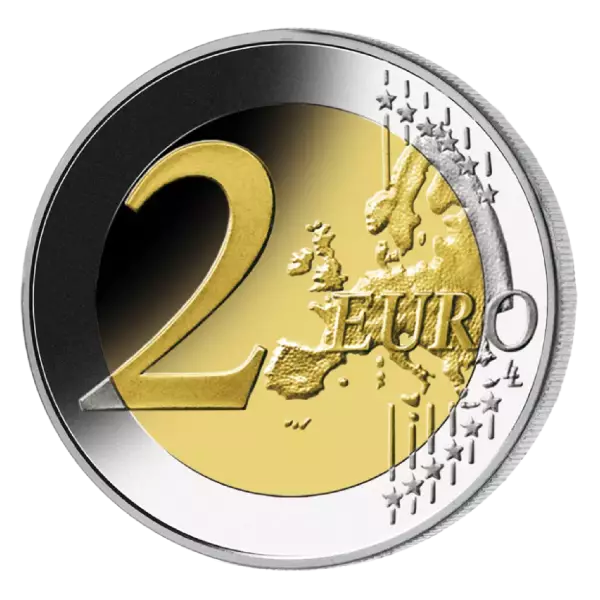

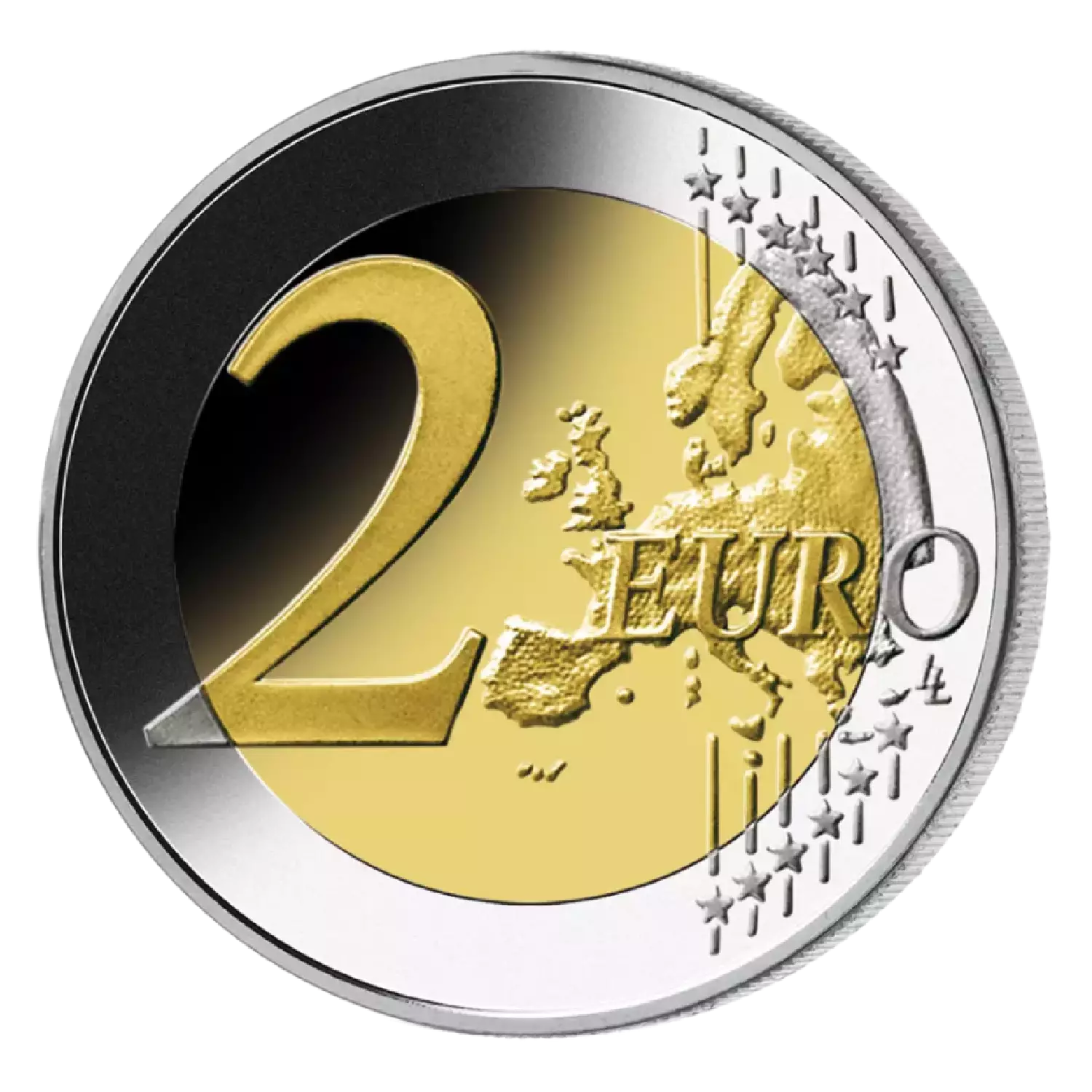
The 2 euro commemorative coin of the Kingdom of Spain, issued on June 30, 2005 with a circulation of 8,000,000 copies, is the first commemorative coin of Spain. Dedicated to the 400th anniversary of the publication of "Don Quixote". Bimetallic, diameter 25.75 mm, weight 8.5 g. Minted at the Royal Mint of Spain (FNMT).
Obverse
The center of the coin depicts the figure of Don Quixote - the "knight of a sad image" with a spear in his right hand. In the background are two windmills, which the legendary hero went to fight, considering them giants - one of the most famous scenes in the novel. On the left is the mark of the Madrid mint (crown above M), on the right is the year of issue. Around, in a circle, is the inscription "ESPAÑA 2005" (Spain 2005). On the outer ring are the 12 stars of the European Union.
Reverse
The reverse is the common side of the 2 euro coins of the second type, designed by Luc Luix. It depicts a map of Europe as a single continent without internal borders. On the left is a large denomination "2" and the inscription "EURO", on the right is a map. On the outer ring are the 12 stars of the European Union. The band is with a thin groove and a national inscription.
Historical context
"The Ingenious Nobility Don Quixote of La Mancha" (El ingenioso hidalgo don Quijote de la Mancha) is a novel by Miguel de Cervantes Saavedra, published in 1605 (part one) and 1615 (part two) in Madrid. It is considered the first modern novel and one of the greatest books in the history of literature. The novel tells the adventures of a poor Spanish nobleman, Alonso Quixano, who, after reading chivalric novels, went crazy and imagined himself a knight named Don Quixote, setting off on a journey on his thin horse Rocinante with his squire Sancho Panza. The famous episode with the windmills, which Don Quixote attacks, perceiving as giants, has become a symbol of idealism and futile efforts. Cervantes (1547-1616) died on 22 April 1616, the same day as Shakespeare. Don Quixote has been translated into over 140 languages; according to the Norwegian Book Clubs (2002), it is the most important book in the history of world literature. The 400th anniversary of the first edition in 2005 was widely celebrated in Spain and around the world.