
Shopping Cart
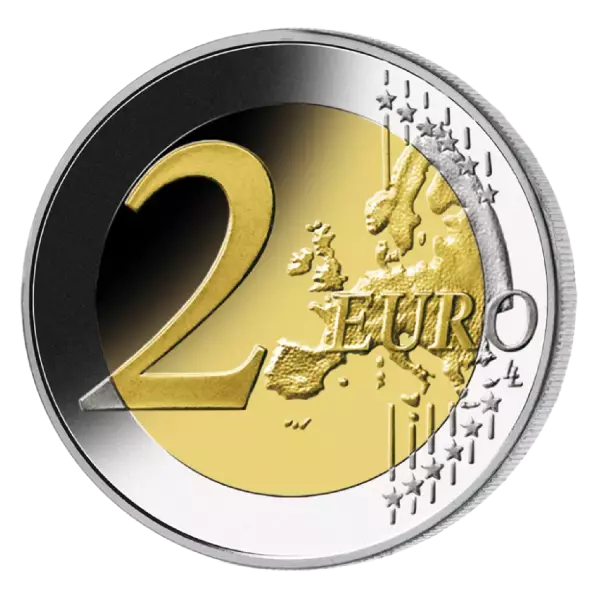

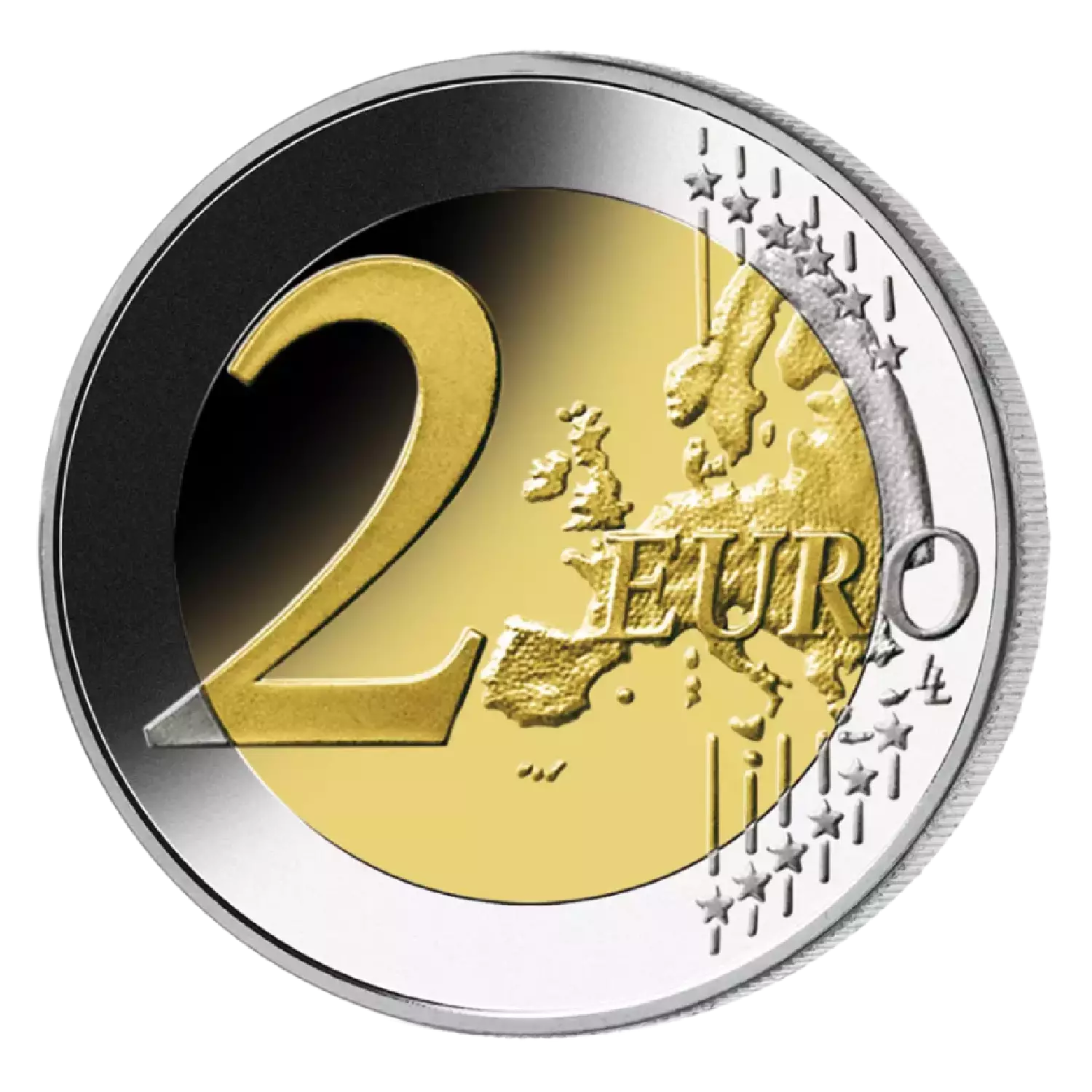
The 2 euro commemorative coin of Spain, issued on March 2, 2013 with a circulation of 8,000,000 copies, is the fourth in the "Patrimonio de la Humanidad de la UNESCO" series. Dedicated to the Royal Monastery and Palace of San Lorenzo del Escorial. It was minted at the Madrid Mint. Bimetallic, diameter 25.75 mm, weight 8.5 g.
Overse
The national side depicts a view of the complex of the Royal Monastery of San Lorenzo del Escorial from the north-west side - you can see the characteristic rectangular plan of the building with the central dome of the basilica and four corner towers, typical of the "Escorial style". At the top, in an arc, is the inscription "ESPAÑA" (Spain). On the right are the year of issue "2013" and the Madrid mint mark (a crowned letter "M"). On the outer ring are the 12 five-pointed stars of the EU.
Reverse
The reverse is the common side of the 2 euro coins of the second type, designed by Luc Luix (Royal Belgian Mint). It depicts a map of Europe as a single continent without internal borders - a symbol of European unity. On the left is a large denomination "2" and the inscription "EURO", on the right is a map with six thin horizontal lines in the background. On the outer ring are the 12 stars of the European Union. The band is finely fluted and has the inscription "2 ★", repeated six times, alternately upright and inverted.
Historical context
The Royal Monastery of San Lorenzo del Escorial (Real Monasterio de San Lorenzo de El Escorial) is a historic palace and monastery complex in the town of San Lorenzo de El Escorial, 45 km northwest of Madrid. It was designed in 1563 by King Philip II together with the architect Juan Bautista de Toledo, and after his death (1567) by Juan de Herrera. Construction lasted from 1563 to 1584. The Escorial was conceived as a memorial to the victory in the Battle of Saint-Quentin (August 10, 1557, Saint Lawrence's Day) and as the residence of the Spanish kings, the center of the Spanish Counter-Reformation and the pantheon of the Habsburg dynasty. Since then, most of the Spanish monarchs have been buried here. The complex combines the functions of a royal palace, a monastery (Order of St. Lawrence, later - the Hieronymites, from 1885 - the Augustinians), a basilica and a library. It was included in the UNESCO list in 1984.