
Shopping Cart
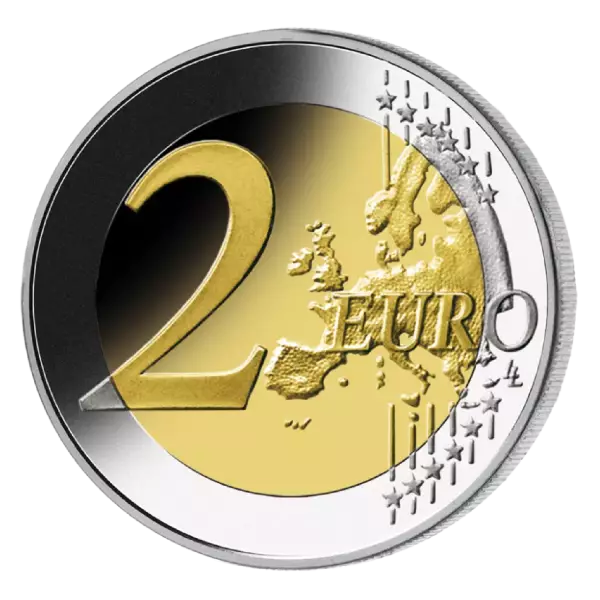

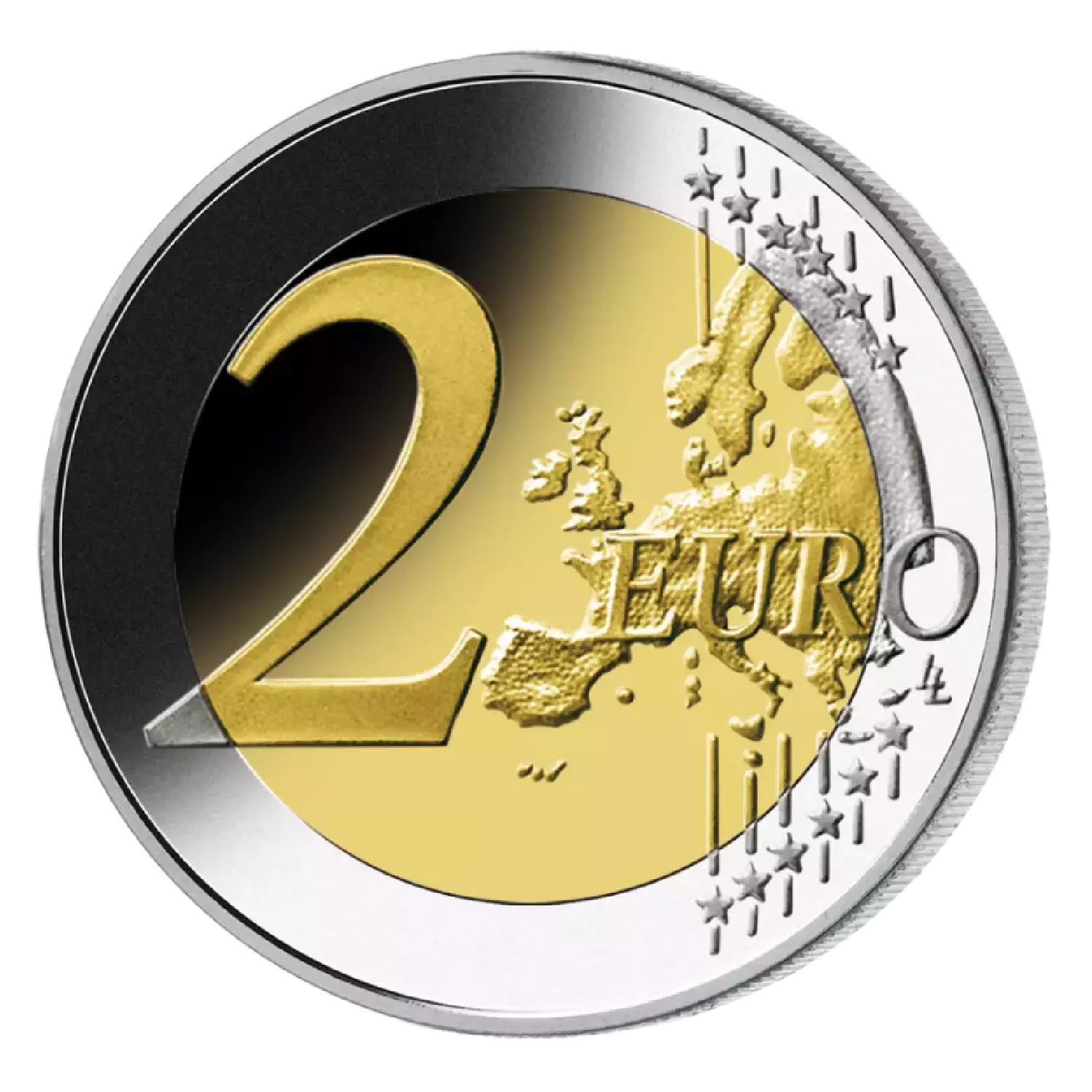
The 2 euro commemorative coin of Spain, issued in 2015 in a circulation of 8,000,000 copies, is the sixth in the "Patrimonio de la Humanidad de la UNESCO" series. Dedicated to the Altamira cave and the Paleolithic cave art of northern Spain. It was minted at the Madrid Mint. Bimetallic, diameter 25.75 mm, weight 8.5 g.
Overse
On the national side, in the center of the coin, the famous drawing of a bison from the Paleolithic paintings of the Altamira cave in Cantabria (northern Spain) is depicted. The bison is one of the most famous images from the polychrome ensemble of the "Great Plafond" of the cave. Above, in an arc, is the inscription "ESPAÑA". On the right is the mark of the Madrid mint (the letter "M" crowned with a crown). Below is the year of issue "2015". The outer ring features 12 five-pointed EU stars.
Reverse
The reverse is the common side of the 2 euro coins of the second type, designed by Luc Luix (Royal Belgian Mint). It depicts a map of Europe as a single continent without internal borders, a symbol of European unity. On the left is a large denomination "2" and the inscription "EURO", on the right is a map with six thin horizontal lines in the background. On the outer ring are the 12 stars of the European Union. The rim is finely fluted and has the inscription "2 ★", repeated six times, alternating upright and inverted.
Historical context
The Altamira Cave is a limestone cave near the town of Santillana del Mar in Cantabria (Northern Spain), world-famous for its Upper Paleolithic rock paintings dating from 35,000 to 11,000 BC. The cave was discovered in 1868 by the peasant Modesto Cubillas, and from 1875 it was explored by the amateur archaeologist Marcelino Sanz de Sautuola. In 1879, his 8-year-old daughter Maria noticed images of bison on the ceiling - this discovery was revolutionary in the understanding of Paleolithic art. The most outstanding ensemble is the "Great Plafond" (Sala de los Polícromos), which depicts about 20 bison, horses, deer and other animals in polychrome technique using the natural relief of the rock. In 1985, the cave was included in the UNESCO list, in 2008 the list was expanded to include 17 decorated caves in northern Spain. Due to the threat of decay of the frescoes, the cave was closed to visitors and an exact copy was built - Neocueva.