
Shopping Cart
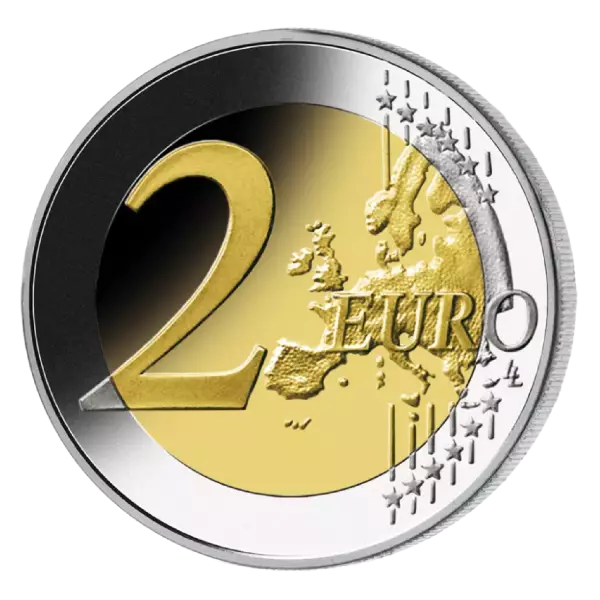

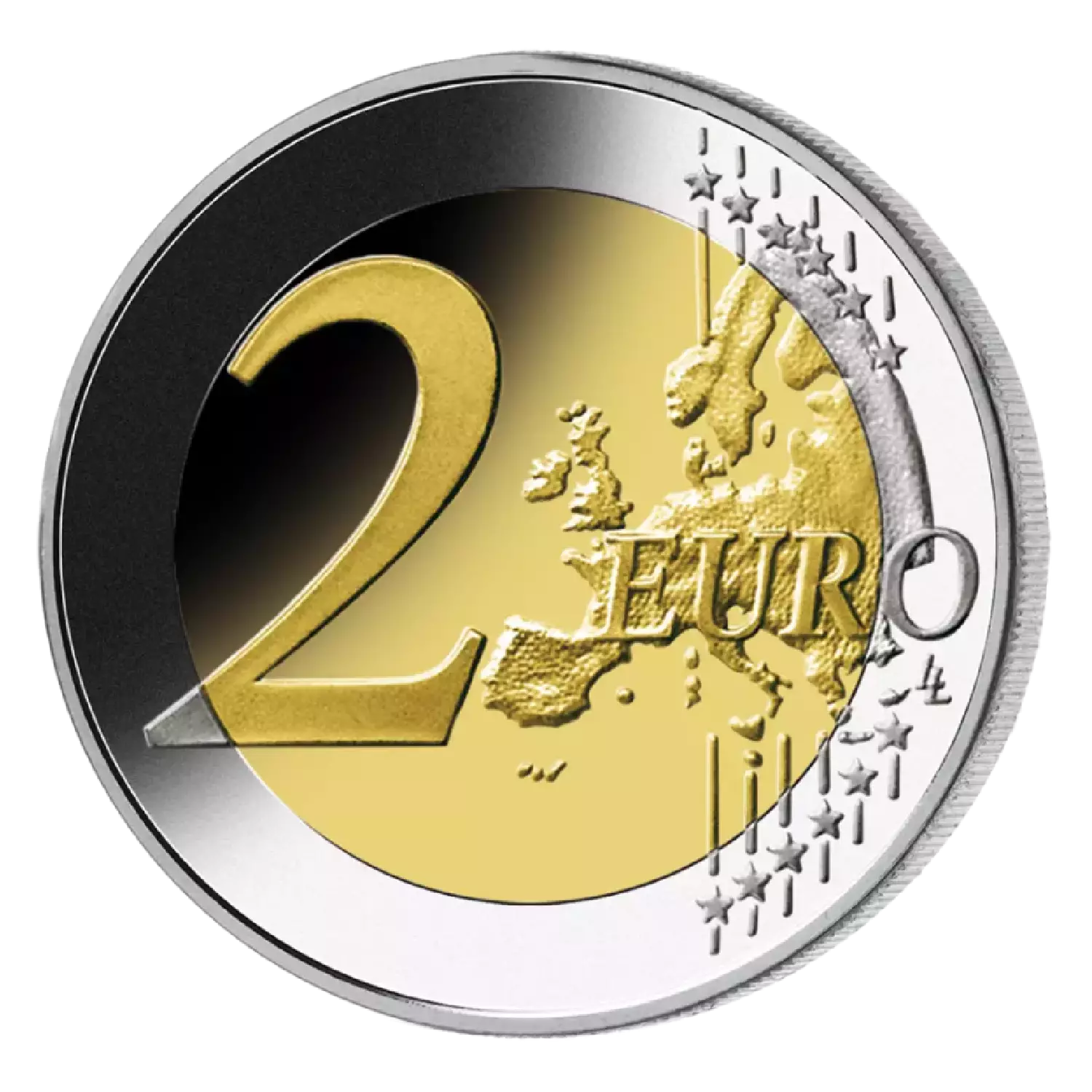
The 2 euro commemorative coin of Spain, issued in 2016 with a circulation of 8,000,000 copies, is the seventh in the "Patrimonio de la Humanidad de la UNESCO" series. Dedicated to the Old Town of Segovia and its Roman aqueduct. It was minted at the Madrid Mint. Bimetallic, diameter 25.75 mm, weight 8.5 g.
Obverse
The national side depicts part of the Roman aqueduct of Segovia - one of the best preserved Roman aqueducts in the world, with characteristic two-tiered arcades made of granite blocks. The central section is depicted - the highest and most spectacular part of the structure on the Plaza del Azoguejo. Above, in an arc, the inscription "ESPAÑA" and the year of issue "2016" are placed. On the right is the Madrid mint mark - the letter "M" surmounted by a crown. On the outer ring are the 12 five-pointed stars of the EU.
Reverse
The reverse is the common side of the 2 euro coins of the second type, designed by Luc Luix (Royal Belgian Mint). It depicts a map of Europe as a single continent without internal borders - a symbol of European unity. On the left is a large denomination "2" and the inscription "EURO", on the right is a map with six thin horizontal lines in the background. On the outer ring are the 12 stars of the European Union. The rim is finely fluted and the inscription "2 ★", repeated six times alternately upright and inverted.
Historical context
The Roman aqueduct of Segovia is one of the most prominent monuments of Roman engineering on the Iberian Peninsula, built in the late 1st - early 2nd century AD, approximately during the reign of the emperors Domitian, Nerva or Trajan. The total length of the aqueduct is about 15 km, the visible (ground) part is 728 m, with 167 arches on 120 supports. The highest point in the city center (Azoguejo Square) is 28.5 meters. The aqueduct was built without mortar, from precisely fitted granite blocks held by gravity. It transported water from the Frio River (source of La Aqueveda) to the Alcázar fortress in Segovia. Active until the 20th century. The city of Segovia, together with the aqueduct, was inscribed on the UNESCO World Heritage List in 1985, and the old town also includes the Alcázar, the cathedral, Romanesque churches, and the Jewish quarter.