
Shopping Cart
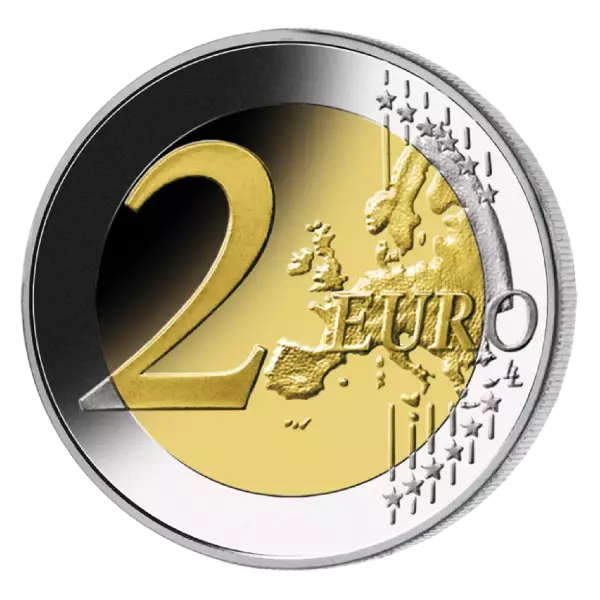

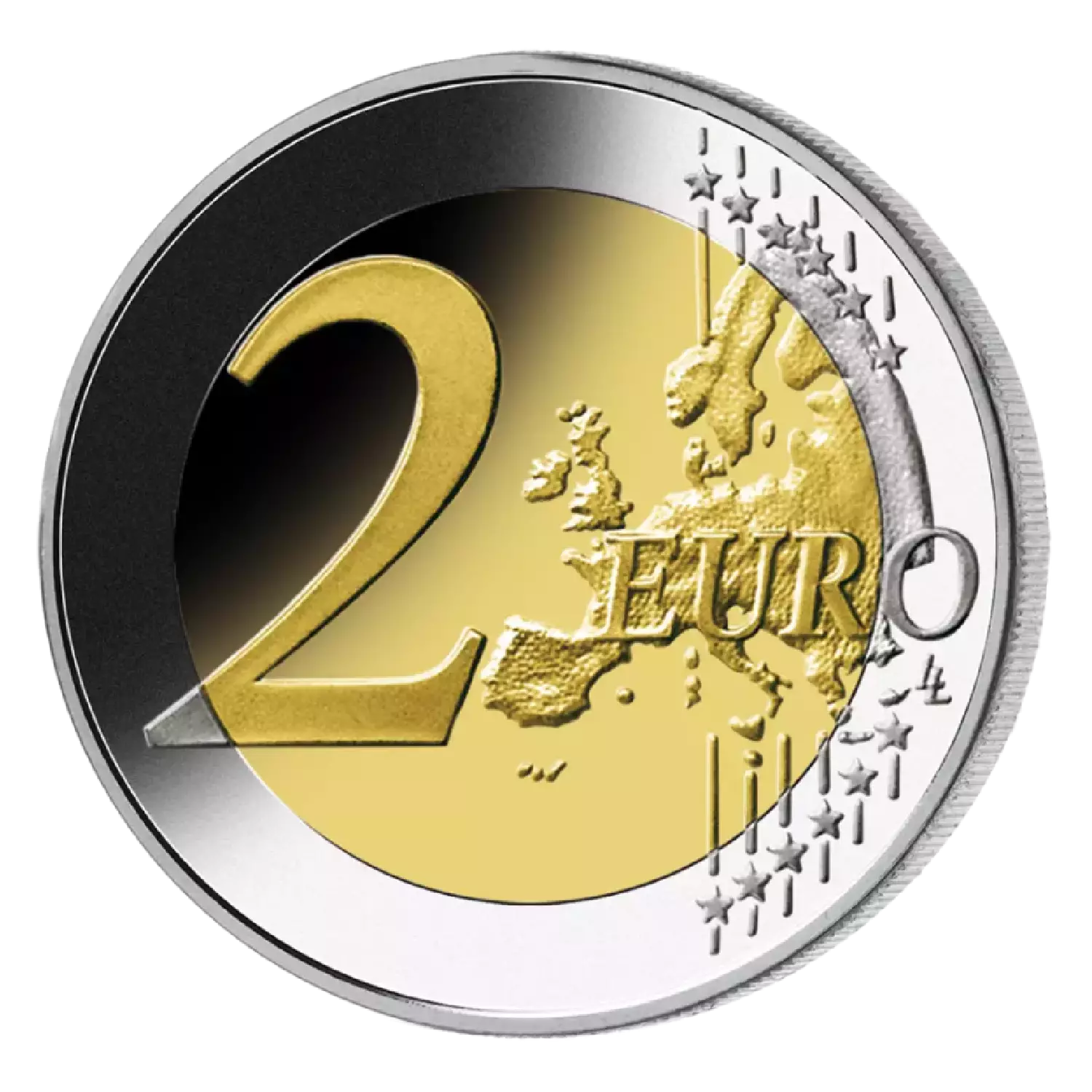
The 2 euro commemorative coin of Spain, issued in 2022 with a circulation of 1,000,000 copies, is the thirteenth in the "Patrimonio de la Humanidad de la UNESCO" series. Dedicated to the Garajonay National Park on the island of La Gomera. It was minted at the Madrid Mint (FNMT-RCM). Bimetallic (copper-nickel ring, three-layer core - nickel brass/nickel/nickel brass), diameter 25.75 mm, weight 8.5 g.
Obverse
The national side of the coin depicts the famous rock formation of Roque de Agando - a 180 m high volcanic outcrop in the form of a basalt peak, located in the center of the island of La Gomera. In the foreground is the characteristic laurel forest (laurisilva) of the Garajonay National Park. At the top is the mint mark of the Madrid Mint (the letter "M" crowned with a crown), above it in an arc is the inscription "ESPAÑA 2022". On the outer ring are the 12 five-pointed stars of the European Union.
Reverse
The reverse is the common side of the 2 euro coins of the second type, designed by Luc Luix (Royal Belgian Mint). It depicts a map of Europe as a single continent without internal borders - a symbol of European unity. On the left is a large denomination "2" and the inscription "EURO", on the right is a map with six thin horizontal lines in the background. On the outer ring are the 12 stars of the European Union. The band is finely grooved and the inscription "2 ★", repeated six times alternately upright and inverted.
Historical context
The Garajonay National Park (Parque Nacional de Garajonay) is located on the island of La Gomera in the Canary Islands archipelago, covering almost 4,000 hectares (10% of the island's territory) in the center and north of the island. It was founded on March 25, 1981. The park preserves a unique laurisilva - a relict subtropical laurel forest of the Tertiary period, which once covered a significant part of Southern Europe and North Africa, but now survives only on the Macaronesian islands (Canary Islands, Madeira, Azores). The main species are Canary laurel, noble laurel, and persea indica. Constant fogs from the trade winds create constant humidity. The park was added to the UNESCO list in 1986. The name "Garachonay" comes from the names of two Guanche natives in love from the island's legend. Among the sights are Roque de Agando, Alto de Garachonay (highest point, 1487 m), numerous trails and gorges.