
Shopping Cart
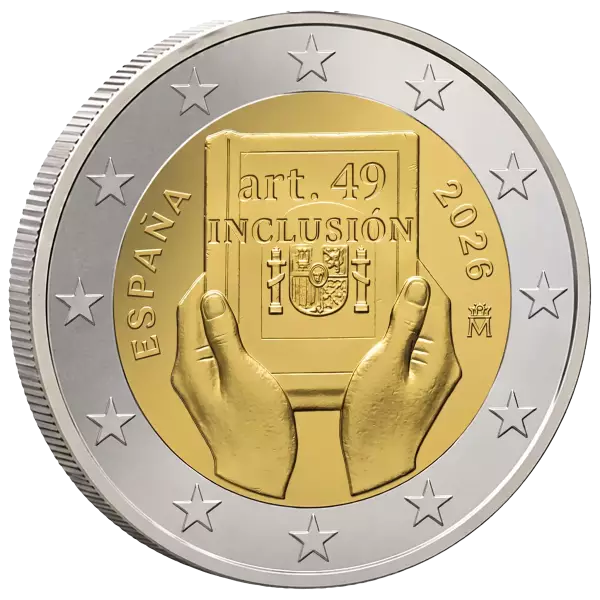


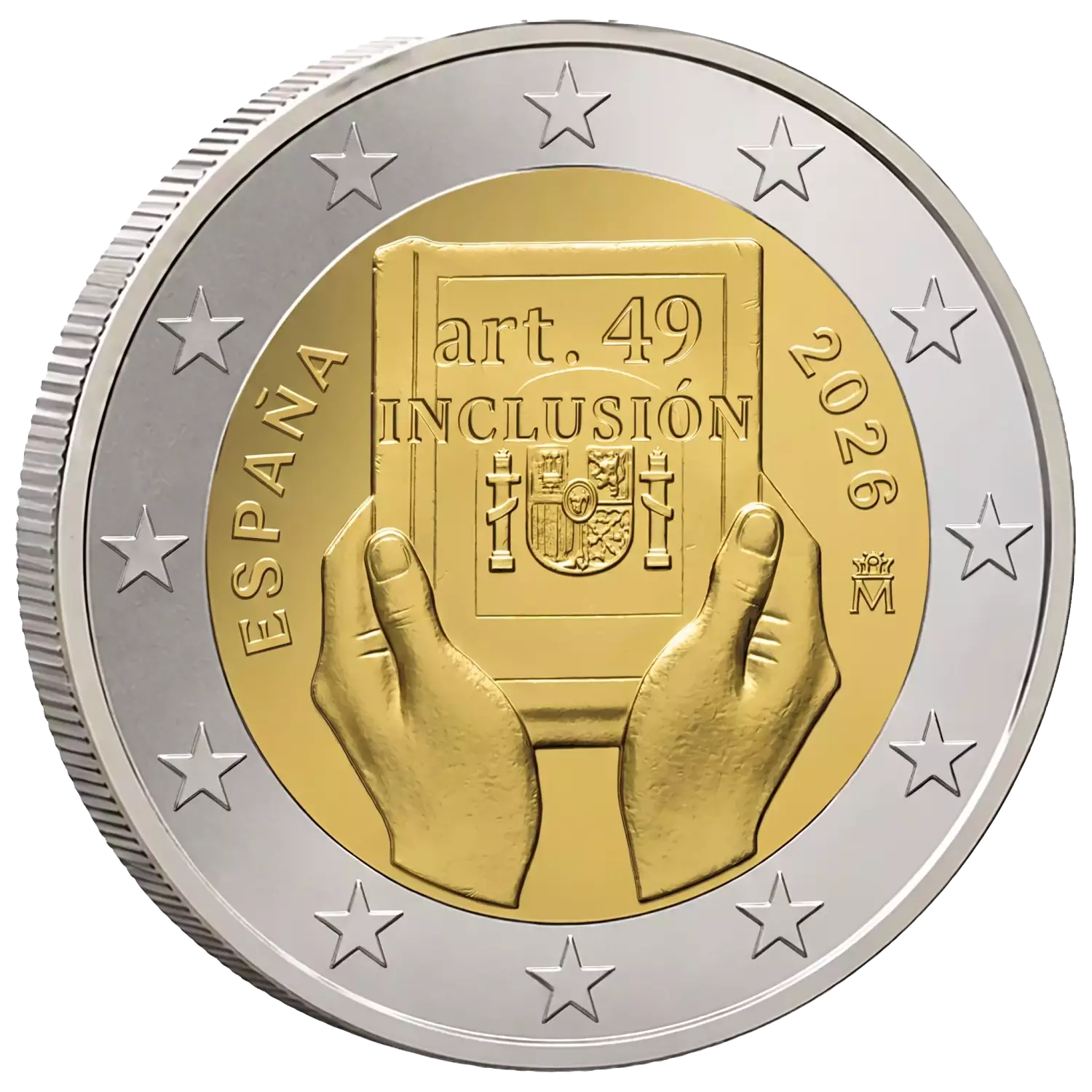

2 Euro commemorative coin of Spain, issued in 2026. Dedicated to the reform of Article 49 of the Spanish Constitution on the protection of persons with disabilities. Minted at the Madrid Mint. Bimetallic (copper-nickel ring, three-layer core - nickel brass/nickel/nickel brass), diameter 25.75 mm, weight 8.5 g.
Overse
The national side of the coin depicts two hands holding an open book - the Spanish Constitution. Above it is the inscription "Artículo 49 INCLUSIÓN" (Article 49 - Inclusion), which emphasizes the key theme of the coin: the reform of the constitutional norm on the protection of persons with disabilities. The inscriptions "ESPAÑA" and the year "2026" are placed around the circumference of the coin. Also on the field of the coin is the mark of the Madrid Mint (the letter "M" crowned with a crown). On the outer ring are the 12 five-pointed stars of the European Union.
Reverse
The reverse is the common side of the 2 euro coins of the second type, designed by Luc Luix (Royal Belgian Mint). It depicts a map of Europe as a single continent without internal borders - a symbol of European unity. On the left - a large denomination "2" and the inscription "EURO", on the right - a map with six thin horizontal lines in the background. On the outer ring are the 12 stars of the European Union. The band - with a thin groove and the inscription "2 ★", repeated six times alternately upright and inverted.
Historical context
Article 49 of the Spanish Constitution of 1978 regulates the protection of the rights and full participation in society of people with disabilities. The original 1978 version already contained the basics of social protection, but used the term "disminuidos físicos, sensoriales y psíquicos" (physically, sensory and mentally impaired), which over time acquired a pejorative connotation. In 2024, the Congress of Deputies and the Senate of Spain approved the reform of Article 49, the third constitutional reform in the history of Spanish democracy after 1992 and 2011. The reform removed the outdated terminology and replaced it with "personas con discapacidad" (people with disabilities), expanding and strengthening the principles of inclusion, autonomy, freedom of choice and full participation in public life. The reform was supported by a majority of all parliamentary forces as a sign of a broad consensus on respect for the dignity and rights of the 4.3 million Spaniards with disabilities. It entered into force on 15 February 2024.