
Shopping Cart
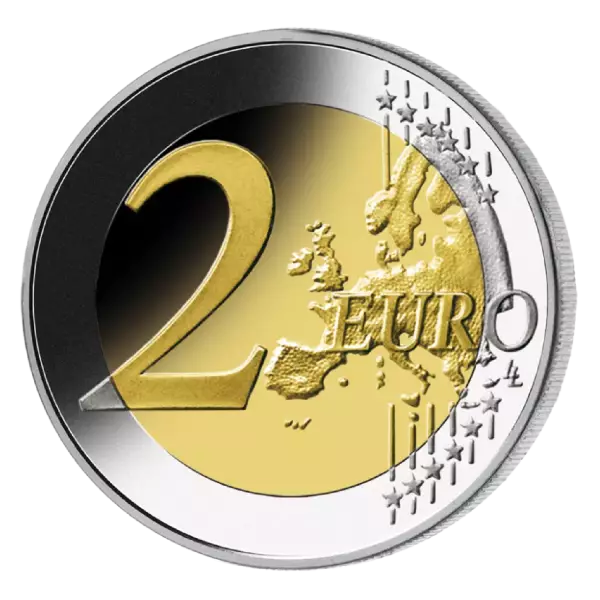

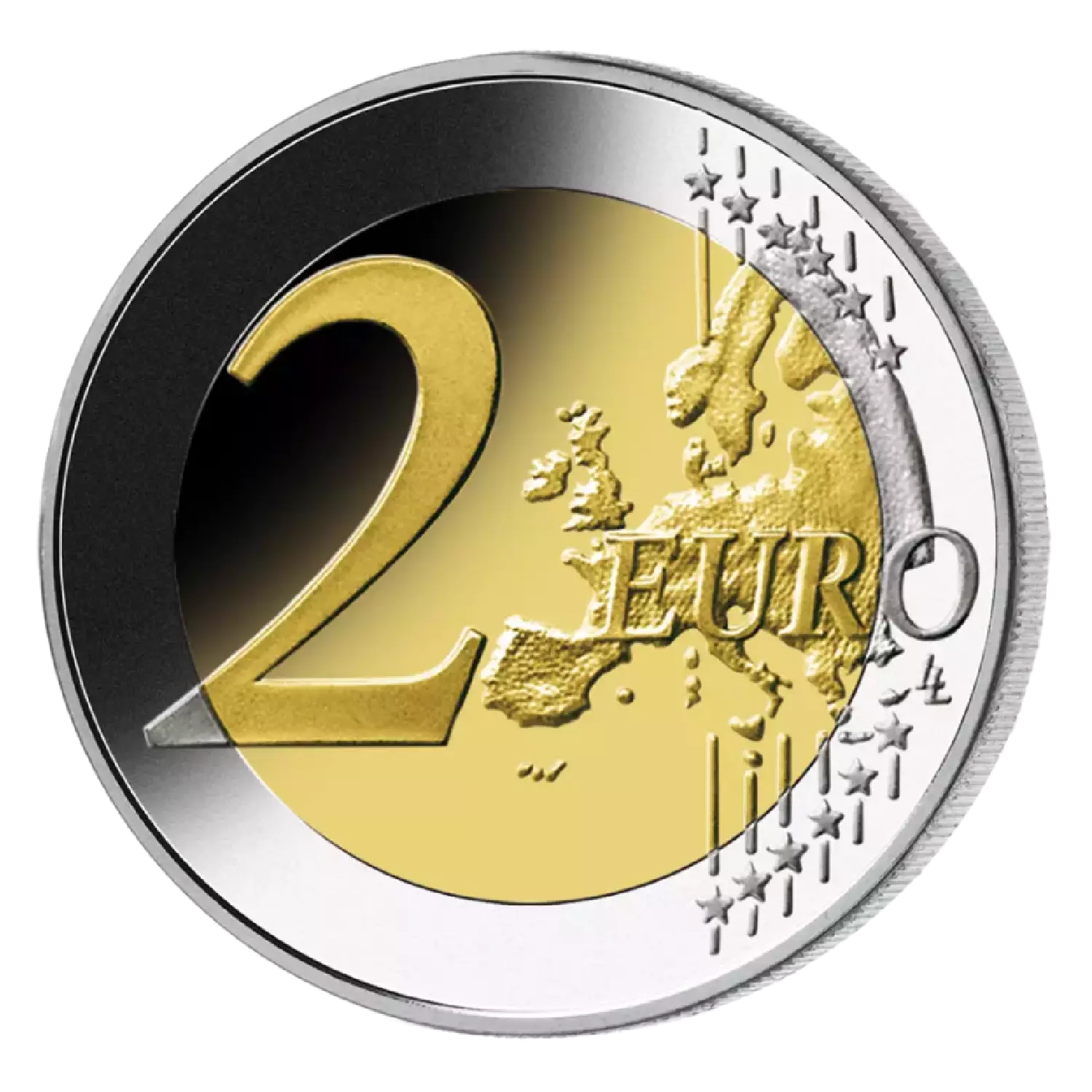
A 2 euro commemorative coin of the Italian Republic, issued on 24 September 2010 in a circulation of 4,000,000 copies. Dedicated to the 200th anniversary of the birth of Camillo Benzo, Count of Cavour. The author of the design is Roberto Mauri (initials "RM"). Bimetallic, diameter 25.75 mm, weight 8.5 g. Minted at IPZS in Rome.
Obverse
The center of the coin depicts a portrait of Camillo Benzo, Count of Cavour, based on a painting by Francesco Aieza from 1864. Cavour is depicted in a characteristic profile - with thick sideburns, round glasses and a stern expression. On the left is the inscription "CAVOUR", below are the years "1810-2010" and the monogram "RI" (Repubblica Italiana). Also on the field of the coin is the mint mark "R" (Rome) and the initials of the author "RM". On the outer ring are the 12 five-pointed stars of the European Union.
Reverse
The reverse is the common side of the 2 euro coins of the second type, designed by Luc Luix (Royal Belgian Mint). It depicts a map of Europe as a single continent without internal borders - a symbol of European unity. On the left is a large denomination "2" and the inscription "EURO", on the right is a map with six thin horizontal lines in the background. On the outer ring are the 12 stars of the European Union. The rim is finely fluted and the inscription "2 ★", repeated six times alternately upright and inverted.
Historical context
Camillo Paolo Filippo Giulio Benzo, Count of Cavour, Isolabella and Leri (Camillo Benso, 10 August 1810 – 6 June 1861) was an Italian politician, businessman, economist and nobleman, one of the leading figures in the movement for the unification of Italy (Risorgimento). Born in Turin in Piedmont. Prime Minister of the Kingdom of Piedmont-Sardinia from 1852 (with a break) until his death. Founder of the influential newspaper "Il Risorgimento" (1847), which gave its name to the entire epochal movement. Cavour skillfully used diplomacy to achieve his goals: he formed an alliance with Napoleon III of France (Treaties of Plombieres in 1858), and launched the Second War of Independence with Austria (1859). Working with Giuseppe Garibaldi and King Vittorio Emanuele II, he achieved the unification of most of Italy. On 17 March 1861, the Kingdom of Italy was proclaimed, and Cavour became its first Prime Minister, but he died only three months later, on 6 June 1861.