
Shopping Cart
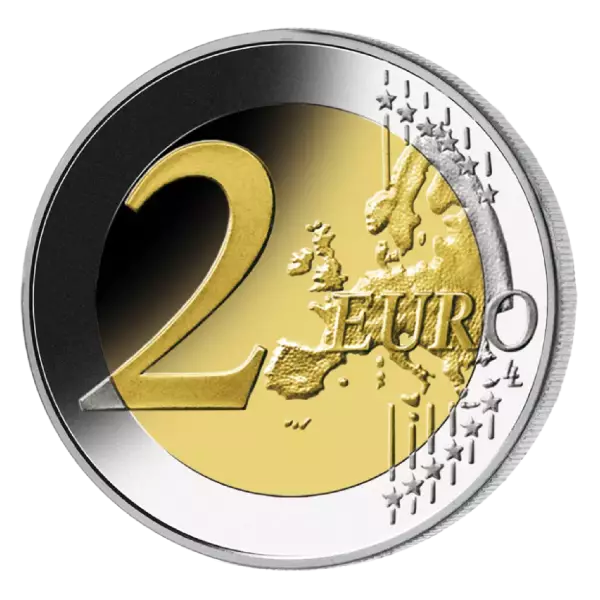

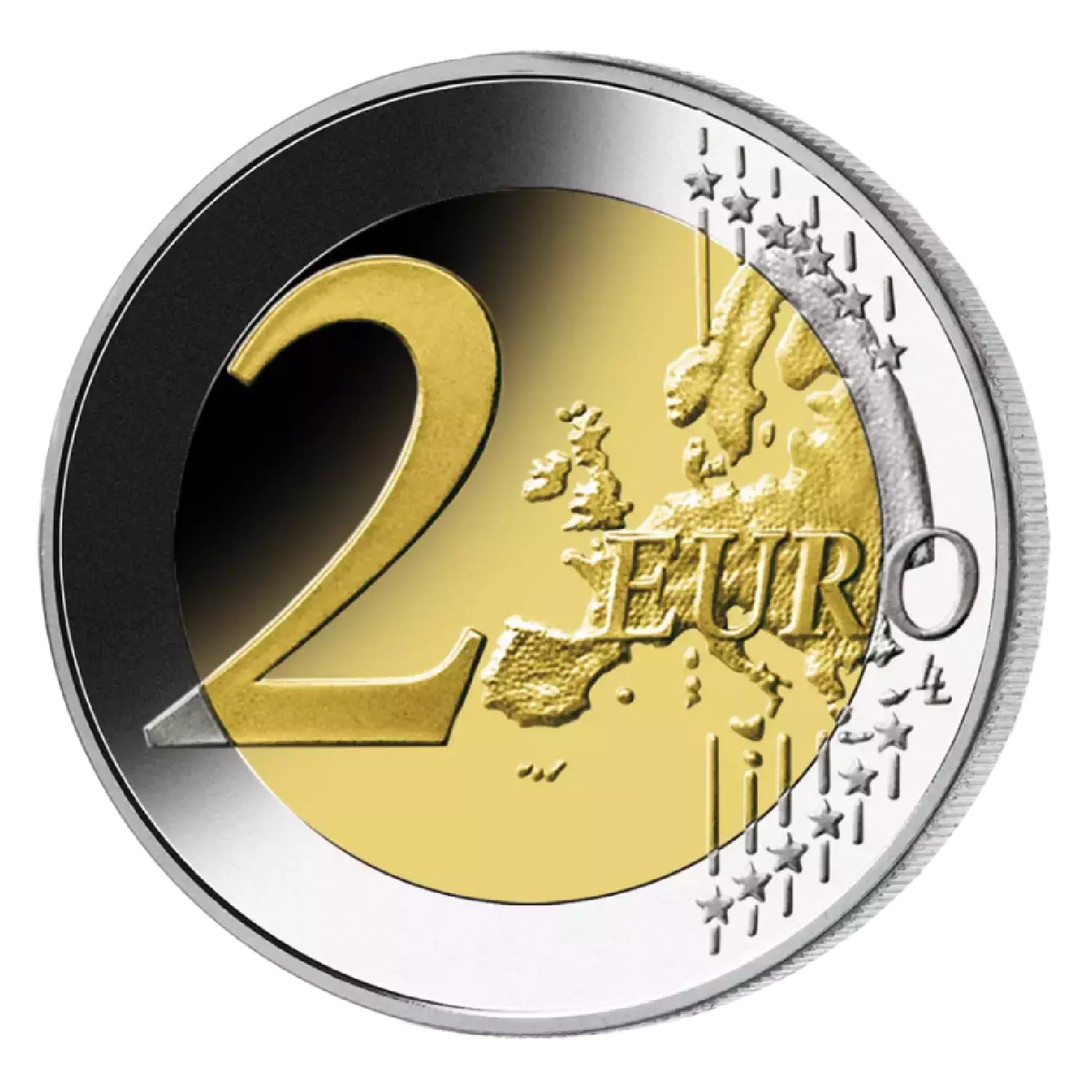
2 euro commemorative coin of the Italian Republic, issued on July 18, 2012, with a circulation of 15,000,000 copies. Dedicated to the 100th anniversary of the death of Giovanni Pascoli. The author of the design is Claudia Momoni. Bimetallic, diameter 25.75 mm, weight 8.5 g. Minted at IPZS in Rome.
Obverse
The coin depicts a portrait of Giovanni Pascoli in a classic profile. On the left is the inscription "G. PASCOLI", on the right is the monogram "RI" (Repubblica Italiana). At the top is the year "1912", at the bottom is "2012". Also on the field of the coin is the mint mark "R" (Rome) and the initials of the author "C. MOMONI". The portrait and all elements are framed on the outer ring by the 12 five-pointed stars of the European Union.
Reverse
The reverse is the common side of the 2 euro coins of the second type, designed by Luc Luix (Royal Belgian Mint). It depicts a map of Europe as a single continent without internal borders - a symbol of European unity. On the left - a large denomination "2" and the inscription "EURO", on the right - a map with six thin horizontal lines in the background. On the outer ring - 12 stars of the European Union. The rim is finely fluted and the inscription "2 ★", repeated six times alternately upright and inverted.
Historical context
Giovanni Pascoli (1855-1912) was an Italian poet, classical philologist, and one of the most prominent representatives of decadence in Italian literature at the turn of the 19th and 20th centuries. He was born on December 31, 1855 in San Mauro di Romagna. In 1867, his father was brutally murdered - this tragedy had a strong influence on the poet's work. He studied at the University of Bologna under Giosue Carducci, and in 1905 he inherited his chair of Italian literature. Main collections: "Myricae" (1891), "Poemetti" (1897), "Canti di Castelvecchio" (1903), "Poemi conviviali" (1904). Pascoli introduced into Italian poetry a new view of nature through the eyes of a "child" (fanciullino) - a concept that he outlined in a theoretical essay. He also wrote Latin poems, for which he received numerous awards. He died of stomach cancer on April 6, 1912 in Bologna. His work influenced all Italian poetry of the 20th century.