
Shopping Cart
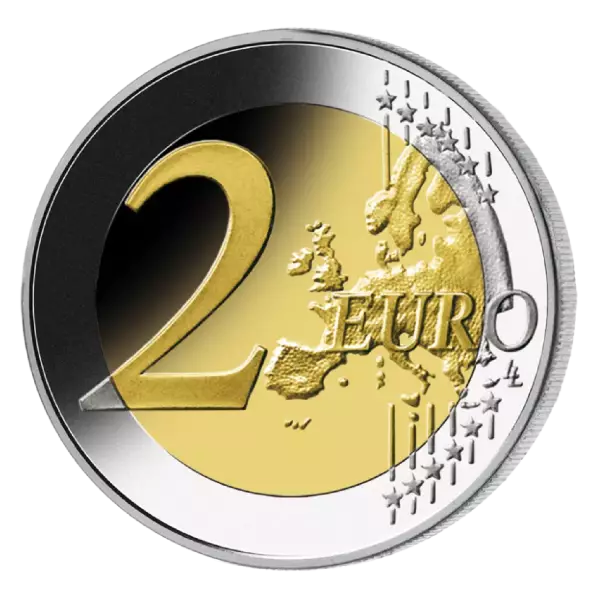

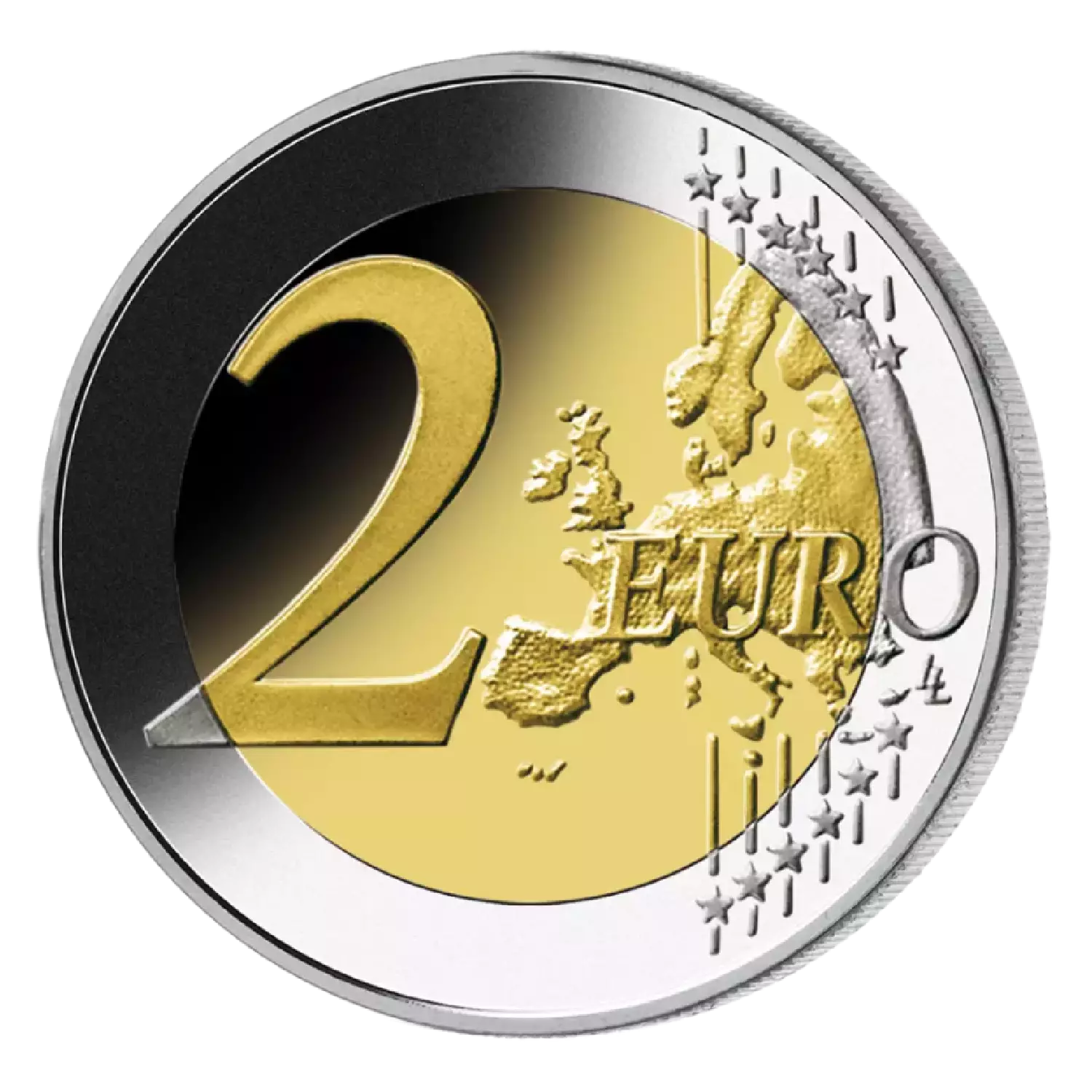
2 euro commemorative coin of the Italian Republic, issued on July 2, 2013 in a circulation of 10,000,000 copies. Dedicated to the 700th anniversary of the birth of Giovanni Boccaccio. The author of the design is Claudia Momoni. Bimetallic, diameter 25.75 mm, weight 8.5 g. Minted at the IPZS in Rome.
Overse
The center of the coin depicts a portrait of Giovanni Boccaccio in medieval headdress, based on a fresco by Andrea del Castagno (c. 1450, the "Famous People" cycle from the Villa Carducci). On the left is the name "GIOVANNI BOCCACCIO". At the top are the years "1313-2013", at the bottom is the monogram "RI" (Repubblica Italiana). Also on the coin's field is the mint mark "R" (Rome) and the initials of the author "C. Momoni". On the outer ring are the 12 stars of the European Union.
Reverse
The reverse is the common side of the 2 euro coins of the second type, designed by Luc Luix (Royal Belgian Mint). It depicts a map of Europe as a single continent without internal borders - a symbol of European unity. On the left is a large denomination "2" and the inscription "EURO", on the right is a map with six thin horizontal lines in the background. On the outer ring are the 12 stars of the European Union. The rim is finely fluted and the inscription "2 ★", repeated six times alternately upright and inverted.
Historical context
Giovanni Boccaccio (1313-1375) was an Italian writer, poet and humanist of the early Renaissance, one of the founding fathers of Italian literary prose and the "Three Crowns" of Trecento along with Dante Alighieri and Francesco Petrarch. He was born probably in Certaldo or Florence, the illegitimate son of a Florentine merchant. He studied canon law in Naples, but focused on literature and classical philology. The main work is "Decameron" (1349-1353) - a collection of 100 short stories, which are told to each other by seven girls and three young men, hiding in a villa near Florence from the Black Death of 1348. The Decameron became a model for European short stories (influenced Chaucer, Shakespeare, Moliere). Boccaccio is also the author of "Filocolo", "Filostrato", "Fiametta", "Nimetale Fiesolane" and the Latin works "De mulieribus claris" (On famous women) and "Genealogia deorum gentilium". He was a great expert and popularizer of Dante. He died on December 21, 1375 in Certaldo.