
Shopping Cart
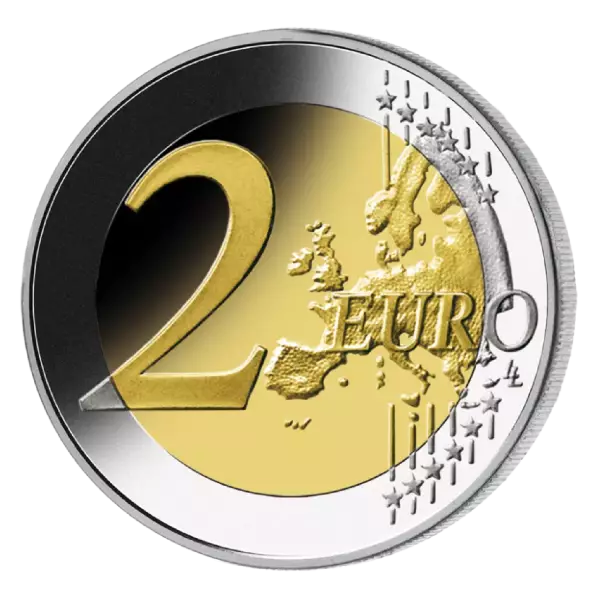

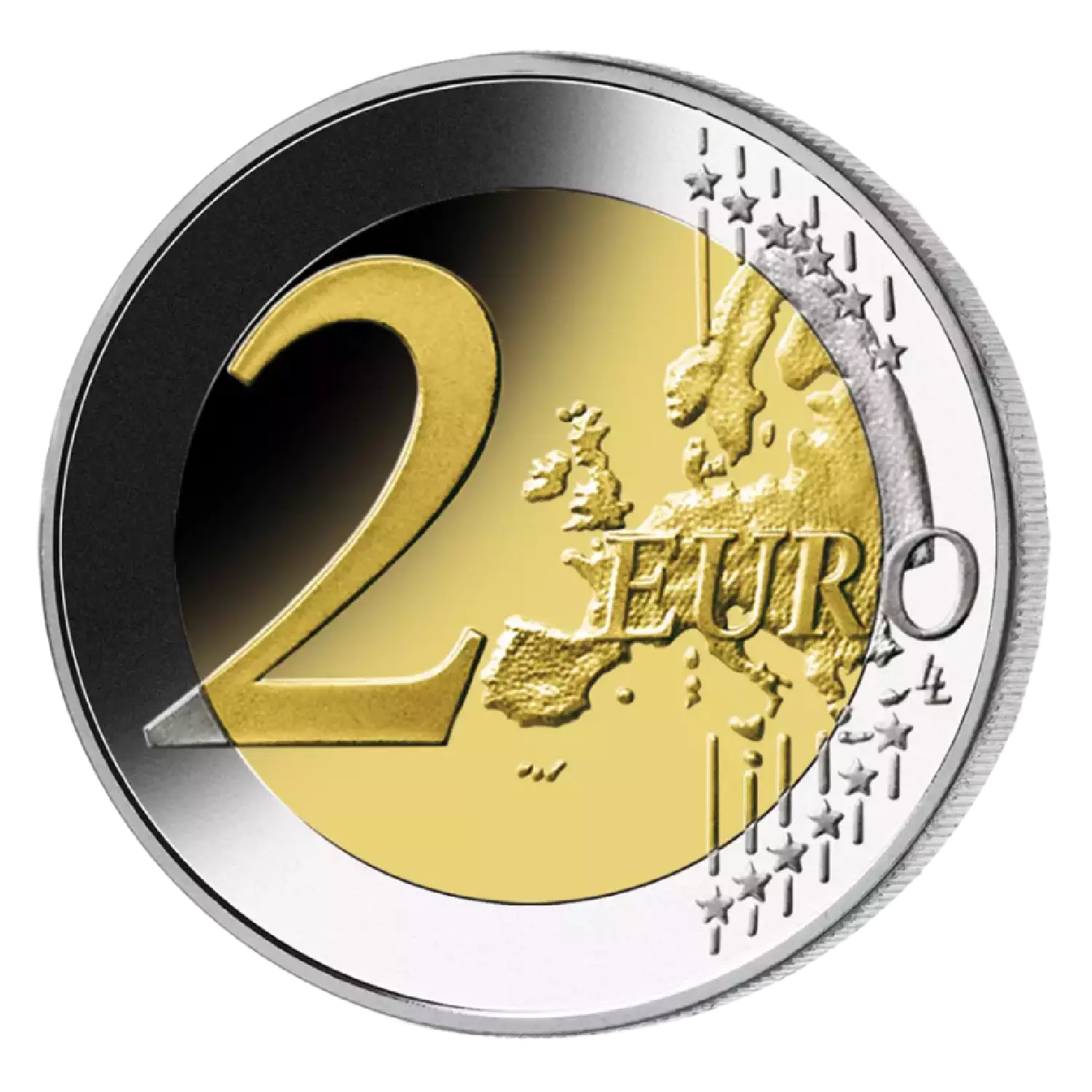
2 euro commemorative coin of the Italian Republic, issued in 2016 in a circulation of 1,500,000 copies. Dedicated to the 2200th anniversary of the death of Titus Maccius Plautus. The author of the design is Luciana De Simoni (initials "LDS"). Bimetallic, diameter 25.75 mm, weight 8.5 g. Minted at IPZS in Rome.
Obverse
The center of the coin depicts two theatrical masks from the ancient "New Comedy" (Commedia Nuova), which became a source of inspiration for Plautus's work. The masks are taken from a mosaic of the 1st century BC, kept in the Capitoline Museums in Rome. Above the two arched masks is a plan of the ancient Roman theater. At the top in the center is the monogram "RI" (Repubblica Italiana). On the right are the initials of the author "LDS" (Luciano De Simone). On the left is the mint mark "R". Below, under the masks, are the inscription "PLAUTO" and the dates "184 a.C." (BC) and "2016". On the outer ring are the 12 stars of the EU.
Reverse
The reverse is the common side of the 2 euro coins of the second type, designed by Luc Luix (Royal Belgian Mint). It depicts a map of Europe as a single continent without internal borders - a symbol of European unity. On the left is a large denomination "2" and the inscription "EURO", on the right is a map with six thin horizontal lines in the background. On the outer ring are the 12 stars of the European Union. The rim is finely fluted and has the inscription "2 ★", repeated six times, alternately upright and inverted.
Historical context
Titus Maccius Plautus (c. 254 - 184 BC) is one of the most famous ancient Roman comedic writers of the Late Roman Republic, the founder of Roman Latin comedy. He was born in Sarsina (Umbria). Little is known about his life: according to legend, he worked at the youth market, then in the theater chorus, earned money from trade and then became a playwright. He wrote about 130 comedies, of which 21 have survived in full (the so-called Varro Canon) and many fragments. His comedies are adaptations of the Greek "new comedy" (Menander, Philemon), but with a peculiar Roman flavor, a lively folk Latin style. Among the most famous: "Amphitryon", "Aulularia" (Comedy about the Pot), "Menekhmas" (the prototype of Shakespeare's "Comedy of Errors"), "The Boastful Moth", "Pseudolus", "Mostellaria". Plautus created types that influenced the entire European comedy: the boastful warrior, the cunning slave, the young man in love, the stingy old man. He died in 184 BC.