
Shopping Cart
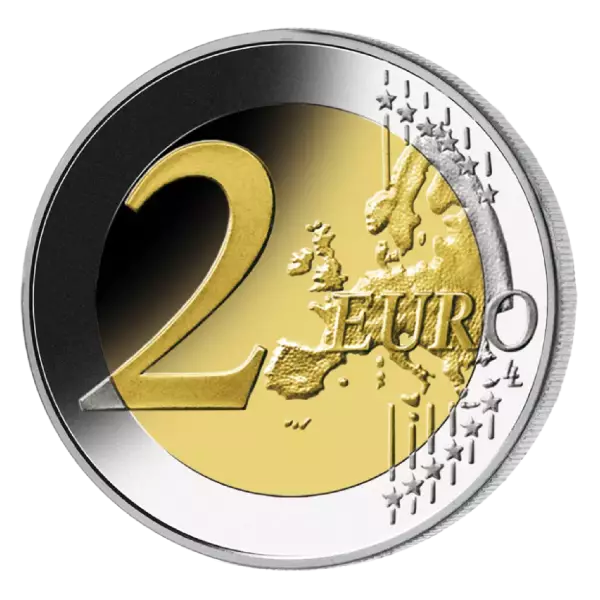

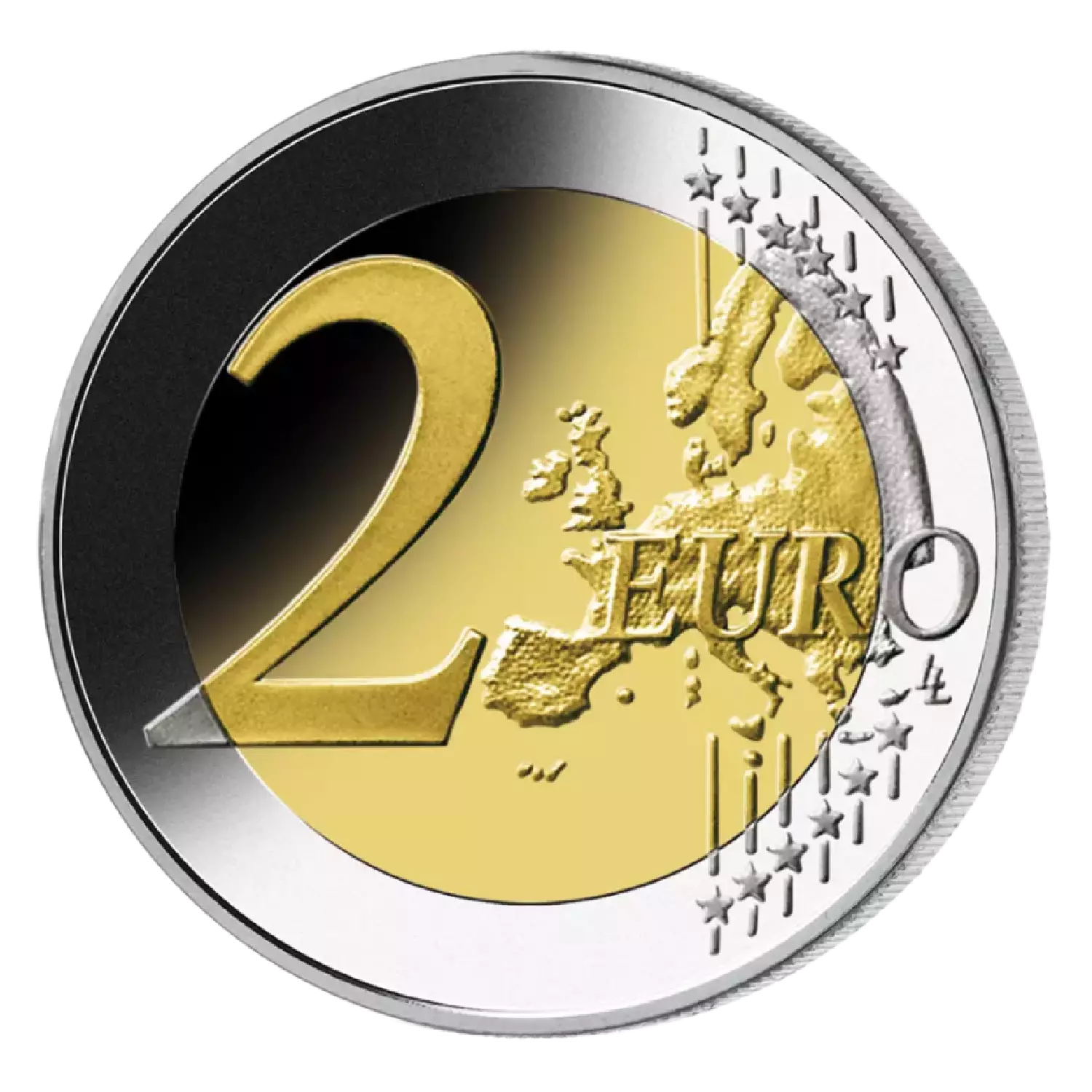
2 euro commemorative coin of the Italian Republic, issued in 2016 in a circulation of 1,500,000 copies. Dedicated to the 550th anniversary of the death of Donatello. The author of the design is Claudia Momoni. Bimetallic, diameter 25.75 mm, weight 8.5 g. Minted at the IPZS in Rome.
Overse
The center of the coin depicts the head of the famous statue "David" by Donatello - a bronze sculpture (c. 1440), kept in the Bargello Museum in Florence. This is the first known free-standing nude male sculpture from Antiquity. David is depicted in a shepherd's hat with flowers, with a sword in his hand. At the bottom is the inscription "DONATELLO" and the dates "1466-2016". At the top is the monogram "RI" (Repubblica Italiana). Also on the coin's field is the mint mark "R" (Rome) and the initials of the author. On the outer ring are the 12 five-pointed stars of the European Union.
Reverse
The reverse is the common side of the 2 euro coins of the second type, designed by Luc Luix (Royal Belgian Mint). It depicts a map of Europe as a single continent without internal borders - a symbol of European unity. On the left is a large denomination "2" and the inscription "EURO", on the right is a map with six thin horizontal lines in the background. On the outer ring are the 12 stars of the European Union. The rim is finely fluted and the inscription "2 ★", repeated six times alternately upright and inverted.
Historical context
Donatello (real name - Donato di Niccolò di Betto Bardi, c. 1386-1466) is an outstanding Italian sculptor of the early Renaissance, one of the creators of the new artistic language of the Renaissance. Born in Florence around 1386. A student of Lorenzo Ghiberti, then Nanni di Banco. One of the creators of Renaissance sculpture, who invented the "stiacciato" relief - an extremely low relief with atmospheric perspective. Among the most famous works: marble "David" (1408-1409), bronze "David" (c. 1440) - the first free-standing nude male statue from ancient times; "Saint Mark" (1411-1413) for the church of Orsanmichele; "Saint George" (1415-1417); "Gattamelata" (1453, Padua) - the first equestrian bronze statue from ancient times; "Judith and Holofernes" (c. 1455-1460). Influenced all subsequent art, in particular Michelangelo. He died on December 13, 1466 in Florence. The media placed him next to the most outstanding masters of antiquity.