
Shopping Cart
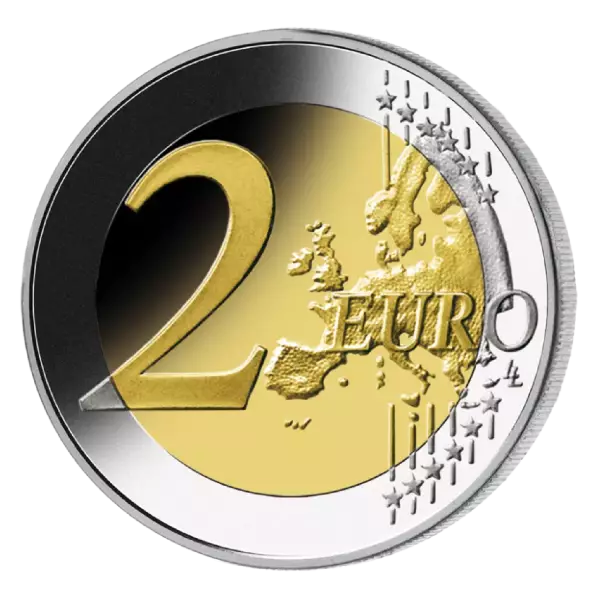

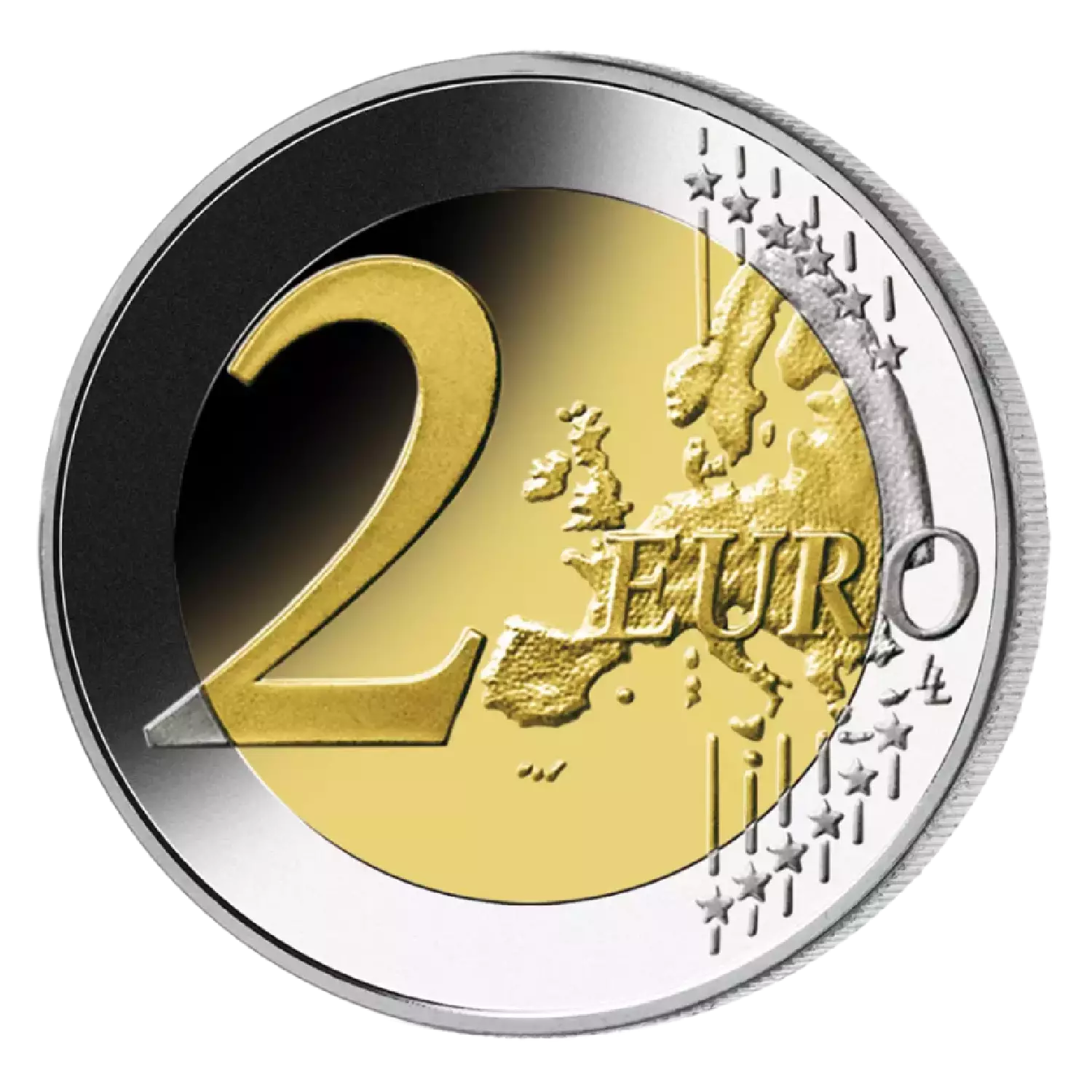
2 euro commemorative coin of the Italian Republic, issued in 2019-2020 in a circulation of 3,000,000 copies (formally dedicated to the 2019 anniversary). Dedicated to the 500th anniversary of the death of Leonardo da Vinci. The author of the design is Claudia Momoni. Bimetallic, diameter 25.75 mm, weight 8.5 g. Minted at IPZS in Rome.
Obverse
The center of the coin depicts a fragment of Leonardo da Vinci's famous drawing "Vitruvian Man" (Uomo Vitruviano, c. 1490) - an icon of the Renaissance, symbolizing the harmony of the human body and the universe, as well as the mathematical proportions of man described by Vitruvius. The original is kept in the Accademia Galleries in Venice. Around it are the inscriptions: "LEONARDO" (Leonardo) and "1519-2019" (year of death and 500th anniversary). Also on the field of the coin is the monogram "RI", the mint mark "R" and the initials of the author. On the outer ring are the 12 five-pointed stars of the EU.
Reverse
The reverse is the common side of the 2 euro coins of the second type, designed by Luc Luix (Royal Belgian Mint). It depicts a map of Europe as a single continent without internal borders - a symbol of European unity. On the left is a large denomination "2" and the inscription "EURO", on the right is a map with six thin horizontal lines in the background. On the outer ring are the 12 stars of the European Union. The band is finely fluted and has the inscription "2 ★", repeated six times alternately upright and inverted.
Historical context
Leonardo da Vinci (1452-1519) was an Italian inventor, artist, architect, anatomist, mathematician, engineer, writer, one of the most outstanding universal geniuses of the High Renaissance. He was born on April 15, 1452 in Anchiano near Vinci (Tuscany), the illegitimate son of a notary. He studied in the workshop of Andrea Verrocchio in Florence. He worked for powerful patrons: Lorenzo de' Medici in Florence (1478-1481), Duke Ludovico Sforza in Milan (1482-1499), Pope Leo X in Rome, and then for Francis I of France (from 1516). Among the most famous works: "Mona Lisa" (c. 1503-1519, Louvre), "The Last Supper" (1495-1498, Milan), "Madonna of the Rocks", "Lady with an Ermine", "Baptism of Christ". Author of thousands of pages of scientific notes and drawings - on anatomy, botany, geology, optics, hydraulics, mechanics, architecture; designed flying machines, tanks, helicopters. He died on May 2, 1519 in Clos (France), where he settled at the invitation of King Francis I.