
Shopping Cart
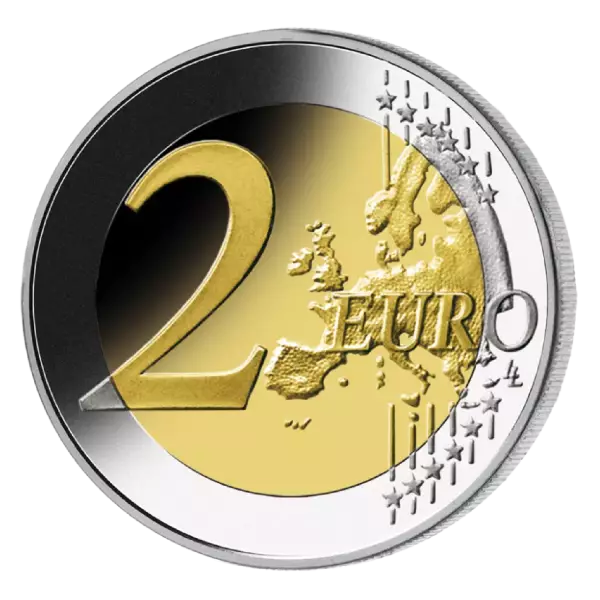

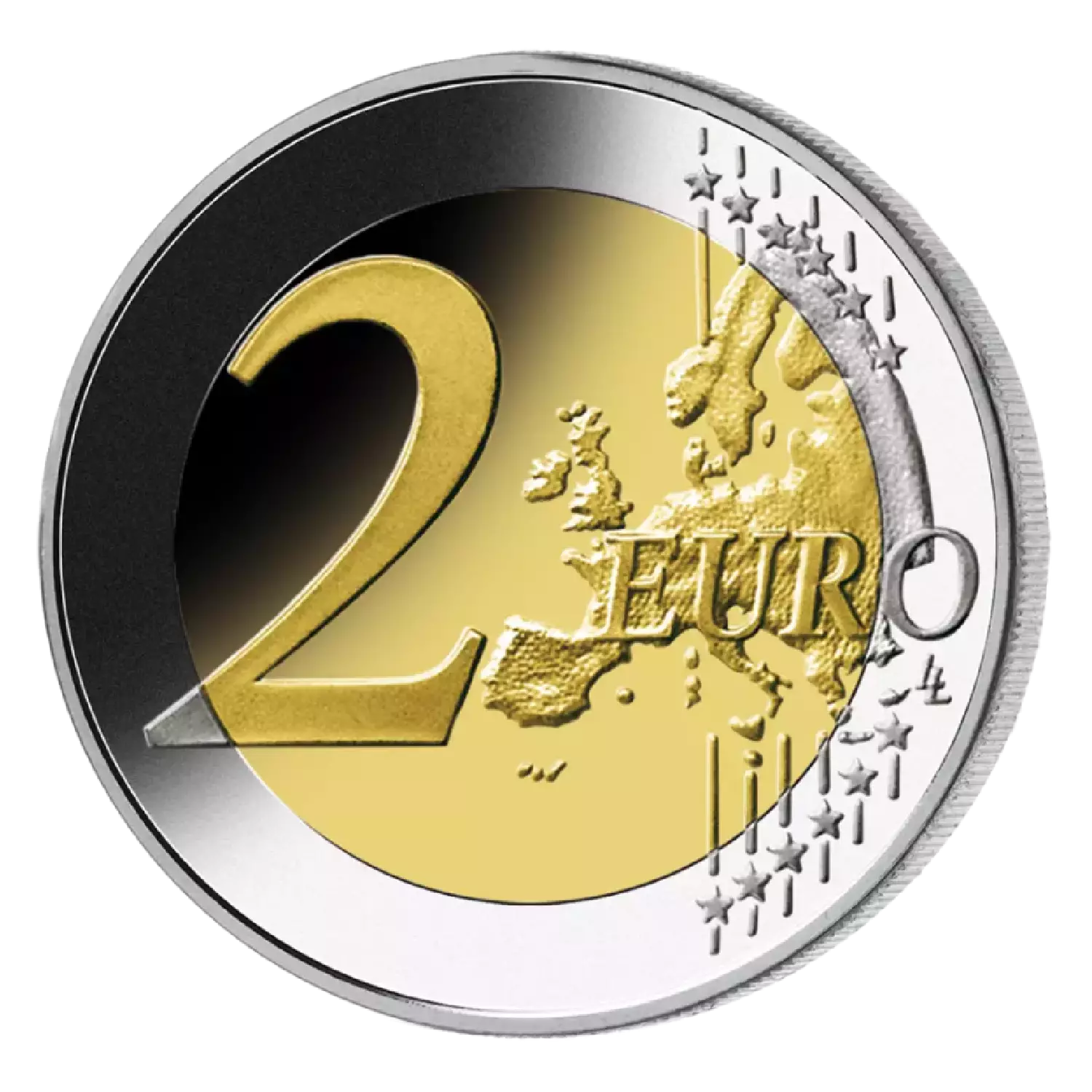
2 euro commemorative coin of the Italian Republic, issued in 2024. Dedicated to the 250th anniversary of the founding of the Guardia di Finanza. The author of the design is Marta Bonifacio (initials "MB"). Bimetallic, diameter 25.75 mm, weight 8.5 g. Minted at the IPZS in Rome.
Obverse
The coin depicts a stylized version of the heraldic emblem of the Guardia di Finanza. It includes various elements: a mountain, sea and sky, a griffin - a mythological animal that, according to legend, guards the Treasury, the state treasury, and a crown with towers. At the bottom is the monogram "RI" (Repubblica Italiana), the dates "1774-2024" (year of foundation and year of issue), on the right is the mark "R" (Rome Mint) and the initials of the designer "MB". Above the emblem is the inscription "GUARDIA DI FINANZA". On the outer ring are the 12 five-pointed stars of the European Union.
Reverse
The reverse is the common side of the 2 euro coins of the second type, designed by Luc Luix (Royal Belgian Mint). It depicts a map of Europe as a single continent without internal borders - a symbol of European unity. On the left is a large denomination "2" and the inscription "EURO", on the right is a map with six thin horizontal lines in the background. On the outer ring are the 12 stars of the European Union. The band is with thin ribbing and the inscription "2 ★", repeated six times alternately upright and inverted.
Historical context
The Guardia di Finanza (Italian Financial Guard) is an Italian gendarmerie specializing in financial and border crimes. The oldest corps in Italy, founded on October 5, 1774 in Turin by the King of Sardinia-Piedmont, Vittorio Amedeo III, as the "Legione Truppe Leggere" (Legion of Light Troops) to protect the border and combat smuggling. During the 19th century, the name and organization changed. In 1881, it was reformed as the "Corpo della Guardia di Finanza". During the First World War, it took an active part in the fighting. Since 1921, it has received its current name. It is subordinate to the Ministry of Economy and Finance. Tasks: combating tax evasion, customs and border checks, combating smuggling, money laundering, financial fraud, corruption, counterfeiting, and illegal drug trafficking. It also participates in military and peacekeeping operations. The number of personnel is about 60,000. Headquarters are in Rome, in the palace on Via Bellisario.