
Shopping Cart
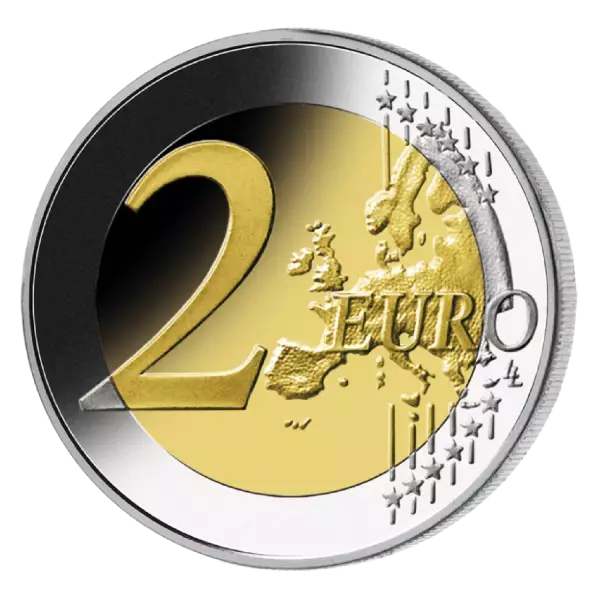

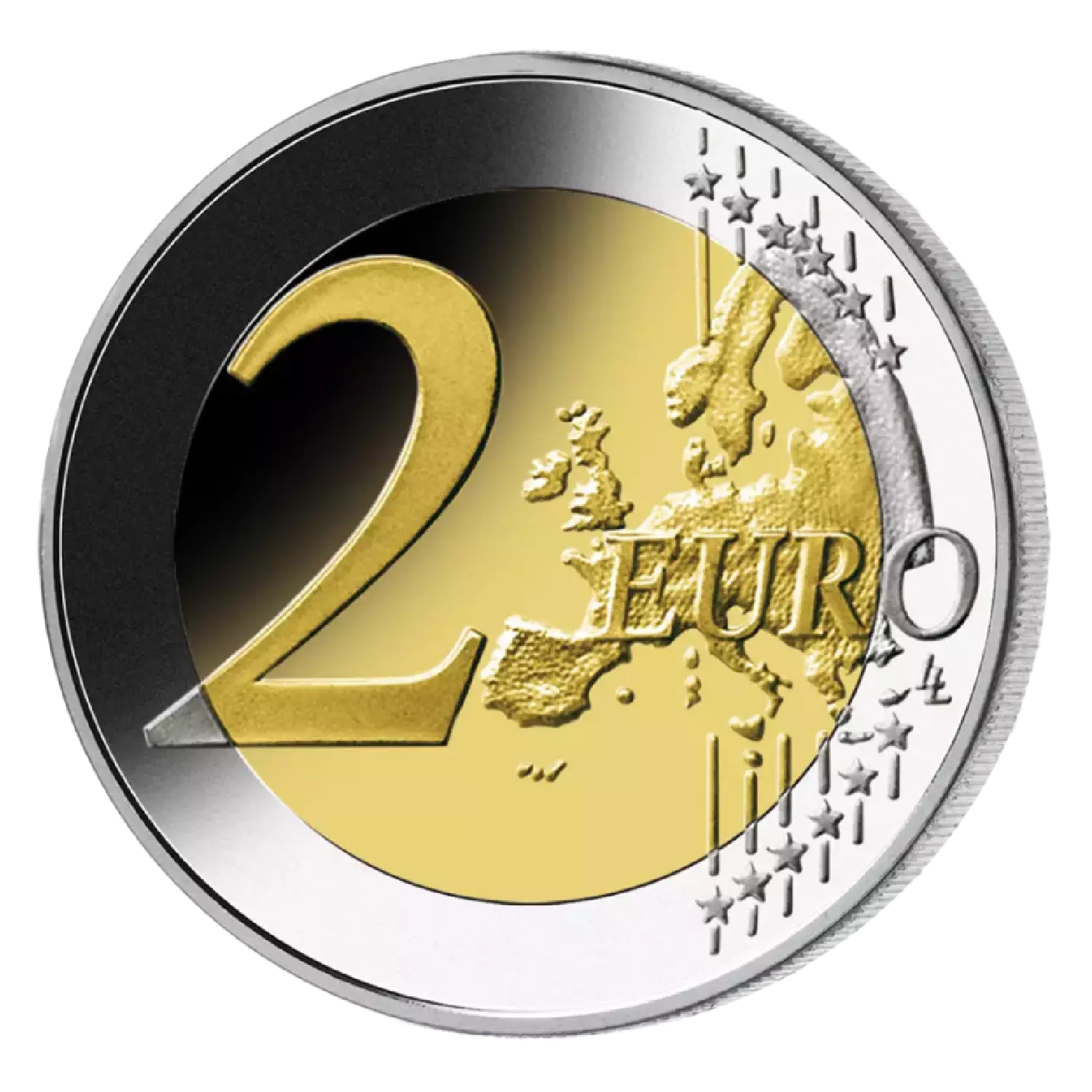
A 2 euro commemorative coin of the Republic of Cyprus, issued in 2020 with a circulation of 418,000 copies. Dedicated to the 30th anniversary of the Cyprus Institute of Neurology and Genetics. Minted in Suomen Ragapa Oy (Finland). Bimetallic, diameter 25.75 mm, weight 8.5 g.
Overse
The center of the coin depicts a stylized neuron with synapses - a scientific illustration referring to the activities of the Cyprus Institute of Neurology and Genetics. Around the image in a circle are the inscriptions: "ΚΥΠΡΟΣ — KIBRIS" (Cyprus in Greek and Turkish) and "ΙΝΣΤΙΤΙΟΥΤΟΙΤΟΙΤΟΙΟΤΟΙΝΟΥ & ΓΕΝΕΤΙKHΣ KYΠΡΟY 1990-2020" (Cyprus Institute of Neurology and Genetics, 1990-2020). On the outer ring are the 12 five-pointed stars of the European Union.
Reverse
The reverse is the common side of the 2 euro coins of the second type, designed by Luc Luix (Royal Belgian Mint). It depicts a map of Europe as a single continent without internal borders - a symbol of European unity. On the left is a large denomination "2" and the inscription "EURO", on the right is a map with six thin horizontal lines in the background. On the outer ring are the 12 stars of the European Union. The band is finely fluted and has the inscription "2 ★", repeated six times alternately upright and inverted.
Historical context
The Cyprus Institute of Neurology and Genetics (CING) is a leading scientific, medical and educational center in Cyprus, founded in Nicosia in 1990. The Institute grew out of the Department of Neurology and Genetics at the Nicosia Academic Hospital, which had been operating since 1980 under the direction of Dr. Konstantinos Kyriakides. Today, the Institute has gained international recognition and plays an active and important role as a national, regional and international center of excellence in providing high-quality services, innovative research and postgraduate education. Among the areas of activity: genetic counseling, cancer genetics, rare diseases, molecular virology, brain research, metabolic diseases, bioinformatics. CING collaborates with leading international centers and universities. Since 2000, the institute has expanded, with new laboratories opened by the President of Cyprus. Associated with the Cyprus School of Molecular Medicine for postgraduate students.