
Shopping Cart
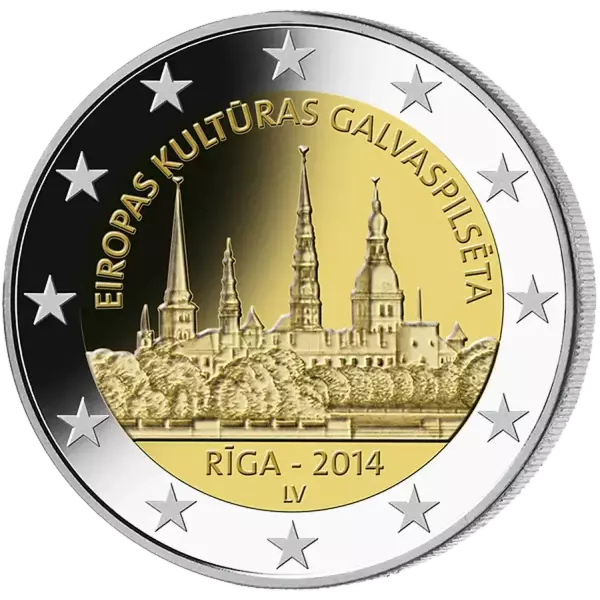
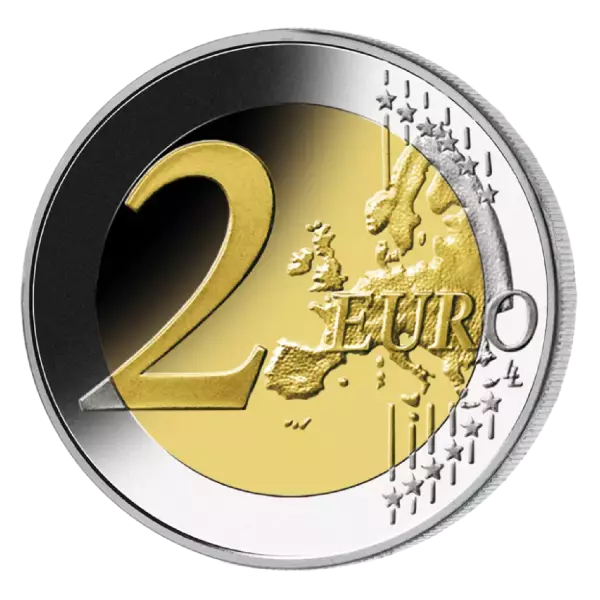


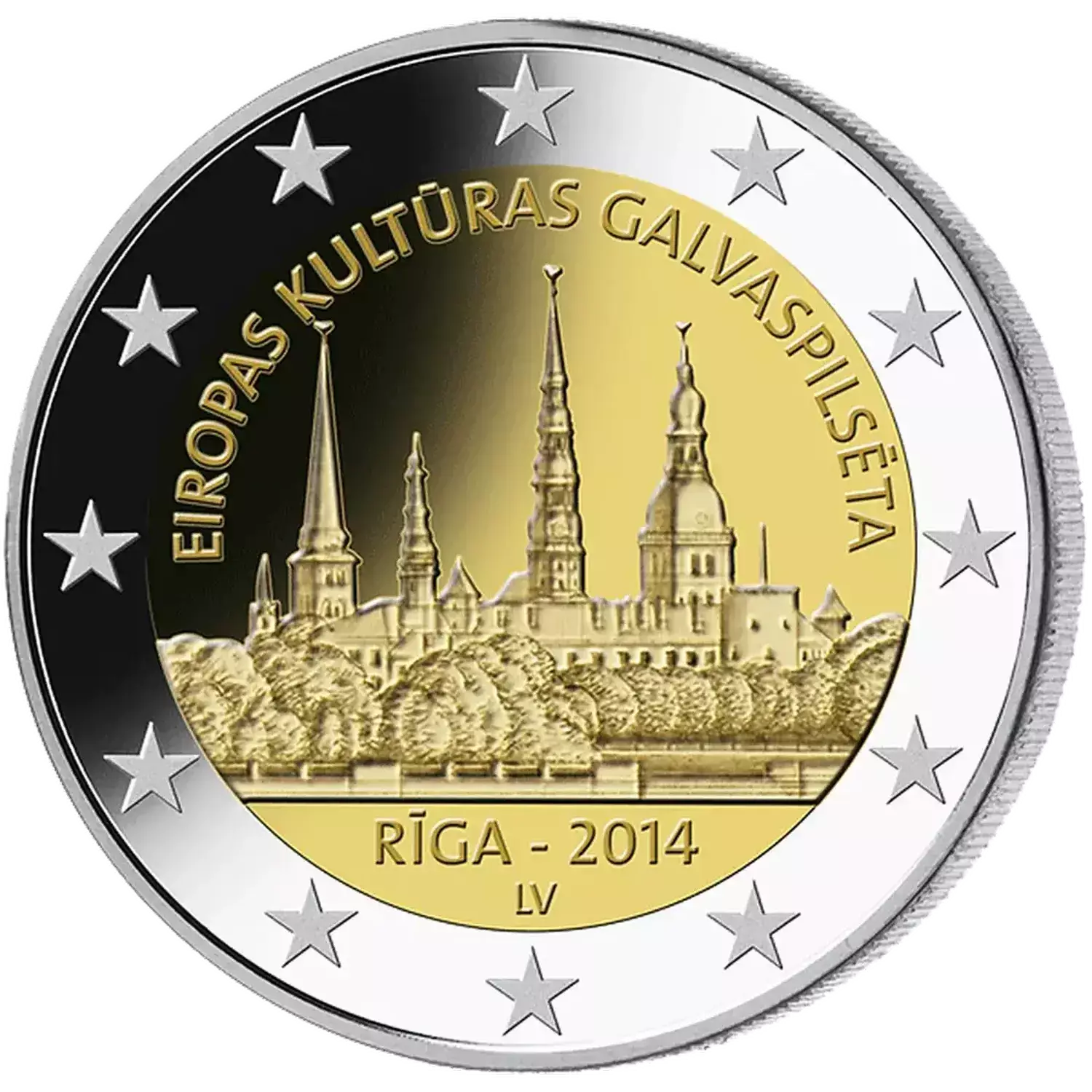
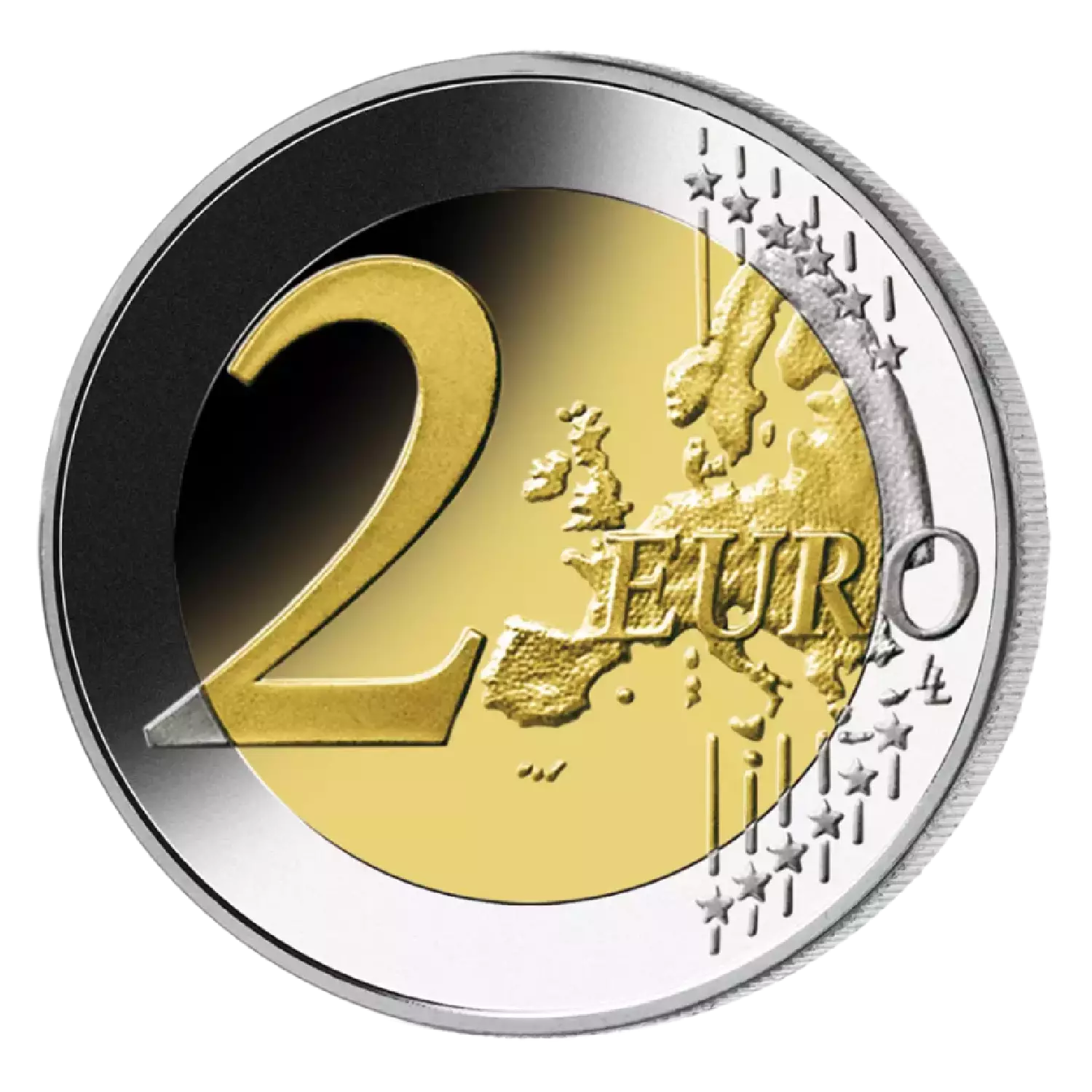
2 euro commemorative coin of the Republic of Latvia, issued on August 12, 2014 in a circulation of 1,000,000 copies. The first 2 euro commemorative coin of Latvia. Dedicated to Riga, the European Capital of Culture 2014. Minted at the Baden-Württemberg State Mint in Stuttgart (Germany). Bimetallic (copper-nickel ring, three-layer core — nickel brass/nickel/nickel brass), diameter 25.75 mm, weight 8.5 g.
Obverse
The center of the coin depicts a stylized panorama of Old Riga — a picturesque historical city core, depicted in silhouette with the main architectural symbols of the capital of Latvia: the spire of St. Peter's Cathedral (Pētera baznīca), the Dome Cathedral, Riga Castle, the characteristic "Three Brothers" tower. Above are the inscriptions "RĪGA" and "EIROPAS KULTŪRAS GALVASPILSĒTA 2014" (European Capital of Culture 2014). Below is the name of the issuing country "LATVIJA". On the outer ring are the 12 five-pointed stars of the European Union.
Reverse
The reverse is the common side of the 2 euro coins of the second type, designed by Luc Luix (Royal Belgian Mint). It depicts a map of Europe as a single continent without internal borders - a symbol of European unity. On the left is a large denomination "2" and the inscription "EURO", on the right is a map with six thin horizontal lines in the background. On the outer ring are the 12 stars of the European Union. The rim is finely fluted and the Latvian inscription "DIEVS ★ SVĒTĪ ★ LATVIJU" (God bless Latvia - the name of the national anthem).
Historical context
Riga is the capital and largest city of Latvia, located on the shores of the Gulf of Riga of the Baltic Sea, near the confluence of the Daugava River. Founded in 1201 by Bishop Albert Buxhoved. Since the 13th century, it has been an important member of the Hanseatic League. Since 1561, it has been part of the Polish-Lithuanian Commonwealth, since 1621 - of Sweden, and since 1710 - of the Russian Empire. The historic center of Riga with its outstanding Art Nouveau architecture (Jugendstil) and Gothic Old Riga was included in the UNESCO World Heritage List in 1997. The European Capital of Culture program is an initiative of the European Union, launched in 1985. In 2014, Riga and the Swedish city of Umeå held this title. During the year, over 200 major cultural events took place in Riga: opera festivals, exhibitions, performances. It was an important year for Latvia - the country simultaneously adopted the euro on January 1, 2014.