
Shopping Cart
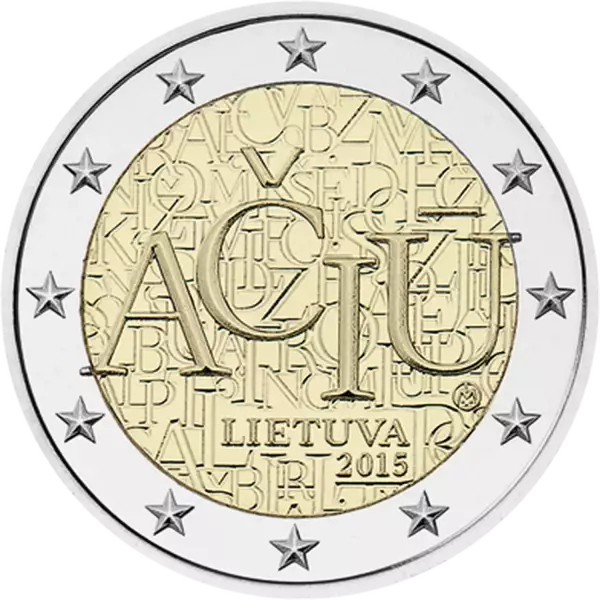


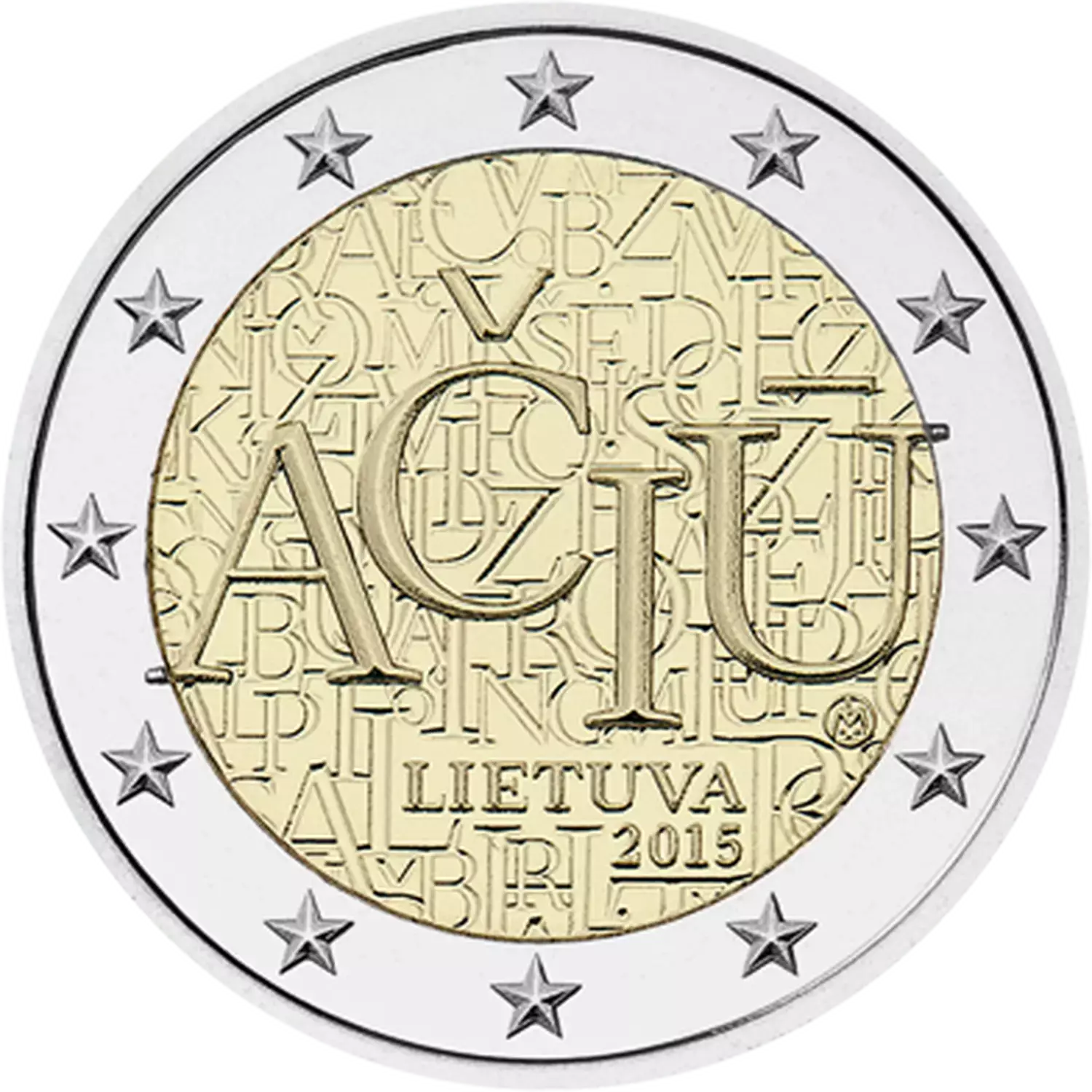
2 euro commemorative coin of the Republic of Lithuania, issued in 2015 in a circulation of 1,000,000 copies. The first 2 euro commemorative coin of Lithuania. It was minted at the Lithuanian Mint (UAB Lietuvos monetų kalykla) in Vilnius. Bimetallic, diameter 25.75 mm, weight 8.5 g.
Overse
The center of the coin depicts a stylized composition of Lithuanian letters and letters placed in a circle, symbolizing the richness and beauty of the Lithuanian language. At the top is the inscription "LIETUVIŲ KALBA" (Lithuanian language). At the bottom is the name of the issuing country "LIETUVA" and the year of issue "2015". On the outer ring are the 12 five-pointed stars of the European Union.
Reverse
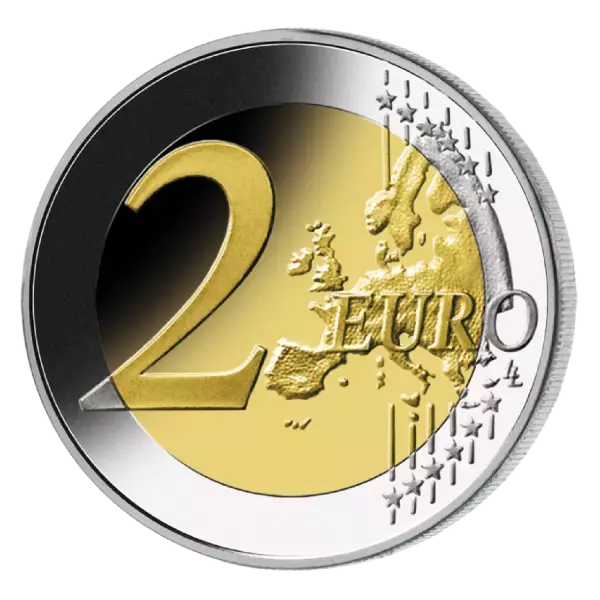
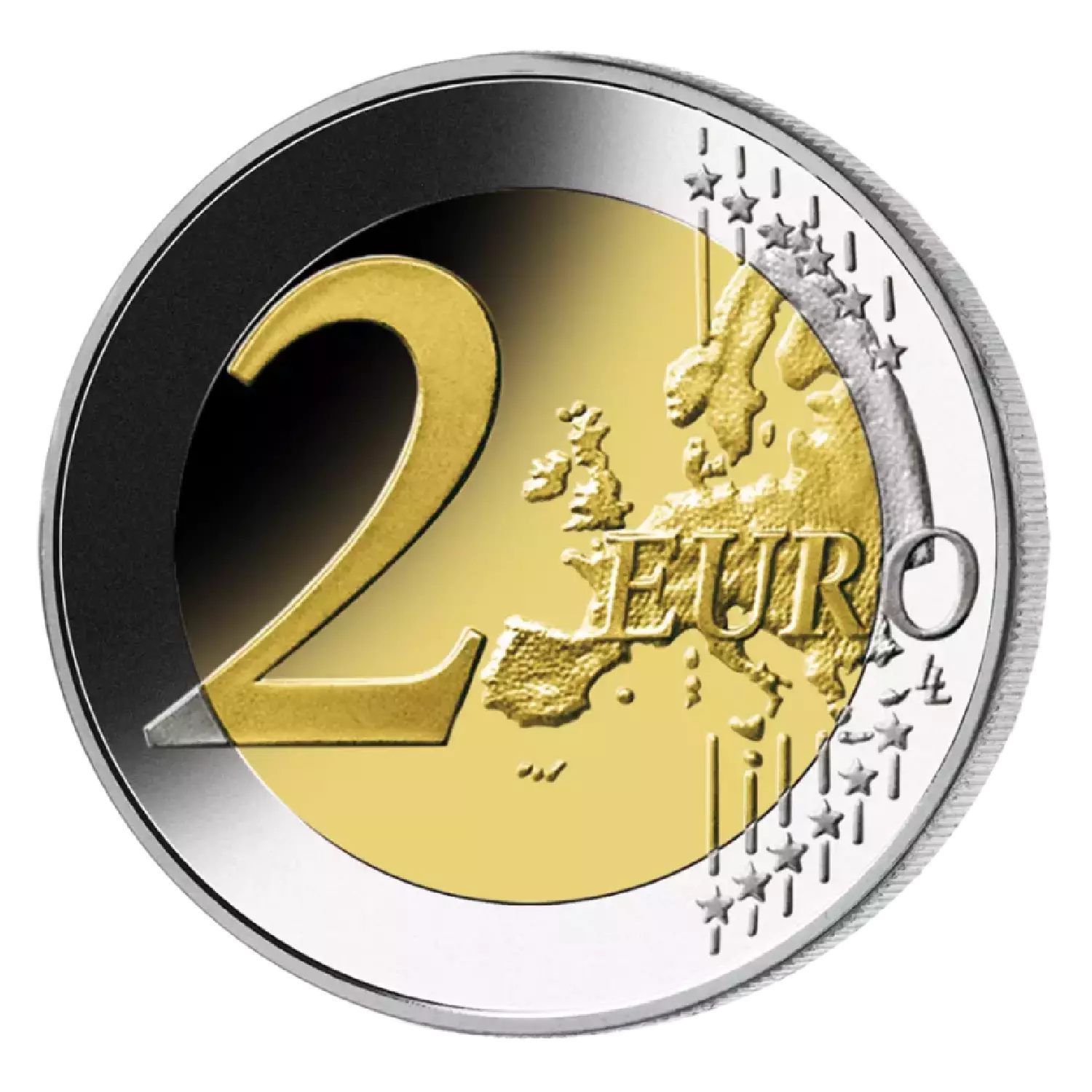
The reverse is the common side of the 2 euro coins of the second type, designed by Luc Luix (Royal Belgian Mint). It depicts a map of Europe as a single continent without internal borders - a symbol of European unity. On the left is a large denomination "2" and the inscription "EURO", on the right is a map with six thin horizontal lines in the background. On the outer ring are the 12 stars of the European Union. The rim is finely fluted and the Lithuanian inscription "LAISVĖ ★ VIENYBĖ ★ GEROVĖ ★" (Freedom, Unity, Prosperity).
Historical context
The Lithuanian language (lietuvių kalba) is one of the two surviving Baltic languages (along with Latvian), belonging to the Indo-European language family. It is distinguished by its extreme archaism and the preservation of ancient Indo-European features that have disappeared in other living Indo-European languages: it has a complex declension system (7 cases), archaic phonology, and tonal accentuation. The Lithuanian language is often called "the oldest living language in Europe" - in structure it is close to Sanskrit and Ancient Greek. The first Lithuanian printed text is the catechism of Martynas Mažvydas in 1547. The first Lithuanian grammar is by Daniel Klein in 1653. In the 19th century, during the "Lithuanian Book Ban" (1864-1904), the tsarist authorities of the Russian Empire banned the printing of Lithuanian in the Latin script. In 1918, with the restoration of Lithuanian statehood, Lithuanian became an official language.